We’re past the halfway point of 2026, and that means spy shots of the 2027 bikes are slowly hitting the internet. We already know that Harley-Davidson is reviving its Evo Sportster, Honda has an inline-four entry-level machine coming, and CFMoto is working on China’s first liter-class production sports bike. Amidst all this, a certain German bike maker has broken the internet by publicly testing its extensively overhauled inline-four liter-class sports bike. And we believe this is the most anticipated litre-class sports bike of next year.
Europe currently leads in superbike innovation
For the longest time, Japan’s Big Four dominated the litre-class sports bike segment. Innovative updates and new performance frontiers were common year after year, leaving European names with a lot to live up to. Fast forward 20 years, a big change has happened.

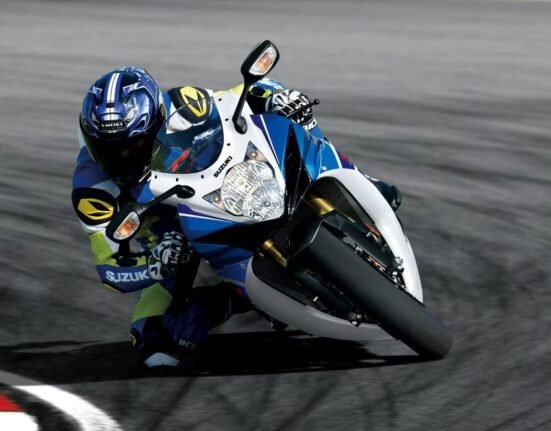
European brands are really leading the way today and Japan’s Big Four have the lead. Suzuki, Kawasaki, Honda and Yamaha are all on the back foot. The YZF-R1 has been phased out in international markets, while the ZX-10R and GSX-R1000 have undergone minor changes rather than overhauls in recent years. Meanwhile, the CBR1000RR-R Fireblade SP is Japan’s newest superbike, but it remains largely identical to the 2020 debut.

In comparison, European bike makers have focused on improving their best superbikes every other year, followed by overhauls here and there. Ducati’s frequent updates to the Panigale V4 prove this well, with the last update coming in 2025. The same can be said for Aprilia, which has received two significant updates to the RSV4 in the last five years. This leaves us with BMW, which is now overhauling its S 1000 RR.
BMW S 1000 RR is the most anticipated liter-class sports bike of 2027
You must be living under a rock if you haven’t already seen the spy shots of the revised S 1000 RR. It is expected to mark the next generation of the S 1000 RR’s lifecycle, following the current generation that debuted in 2019. In comparison, all of its rivals have already had major upgrades in recent years.
As mentioned, the Panigale V4 and RSV4 got overhauls last year, while the GSX-R1000 and Ninja ZX-10R got updates for MY26. There is no date to support the overhaul for the CBR1000RR-R. The CFMoto V4 SR-RR also looks attractive, but it will be a completely new platform when it launches. So we’re not sure how it will perform and when it will reach US shores. This means that the S 1000 RR is the much-awaited litre-class sports bike to be launched next year.
The new S 1000 RR will have notable updates in almost all aspects

Judging by the spy shots, we already know that there is a new design for the upcoming S 1000 RR. It will take heavy inspiration from the BMW Concept RR shown last year, with a new generation of aerodynamic wings on top. These blend in well with the aesthetic, unlike the current one, which looks like an afterthought.
On top of that there are sleeker headlights, an updated air duct and sharper fairing. The whole package appears to be more futuristic than the current-gen machine without deviating too much from the usual image of superbikes. Apart from the design, we also know some finer points. There is a downside here.
Updated inline-four powerhouse with more power

The current S 1000 RR is powered by a 998cc, inline-four engine with ShiftCam technology. This, along with its increased 13.3:1 compression ratio, helps produce 210 horsepower (205 in the US) and 83 pound-feet. The upcoming version aims to take that figure even higher, as confirmed by a type-approval filing by the Bavarian giant.
The new output will be around 212 horsepower (158kW), making it the second most powerful inline-four superbike on the market. It will be just over twice the size of the 214-hp CBR1000RR-R Fireblade SP. What remains unclear is which set of engine updates BMW has employed to achieve the new output while meeting modern emission norms. However, the new and sleeker exhaust definitely plays a part in this.
Rebuilt underpinnings complement the engine

Like the engine, the underpinnings have also gone under the knife. The cross-section appears to have been reworked, combining the twin-spar chassis with a new tubular subframe. On top of that there’s an updated asymmetric swingarm. All of these indicate serious weight savings along with improved ride dynamics during both regular and track conditions. You should know that the S 1000 RR is already lighter than its European rivals. Therefore, saving any weight will only increase its benefits.

The next big change comes to the braking package. Gone are the Nissin-built front calipers in favor of new Brembo HyPure monoblocks. There’s also a new underslung calliper at the rear instead of the traditional unit on the current bike. However, not much seems different in terms of suspension. We can still see the vertical monoshock and beefy 45mm forks, mounted on 17-inch alloy wheels with the same ‘M’ badging that we see on the existing bikes.
A complete cockpit experience with different ergonomics
Visual and mechanical overhauls are supported by cockpit overhauls. The already impressive TFT instrument cluster has made way for a huge tablet sized instrument cluster. We believe it will have the regular set of rider aids expected from a flagship BMW, albeit with updates to match the added grunt. Another new cockpit element is the switchgear. Almost all the touchpoints appear new, be it the turn signal buttons or the starter. Oh, and the joystick wheel appears to be absent. There’s also a new hydraulic clutch to ease your left-hand effort.

Last but not least, there are also noticeable ergonomic differences. The triple-clamp is new with visible hollow sections to reduce weight, while the tank has a different shape with a flat top section to support your thighs during elbow-down sessions. We also see a new windscreen which is much wider than the existing bike. However, the overall ride triangle still appears front-heavy and balanced rather than aggressive.
The S 1000 RR should reach US dealers next year

So when will the updated BMW superbike be launched? Technically there has been no official confirmation of this. But with the 2027 colorways already out, we know the updated bike will be a part of BMW’s MY28 lineup. This means you can expect it to reach dealerships around mid-2028. It’s also reasonable to expect a big increase in price from the current MSRP of $20k. This will make it one of the most expensive inline-four bikes.
Source: BMW Motorrad