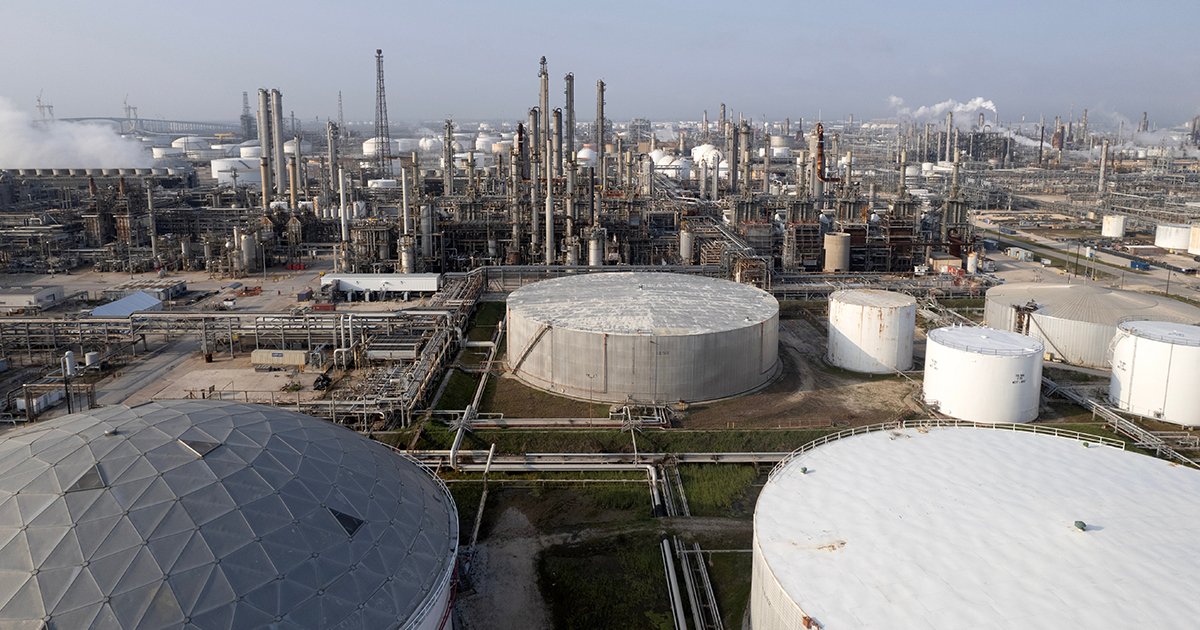
An oil refinery in Houston. (Mark Felix/Bloomberg)
key takeaways:
- Profits at American refiners, which convert crude oil into gasoline and diesel, are hitting records as fuel supply disruptions caused by the war have pushed up prices of refined products. The average per barrel margin a US refiner receives for producing two barrels
- Diesel and gasoline markets remain tight due to Russia’s diesel export ban, conflict around the Strait of Hormuz, low stockpiles and lower fuel exports from China.
- Analysts say markets remain sensitive to refinery outages, while China’s return to fuel exports could ease the shortfall but send crude prices higher.
Profits at American refiners, which convert crude oil into gasoline and diesel, are hitting records as fuel supply disruptions caused by the war have pushed up prices of refined products.
The average per-barrel margin paid to U.S. refiners to produce two barrels of gasoline and one barrel of diesel from three barrels of crude, known as the “3-2-1 crack spread,” rose to $70 a barrel on July 16, the highest level on record.
Read more: Oil supertankers are suffering rapid losses in Hormuz attacks
Although not an exact figure, this number is meant to approximate the activities of a typical US refinery, which produces more gasoline than diesel.
During the Iran conflict, fuel prices have increased comparatively more than crude oil and remain high despite a decline in crude oil prices during the now-expired ceasefire. This is due to geopolitically motivated disruption, persistent demand and unusually low reserves, which are creating headaches for consumers and businesses, as well as central banks trying to control inflation. It also presents a risk for President Donald Trump, whose Republican Party will try to defend its legislative majority in the November midterm elections.
Diesel futures rose this month after Russia banned most exports of the fuel months after Ukrainian drone attacks on the country’s refineries. Renewed conflict around the Strait of Hormuz is only increasing tensions.
In the US, profit margins for diesel manufacturing were reaching pre-war record levels, while retail prices rose above $5 per gallon on July 15. In Europe, margins are at an all-time high.
“Distillate cracks in both the U.S. and Europe have surged to record highs – a sign that this shock is becoming a refining story rather than just a crude supply story,” Natasha Kanaeva, head of commodity research at JPMorgan Chase & Co., said in a note.
Margins for gasoline are also hovering near the all-time high set in June 2022, when pump prices set a record in the U.S. Average retail gasoline prices were about $3.94 a gallon on July 15, according to the American Automobile Association.
In recent months, refiners have produced more jet fuel and diesel at the expense of gasoline. And exports remain within normal seasonal ranges, keeping inventories low.
Global gasoline and diesel markets are also suffering from a supply shortage from China, said Ryan Mackey, senior commodity strategist at TD Securities.
China recently allowed its refiners to export gasoline, diesel and jet fuel after banning shipments for months.
If China returns to the market in earnest, it may find some relief from the pressure created by Russia’s absence. But it is also likely to increase crude oil prices, Mackey said.
“This seems to be a difficult issue to fix without putting pressure on the crude market again,” Mackay said.

Alex Fraser from Cox Fleet discusses how fleets should respond when a roadside breakdown occurs, testing their safety, compliance and customer service systems simultaneously. Tune in by going above or RoadSigns.ttnews.com.
There are further risks ahead in the US, given the unusually low amount of fuel in storage in the US at this time of year, markets appear particularly sensitive to shocks from disruptions, including refinery outages.
According to Rapidan Energy, refiners are at their “practical operating limits” and are postponing maintenance, increasing the risk of unplanned outages, potentially increasing volatility.
Of course, there are some caveats to the record profits. The 3-2-1 spread uses New York-based futures prices that do not necessarily reflect local costs on the Gulf Coast or elsewhere in the country. And fuel prices also include the near-record cost of credits to comply with America’s most ambitious biofuel blending mandate to date.