| Update:
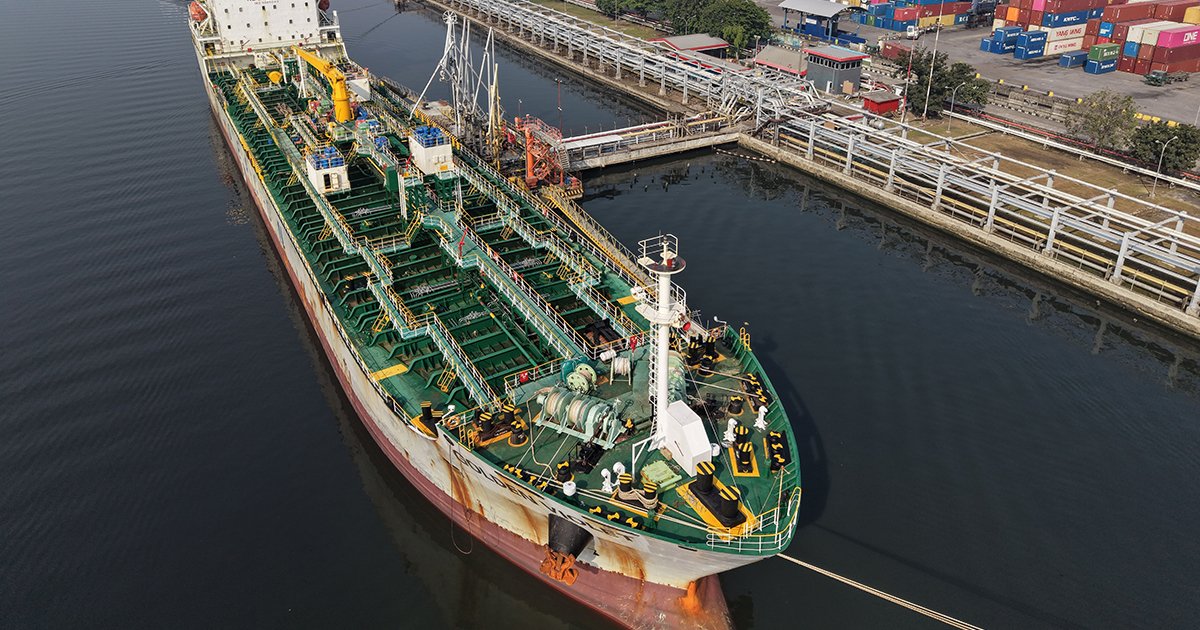
Golden Violet tanker arrives at PT Pertamina facility at Tanjung Priok port in Jakarta, Indonesia. (Dimas Ardian/Bloomberg)
key takeaways:
- Oil prices rose on July 14 as fighting intensified in the Middle East.
- Uncertainty over the future stability of supplies has deepened as the US and Iran both claim they control the Strait of Hormuz.
- Fighting in the region has prevented oil tankers from using the waterway to deliver crude from the Persian Gulf to customers, sending fuel prices soaring around the world.
NEW YORK – Stocks remained steady on a quiet Wall Street following a report July 14 that showed U.S. inflation last month was not as bad as economists expected. This comes even as oil prices continue to surge on concerns that the United States and Iran could return to all-out war.
The price of a barrel of Brent crude, the international standard, rose 3.5% to $86.18. After jumping nearly 10% on July 13, it is back to where it was before the United States and Iran signed an interim deal to stop their fighting in the middle of last month.
The S&P 500 added 0.1%, recouping some of the previous day’s 0.8% loss. As of 9:35 a.m. Eastern time, the Dow Jones Industrial Average was down 96 points, or 0.2%, and the Nasdaq Composite was 0.4% higher.
Shares were helped by lower yields in the bond market, which fell after a report that said prices U.S. consumers paid for gasoline, food and other costs of living were 3.5% higher last month than a year earlier.
Although this was higher than almost everyone expected, it was not as bad as May’s 4.2% inflation rate or the 3.9% expected by economists for June. Inflation getting less bad could ease pressure on the Federal Reserve, which is considering raising interest rates.
Higher rates may curb inflation, but they also slow the economy and hurt the prices of all types of investments.
After the inflation report, traders are seeing less than a 17% chance that the Federal Reserve will raise its key interest rate at its next meeting later this month. That’s down from the roughly 42% probability seen the previous day, according to CME Group data.
After oil gained nearly 9% yesterday and wholesale gas prices rose significantly, retail gas prices are expected to start rising today in price cycle markets where these behaviors are very well established. I believe prices will rise above $4 today in many price cycle states. – Patrick de Haan (@GasBuddyGuy) 14 July 2026
There may also be a decline in yield Rates for mortgage and other loans to American households and businesses. This helped the shares of many companies in the housing industry to strengthen.
Builders FirstSource, which sells countertops, windows and other building materials, rose 1.9%, while homebuilder Lennar climbed 1.5%.
A surge in several big, influential stocks of computer chip companies also helped keep the market stable. They have been swinging sharply in recent weeks over concerns that they have gotten too excited about artificial intelligence technology.
Micron Technology rose 4.4% and Nvidia rose 0.6%. A day earlier, they were the two heaviest weights on the S&P 500 after falling 4.4% and 3.5%, respectively.
Certainly, major risks to inflation remain. Fighting in the Middle East threatens to shut down or slow traffic in the Strait of Hormuz, the narrow waterway that oil tankers use to ship crude from the Persian Gulf to customers around the world.
The other big focus on Wall Street this week is earnings reporting season, as companies tell investors how much profit they made from April to June.
Companies are under pressure to deliver big growth to justify how high their stock prices have gone. The indices are near records despite recent volatility due to concerns about AI stocks.
Bank of America, Citigroup, JPMorgan Chase, Goldman Sachs and Wells Fargo all reported stronger-than-expected profits in their latest quarter on July 14. Their reports showed strength for their trading desk and suggested US consumer spending is still resilient.
Their stocks were mostly higher after the results. Goldman Sachs rose 4.7%, but Wells Fargo fell 1.7%.

Alex Fraser from Cox Fleet discusses how fleets should respond when a roadside breakdown occurs, testing their safety, compliance and customer service systems simultaneously. Tune in by going above or RoadSigns.ttnews.com.
On the losing end of Wall Street and dragging the Dow down was IBM. It fell 24.2% after CEO Arvind Krishna said its software and infrastructure businesses performed below expectations in the last quarter.
In late June IBM customers shifted their spending to servers, storage and memory to get ahead of expected price increases due to the AI boom.
“These situations require our teams to execute diligently, and we faltered this quarter,” Krishna said in a letter to investors. “We did not adapt and move quickly enough, and several large deals failed to close on the timelines we expected, causing most of our losses.”
In the bond market, the yield on the 10-year Treasury fell to 4.57% from 4.62% at the end of July 13. This prevents it from rising above 3.97% before the start of a war with Iran.
Fed Chairman Kevin Wersh will answer questions from lawmakers on Capitol Hill later in the day for the first time since taking over leadership of the central bank. In his prepared testimony, he promised to make high inflation “a thing of the past” but gave no hints about the Fed’s next steps.
Overseas, indices were mixed in Europe after a strong finish in Asia.
Japan’s Nikkei 225 rose 0.7% after SoftBank Group Corp rose 3.3%. It is a big investor in AI, and Chairman Masayoshi Son gave a speech at a company event in Tokyo, where he ridiculed the idea that there is a bubble in investment in AI potential.
Shares in Shanghai rose 1.4% after the government reported China’s exports in June rose 27% from a year earlier as AI drove strong demand for computer chips and other technology.
AP Business Writer Ellen Kurtenbach contributed to this report.