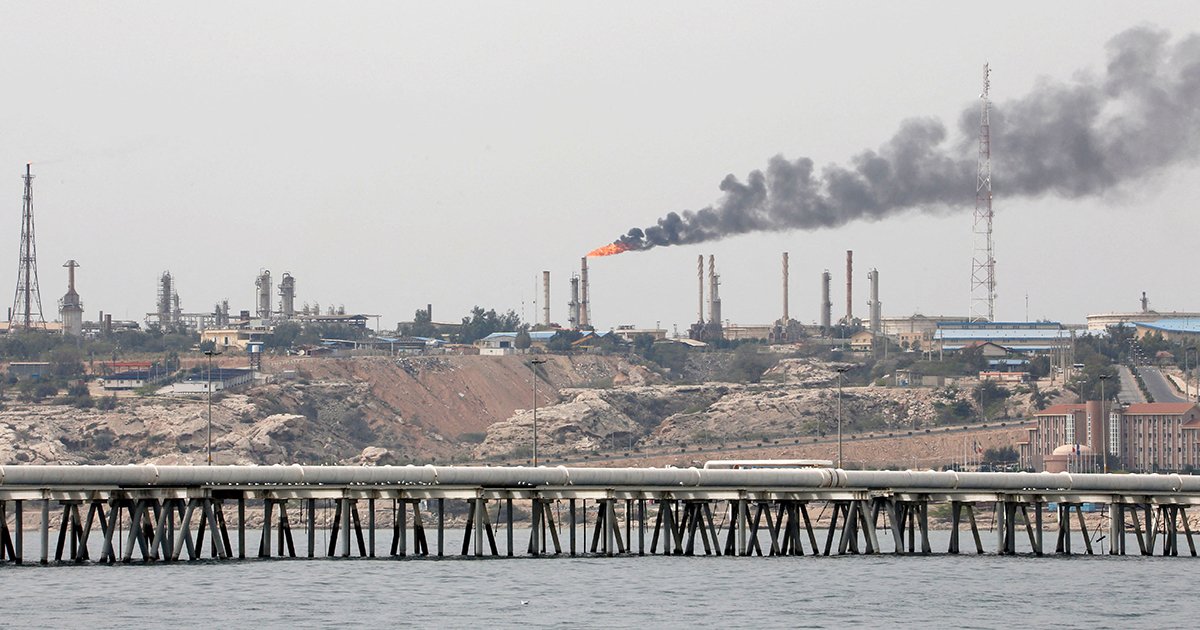
An oil facility on Kharg Island, Iran. (Atta Kenare/AFP/Getty Images/Bloomberg)
key takeaways:
- Oil prices remain high as the US escalates attacks against Iran.
- Iran targeted Kuwait and Bahrain with missile and drone attacks.
- World stocks mostly fell.
HONG KONG – Stocks around the world mostly fell on 16 July and oil prices fell despite a spate of attacks between the US and Iran.
Oil prices fell and remained high as the US stepped up its attacks against Iran, while Iran launched missile and drone attacks on Kuwait and Bahrain.
Brent crude, the international benchmark, fell 0.3% to $84.68 a barrel. It was trading near $72 a barrel in late February, before the war began.
Benchmark US crude slipped less than 0.1% to $79.57 a barrel.
US futures edged lower, while benchmarks in South Korea and Japan were hit by selling of AI-related stocks.
Britain’s FTSE 100 fell 0.4% to 10,475.27 in early European trading. France’s CAC 40 also fell 0.4% to 8,348.82. Germany’s DAX fell 0.3% to 24,926.60.
Chart of the day: The cost of refining a barrel of crude is at an all-time high due to the twin crises over the Strait of Hormuz and Ukraine’s bombing campaign against Russian refineries. The benchmark WTI 3-2-1 refining indicator is flirting with the $70 per barrel level today. pic.twitter.com/76Kjfz8Gnu
-Javier Blas (@JavierBlas) 16 July 2026
Seoul’s Kospi index in South Korea fell 6.4% to 6,820.60. Interest rate hike by the Bank of Korea also contributed to its decline. This was the first rate increase by the BOK since 2023 and was aimed at helping curb inflationary pressures caused by the Iran war.
Memory chip maker SK Hynix fell 11.5%, while Samsung Electronics fell 8.8%.
Taiwan’s Taiex closed almost unchanged. Taiwan computer chip maker TSMC gained 1.2% ahead of its earnings report. After market close, TSMC, often seen as a barometer for the global industry and for the boom in artificial intelligence, announced an additional $100 billion investment in U.S. computer chip manufacturing capacity, with record earnings last quarter and forecasts for higher revenue growth.
In Amsterdam, shares of Dutch chip machine maker ASML rose 0.9% in early trade July 16 after TSMC reported stronger-than-expected results.
In other Asian trading, Tokyo’s Nikkei 225 fell 2.8% to 66,835.54. Shares of Japanese memory chip maker Kioxia fell 15%. Chip-making equipment maker Tokyo Electron fell 4.5%, while chip testing equipment maker Advantest dropped 5.9%.
SoftBank Group fell 6.3%.
Hong Kong’s Hang Seng rose 1.3% regionally to 25,008.60. Hong Kong-traded shares of technology giant Alibaba climbed 3.1% after China’s cyberspace regulator said on July 15 it had approved Apple’s Intelligence AI tool for use in China. An Alibaba spokesperson said its Quen model would be integrated into Apple Intelligence.
The Shanghai Composite Index fell 1.9% to 3,882.41.
Australia’s S&P/ASX 200 closed flat at 8,840.70, while India’s Sensex rose 0.2%.

Alex Fraser from Cox Fleet discusses how fleets should respond when a roadside breakdown occurs, testing their safety, compliance and customer service systems simultaneously. Tune in by going above or RoadSigns.ttnews.com.
Wall Street benchmark S&P 500 on July 15 Rose The Dow rose 0.4% and 0.3%. The technology-heavy Nasdaq Composite rose 0.6%.
A US report showed inflation slowed in June and strong earnings results from US investment company BlackRock, among other major companies, also helped lift the market. BlackRock shares rose 6.6% after reporting stronger-than-expected quarterly revenue and profit.
In other deals early on July 16, the US dollar fell to 162.14 JPY from 162.19 yen. The euro rose to $1.1467 from $1.1464.