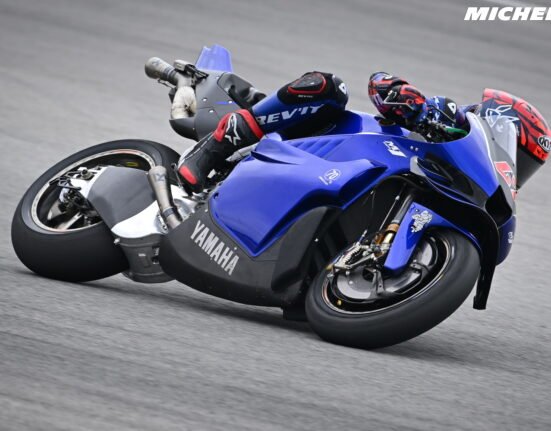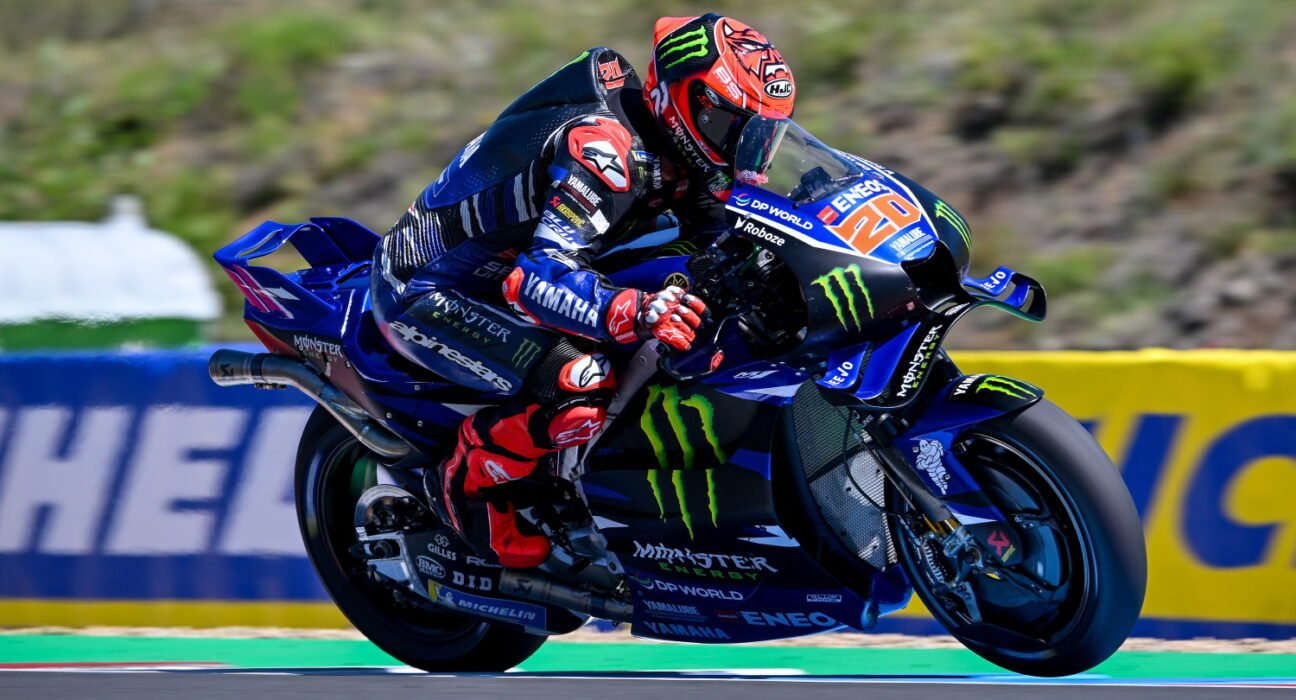
MotoGP is brewing a storm: star rider Fabio Quartararo has declared that scrapping the controversial “holeshot” lowering device overnight would be a reckless move that risks throwing the entire grid into chaos. His blunt warning comes after a disappointing day at Brno, where technical experiments and a lack of power left the Yamaha Ace far away from the front.
On a tense Friday at the Czech circuit, Quartararo could only manage 14th on the timesheets, missing out on automatic entry into Q2 by a wide margin. The Frenchman, nicknamed “El Diablo”, fought desperately to minimize the damage, but found himself about eight tenths behind the pace. The headline-grabbing trial run had further compounded their struggles: for the first time in years, MotoGP riders were asked to start practice without the now-ubiquitous front lowering device. Quartararo, along with others like Alex Rins, are struggling with the new protocols, raising immediate questions over the wisdom of sudden regulatory changes.
The stakes could hardly be higher. Over the years, mechanical “holeshot” devices have fundamentally changed race starts, allowing riders to lower the front or rear of the bike, boost traction, and sprint off the line with unprecedented speed. But as the technology arms race intensifies, MotoGP rulemakers are facing increasing pressure to rein in the equipment in the name of safety and sporting fairness. Quartararo’s experience at Brno has added fuel to the fire: his Yamaha, already hampered by a lack of outright power, now risks falling even further behind if the technical landscape changes overnight.
The Frenchman did not mince words when describing the current situation. “The feeling is better than the last two grands prix – we’re still far away, but with a great lap I could have been with Acosta,” Quartararo said, referring to a rival’s pace. “Unfortunately, I’m stuck behind the other riders, and we’re slow everywhere. The engine limits us, especially in the last corner and Turn 1. We’re trying to get the gear ratios as short as possible to make up for the power loss, especially in the higher gears.”
He was equally candid about the impact of losing the front device. “It was strange. For four years, we have built our entire startup process around these systems. I don’t know how others found it, but for me it was very unusual. During the second attempt, I took the wheel too much. If we are really going in this direction, we need test after test to understand and optimize,” Quartararo stressed.
Asked how he coped without the lowering device, he revealed, “Honestly, we looked at what we did four years ago and tried to replicate it. But today, we have less traction, and we need to rethink launch control and other electronic aspects. Now, it depends more on the rider. The approach to the start has to change completely.”
Pressed on whether it was a matter of personal customization, Quartararo responded, “Absolutely. I’m mainly trying to adapt how I manage starts and clutch release. It’s a different process than what we’re used to.”
His view on a possible ban was clear but cautious: “It’s hard to say. If you look at modern MotoGP, maybe we have gone too far with these systems. But if they want to change, they can’t do it overnight. We need time to adapt. If they want to introduce it already in the next Grand Prix, we should be able to work on it from FP1 and FP2. We need time to understand how to manage everything. I don’t know how.” It’s a right or wrong decision, but it’s definitely something we need to get used to.”
Fellow Yamaha rider Alex Rins, who faced an even more disappointing finish with a 20th-place finish on Friday, echoed Quartararo’s concerns. “Nothing worked. I struggled with the electronics, and I’ve asked the team to analyze the data in detail. The fueling isn’t perfect, and I’m having trouble picking up speed – but that’s how it is. We’re very far away, but we’ll see tomorrow,” lamented Rins. When asked about starting to practice without the device, he admitted, “I tried it! I don’t know if that’s the solution. It’s hard to start with just the back device, and it’s hard to release. It’s really hard for all of us to take it off in the middle of the season.”
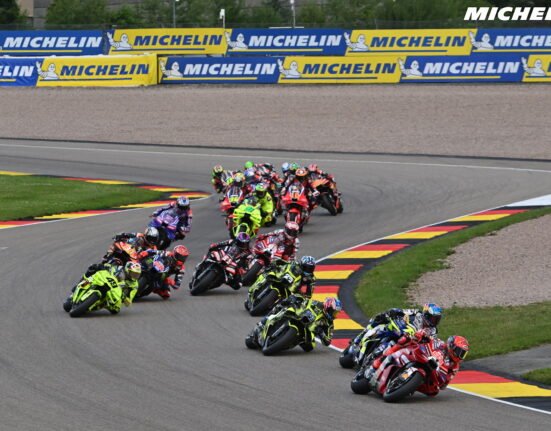
The debate over the holeshot device is now set to dominate the paddock. While some like Marc Marquez argue that the real issue is the sheer number of practice starts and the mountain of data now available to riders, Quartararo is not convinced that limiting practice will make much of a difference: “Even if you remove practice starts, you still have the data and the race videos. You already know where to brake and what to expect. The real difference comes at certain tracks – like Silverstone or Phillip Island, where the conditions are particularly challenging, or Hungary, Where Turn 1 is very tight. In those cases, you have to brake with real caution, especially when the bike is completely down.
With tensions rising and the grid divided, MotoGP faces a critical moment. Will safety and sportsmanship prevail over technological innovation, or will the pursuit of mechanical advantage continue unabated? As Quartararo and his rivals struggle to adapt, the answer could define the next era of the sport – and decide who stands on the podium in the races to come.
Don’t miss a second with the new app where you can watch live timing of MotoGP, Formula 1, NASCAR, IndyCar and much more: just press – Here (Free for all users)