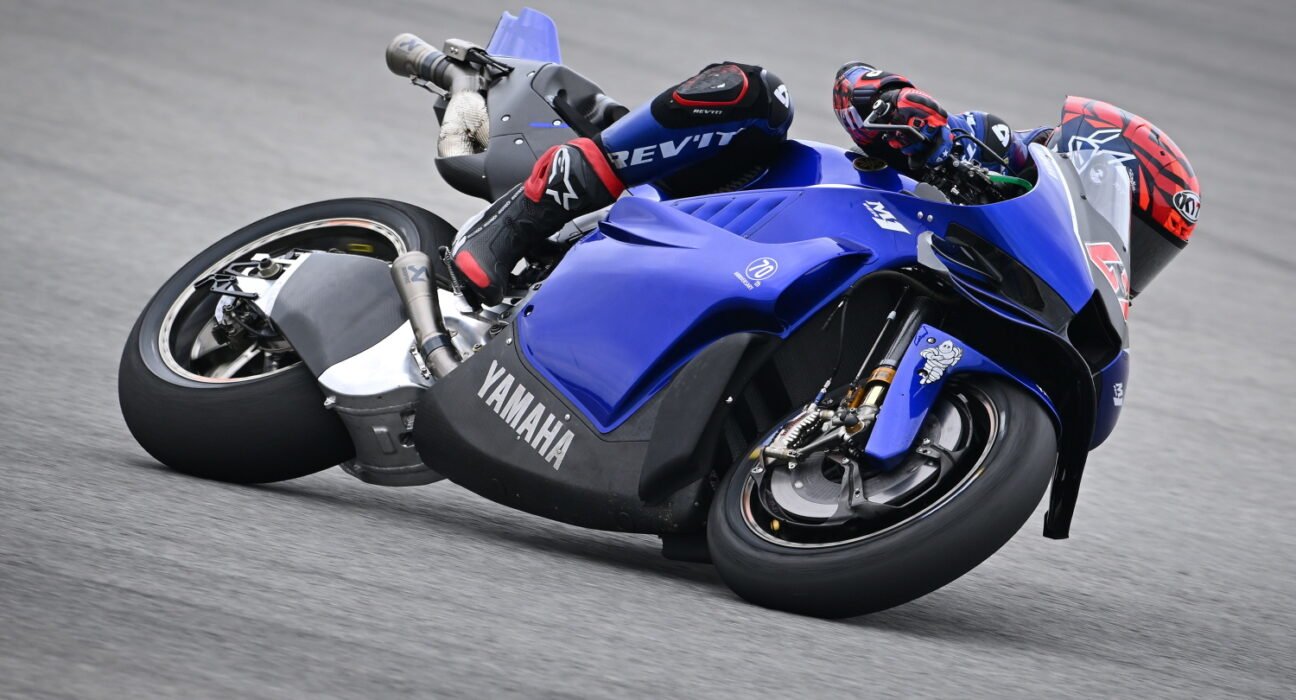
MotoGP teams accelerating development as 2027 technical regulations come into force
After a summer hiatus, MotoGP manufacturers have restarted development efforts this week, ramping up work on prototypes to conform to the broader technical regulations set to begin in 2027. The mid-season pause has not slowed momentum for the sport’s leading brands as they race to refine the machines built under the new framework.
Yamaha led the return to track activity with testing sessions scheduled for Tuesday and Wednesday at Jerez. Test riders Augusto Fernandez and Andrea Dovizioso are tasked with driving the YZR-M1 prototype, now retuned to 850cc in accordance with the upcoming regulations. The 2027 technical package mandates significant modifications: power outputs in the engines will be reduced, aerodynamic components will be reduced, ride height devices will be eliminated, and most notably, Pirelli will replace Michelin as the sole tire supplier. With the current season’s 1000cc V4 Yamaha struggling to make notable profits, the Japanese manufacturer is channeling resources into this next-generation project, which riders Jorge Martin and Ai Ogura will formally debut during official pre-season testing in Valencia on December 1.
Meanwhile, Ducati, KTM, Aprilia and Honda are preparing for a joint testing event at Mugello alongside the British GP at Silverstone on 5-6 August. Unlike Yamaha, which enjoys flexibility in choosing test sites due to its concessional status, these manufacturers share the Mugello site to consolidate development costs and efforts. It is his second major group session in the space of three weeks, following a mid-July test in Barcelona. Honda’s focus remains on the 2027 prototype, with Takaaki Nakagami leading development duties while waiting for Aleix Espargaro to recover from a cervical injury. Ducati, KTM and Aprilia are similarly committed to developing their next year’s machines, but may also be testing select components of their existing models that are still in the championship battle. KTM has reportedly secured approval to begin engine development, although actual implementation will begin after Silverstone.
This concentrated effort underlines the high risks for manufacturers adopting the new technological landscape, particularly with the advent of Pirelli tires and regulatory pressure on performance-enhancing devices. As the 2026 season approaches, the battle for innovation and reliability rages behind the scenes, setting the stage for a significant change in MotoGP’s technological arms race.
“The new rules will help us next year,” Yamaha acknowledged, referring to the simplified engine configurations that will become mandatory. The continued development process is clearly underway, promising a new chapter of competition and engineering prowess for the flagship class.
Don’t miss a second with the new app where you can watch live timing of MotoGP, Formula 1, NASCAR, IndyCar and much more: just press – Here (Free for all users)