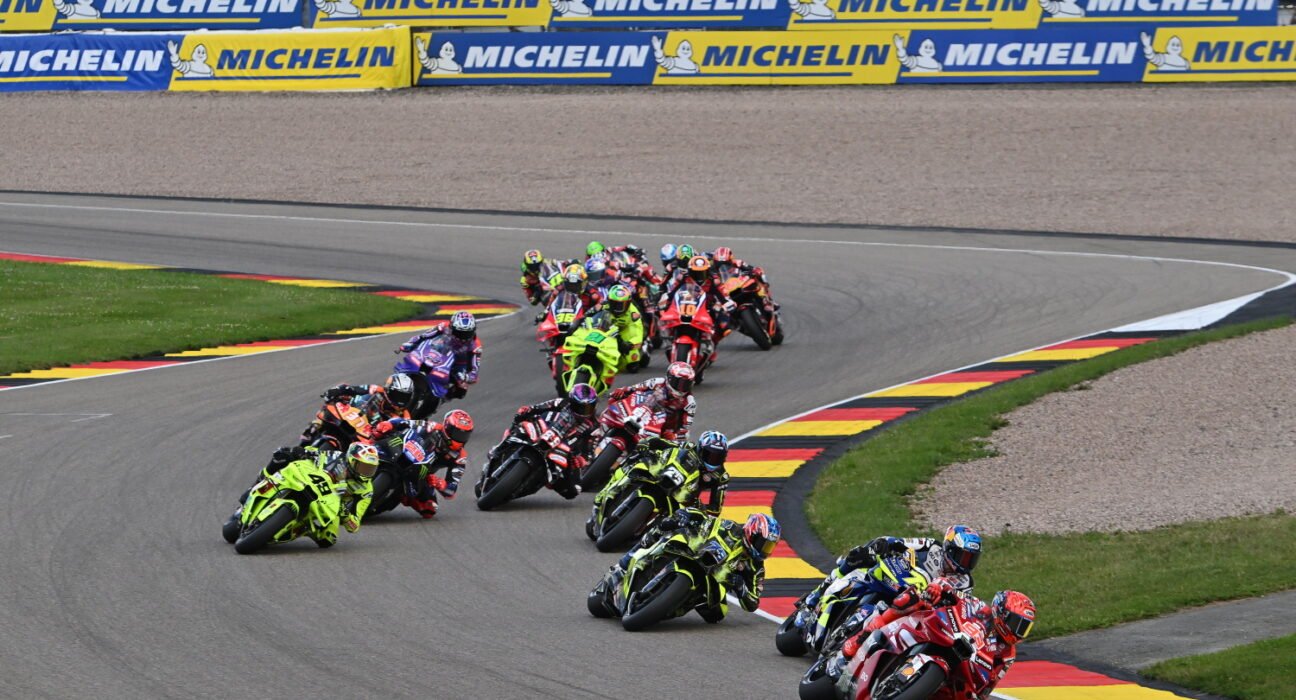
MotoGP riders react to controversial new starting grid rules affecting race dynamics and safety
The MotoGP paddock has been in the news since the introduction of two significant changes to the starting grid rules, unveiled during the Dutch Grand Prix and first implemented at the Sachsenring before the summer break. These adjustments – an increase of three meters to the distance between riders on the grid and a ban on wheelie control devices at the start of the race – have caused a wave of strong opinion from leading class riders, reflecting the safety benefits but also the changed strategic landscape in the opening moments of each race.
The wheelie control device, designed to prevent the bike from lifting the front wheel during starts and thus reduce early race incidents, was notably absent from the Dutch GP. Meanwhile, the mandatory spread between riders on the grid, a regulation that also applies to Moto2, Moto3 and MotoGP sprint races, aims to increase rider safety by reducing close-quarter collisions when the lights are off.
LCR Honda’s Diogo Moreira highlighted the complexity of the change: “It’s better for safety, no doubt. But overtaking in the first meters has definitely become harder. It affects everyone equally, so now it’s more important than ever to secure a front-row start, especially on a tight circuit like the Sachsenring.” His comments underline the strategic shift towards giving even greater priority to competency performance.
Honda HRC’s Luca Marini gave brief support: “It’s not a huge difference for me, but it’s a good change. From a safety point of view, it’s definitely the right step.”
KTM’s Pedro Acosta, known for his aggressive starts, acknowledged the safety benefits while lamenting the difficult overtaking situations: “This is the first safety rule change that really increases safety. With a good start, you can overtake those in your row at the first corner, but it is now much harder to pass riders who started in the front row. Now it is mostly about the braking zone. The main thing is that at a turn, with you There may be one or two riders, not five like before.”
Brad Binder, aboard KTM, also echoed the sentiments on the front row: “I can’t overtake as many riders as before, even with a great start. It’s now almost impossible to cross two lines, let alone one. From a safety point of view, it’s definitely the right decision. We’ll see if it’s the right program overall. It’s become very difficult to recover positions quickly.”
KTM Tech3’s Enea Bastianini emphasized the safety benefits despite the trade-off in overtaking: “The increased distance is probably positive for safety. But the opportunities for passing are definitely reduced. Considering past incidents, it is definitely safer.”
Gresini’s Alex Márquez put it bluntly: “It is quite difficult to gain position at the beginning. Without someone making a big mistake, it is almost impossible to stay with them in the first stage.”
Yamaha’s Alex Rins summarized the new reality: “It’s crazy how few chances there are to overtake quickly now. It’s definitely gotten safer.”
Yamaha’s reigning world champion, Fabio Quartararo, offered a more measured approach: “For me, it’s the same as before. We have a little more space now but it doesn’t make a big difference. If there’s more space, we try to find gaps under braking. So it doesn’t really help, but it’s not a big problem either.”
Aprilia’s George Martin praised the improved reaction margin: “The main difference is that there is more room to react when something happens. This time nothing happened in the first phase, so it’s probably a good change.”
Meanwhile, Trackhouse’s Ai Ogura felt no real difference when comparing the previous debut to the current format: “I don’t feel any difference. It feels fine to me.”
The new rules clearly prioritize safety by reducing pile-ups and crashes in the critical launch stage, but the trade-off is a more tactical and less aggressive opening lap, with reduced opportunities for overtaking. Riders unanimously acknowledged that starting position and qualifying performance have become more important than ever, as it has become increasingly difficult to gain position in the early races. Whether these rule changes will ultimately provide the desired balance between safety and racing spectacle remains to be seen, but the immediate reaction from the paddock is clear: the starting grid has been radically changed.
Don’t miss a second with the new app where you can watch live timing of MotoGP, Formula 1, NASCAR, IndyCar and much more: just press – Here (Free for all users)