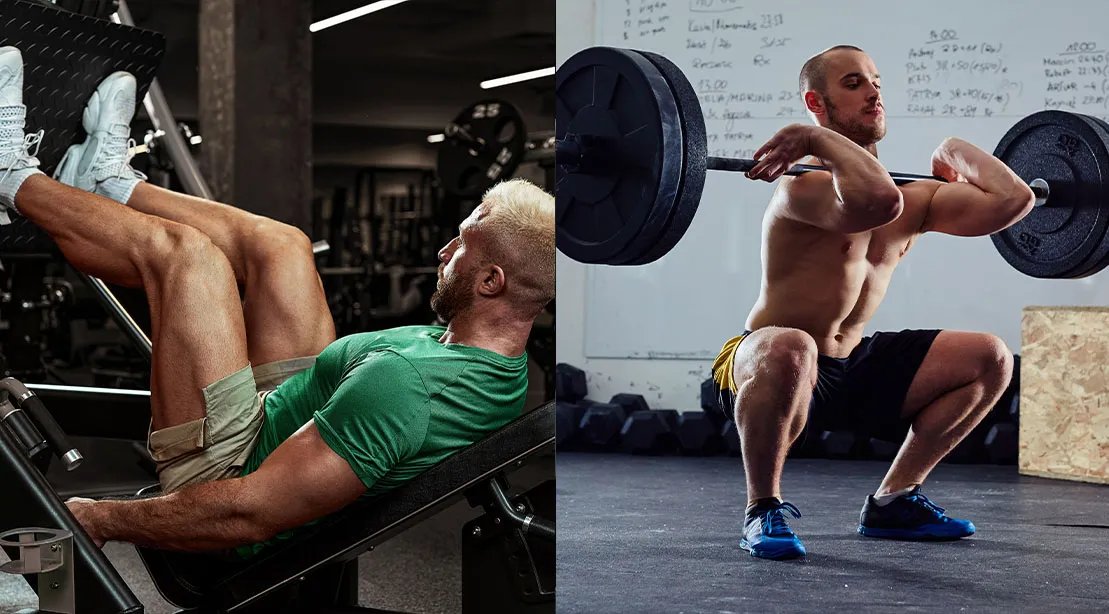
For decades, the barbell squat has been crowned as the undisputed king of leg exercises. Walk into any hardcore gym and sooner or later you’ll hear this:
“If you want big legs, you have to squat.”
However, do you? I’m not so sure. In fact, I would argue that for many beginners, squats are one of the worst choices for building your legs safely and efficiently. Not because squats are inherently bad, but because the exercise itself demands a very specific set of physical benefits, technical skills, and structural flexibility that many people do not possess.
Why aren’t some lifters built for barbell squats?
The fitness industry loves absolutes. Squats are king. Deadlifts are mandatory. Bench press determines your value as a human being. The reality is much less romantic.
Not everyone is made to sit.
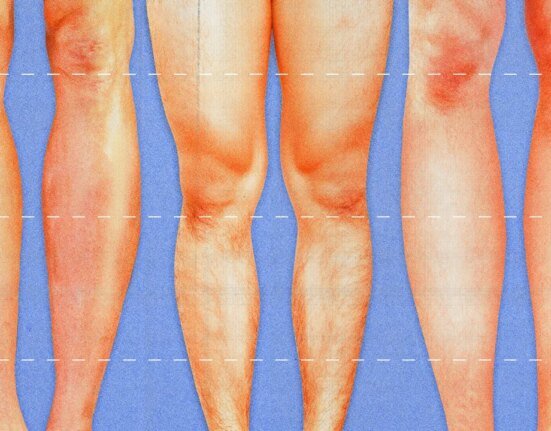
This is not an opinion. Studies examining hip joint structureLength of the femur, pelvic geometry, muscle origin and insertion points, and ankle mobility have repeatedly shown that biomechanics vary dramatically from person to person. Some are simply engineered for efficient squatting mechanics. Others fight their anatomy in every possible way.
Take two lifters of similar height and weight. One has short thighs, excellent ankle mobility and favorable hip structure. He sits in a beautiful, straight squat with perfect balance.
The other has long thighs, tight ankles, and hip mechanics that force him to bend forward excessively. His lower back immediately becomes part of the lift, whether he wants it to or not.
A person is training his legs. Another is talking with a prospective orthopedic surgeon. This is where beginners run into trouble.
Leg Press vs. Squat: Which Builds More Muscle Safely for Beginners?
Squatting requires coordination, mobility, balance, spinal stabilization, and enough experience to recognize when technique begins to deteriorate. What’s worse, this is an exercise that may be difficult to do safely. One bad rep, a loss of balance, a slight change in spinal position under heavy load, and now the lower back has become the weakest link. Then you hear a little “pop” and you’re looking at months of recovery – which is a huge shock. Unlike sore quads, the lower back has a long memory.
Compare this to the leg press. You’re sitting. Your back is supported. Balance has been removed from the equation. The movement pattern is fixed. The possibility of sudden instability is dramatically reduced. You lose weight. You push it back up with your toes. Done.
No complex motor learning required. For beginners, this is one of the things that influences whether or not you’ll return to the gym tomorrow. The leg press allows one to overload the quadriceps, glutes, and hamstrings simultaneously without learning how to stabilize the entire kinetic chain under compression. You can focus all your attention on training your legs instead of worrying about whether your lumbar spine is going to explode.
The real truth is that you can build amazing legs without doing a single barbell squat. I did it. My own structure has never supported sitting. I learned this quickly and the hard way. I can spend years forcing my body into a movement pattern it clearly dislikes, or I can focus on movements that get results without unnecessary orthopedic drama.
Why might beginners benefit more from the leg press?
I chose the second option. My legs got completely better with leg press. Now before the squat police start hyperventilating, let’s be fair. Squats absolutely have value. They teach coordination. Athleticism develops in them. They train multiple muscle groups at once. They improve movement ability. But beginners should earn their way there instead of being burdened on the first day because someone read an article from 1978 (which I probably wrote).
If one spends a few years developing leg strength with leg presses, hack squats, pendulum squats, belt squats and other modern machine variations, one can gradually experiment with squatting later on.
Still, I would strongly recommend the Smith Machine first. The fixed bar path eliminates instability while allowing the lifter to develop confidence and learn proper depth control.

What beginners need to know before squatting
And if free bar squats eventually become part of the program, injury prevention becomes important. This would probably mean: Use the proper lifting belt for heavy sets. Do not jump carelessly in the lower position. Avoid increasing your ego. Control the eccentric (downward motion). Maintain neutral spine alignment.
Understand that knee wraps are support tools, not permission slips to use weights that you have no business lifting. Most importantly, know your range of motion. There is no parallel religion. Imposing unnatural depth just because social media says “grass to grass” is how perfectly healthy joints become future problems.
The irony is that modern equipment has largely resolved this debate. Today we have pendulum squats, hack squats, belt squats, leverage machines, and countless plate-loaded designs that replicate the mechanics of squatting while dramatically reducing spinal loading.
So the question beginners should ask is “should I sit?” The better question is: “What is the safest and most effective way for me to train my legs based on my structure?”
Squats can be excellent.
Squats can also be disastrous.
For my money, if I can build world-class legs with the leg press while avoiding unnecessary wear and tear on my lower back, I’ll take the machine every time.
Call me old school.
Or maybe I’m old enough to know better — or am the only one compared to my contemporaries who hasn’t needed a hip replacement.