Source: Yamaha Motor Company Limited | Yamaha Motor has introduced GEAREV, a new electric scooter built specifically for commercial delivery and dispatch use in Japan. This model went on sale on July 17, 2026, with a dedicated version called NEWS GEAREV configured for newspaper delivery routes.
Vehicle classes and licensing
The GEAREV falls under Japan’s Genpaku Daishu classification – the country’s entry-level moped category. It can be operated with a standard moped license or a regular passenger car license, lowering the barrier to entry for commercial fleet operators who do not wish to train riders on motorcycle-specific licensing.


battery system
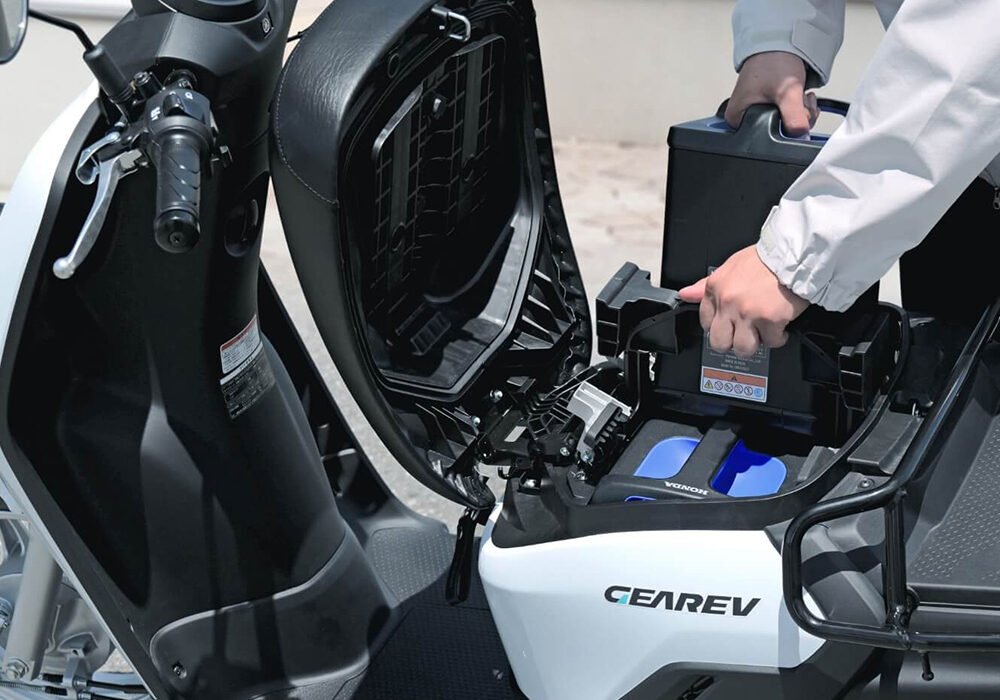
The scooter runs on two removable lithium-ion battery packs, providing a combined range of around 100 km per charge. The dual-pack layout allows riders to replace charged batteries instead of waiting for a full charge cycle – a design choice aimed at delivery operations where vehicle downtime directly translates into lost routes.

Buyers who purchase the vehicle themselves are required to separately contract battery access through battery-sharing service Gachaco. Gachaco is a joint venture backed by Honda, Yamaha, Suzuki and Kawasaki created to build a shared swap infrastructure for small-displacement electric vehicles in Japan – a rare example of direct competitors pooling resources on charging/swapping standards rather than running proprietary systems.


target market
Both GEAREV and NEWS GEAREV are positioned specifically for business use: parcel delivery, courier work and newspaper delivery. Yamaha has not indicated a consumer-facing version of the platform at this time.

Context
GEAREV joins the growing list of swappable-battery platforms emerging in the commercial light-EV segment. Honda is pitching its Mobile Power Pack e:System for B2B integration, with a wider commercial launch targeted for June 2026. Separately, Yamaha-backed ENYRING has partnered with European swap-infrastructure provider Swooby to bring battery-swap subscriptions for e-bikes to Amsterdam and Berlin. Honda and LG Energy Solutions are also piloting battery-swapping electric motorcycles in Hanoi.

The pattern points to Japanese manufacturers focusing on shared or semi-shared swap standards for light commercial EVs, rather than each brand building separate infrastructure – a strategy that mirrors what’s going on in India’s electric tuk-tuk market, where swappable batteries have increasingly gained share in commercial three-wheelers.
All photos © Yamaha Motor Co., Ltd.