When you’re in the market for a premium touring bike, there’s a certain kind of sticker shock that drives you out of the dealership. You go looking for a capable, well-equipped sport-tourer, and you come back gently directed toward a $25,000 BMW or a $27,000 Triumph. Things get even worse if you look at an American tourer, as they can average over $30,000 MSRP. Sure, these are absolutely wonderful machines, but that’s a lot of money to spend on a motorcycle. And that price increases when you tick on options, which is often the case in the open-class touring segment. Then what you may need is something that comes loaded with no extra surprises straight from the factory with a full price that stays in the ballpark of $20,000. In context, that is exactly what Kawasaki offers.
Interesting case of American touring segment
What’s coming to the fore right now is how many riders are choosing adventure-sport and sport-touring motorcycles as their go-to work machines. The appeal is very simple: They can travel, take back roads, cross states and carry stuff without asking the rider to choose one mission and leave the rest. Baggers and big-bore cruisers are beloved machines, but they have always demanded a certain kind of commitment from a rider: commitment to the pavement, to a certain riding posture, and a very specific idea of what a long ride should be like.

Adventure bike-type crossover tourers demand none of this. These are built to handle mountain switchbacks on Mondays and 400-mile interstate races on Tuesdays, often carrying a single passenger and enough luggage for a week. They’re lighter than traditional full-dress tourers, they’re dramatically more capable when the road gets rough, and increasingly, they’re available at price points that make the traditional cruiser market look expensive by comparison. Riders are voting with their wallets, and the vote is shifting toward versatility.
Kawasaki Versys 1100 SE LT makes luxury bike feel overpriced
Base price: $19,499
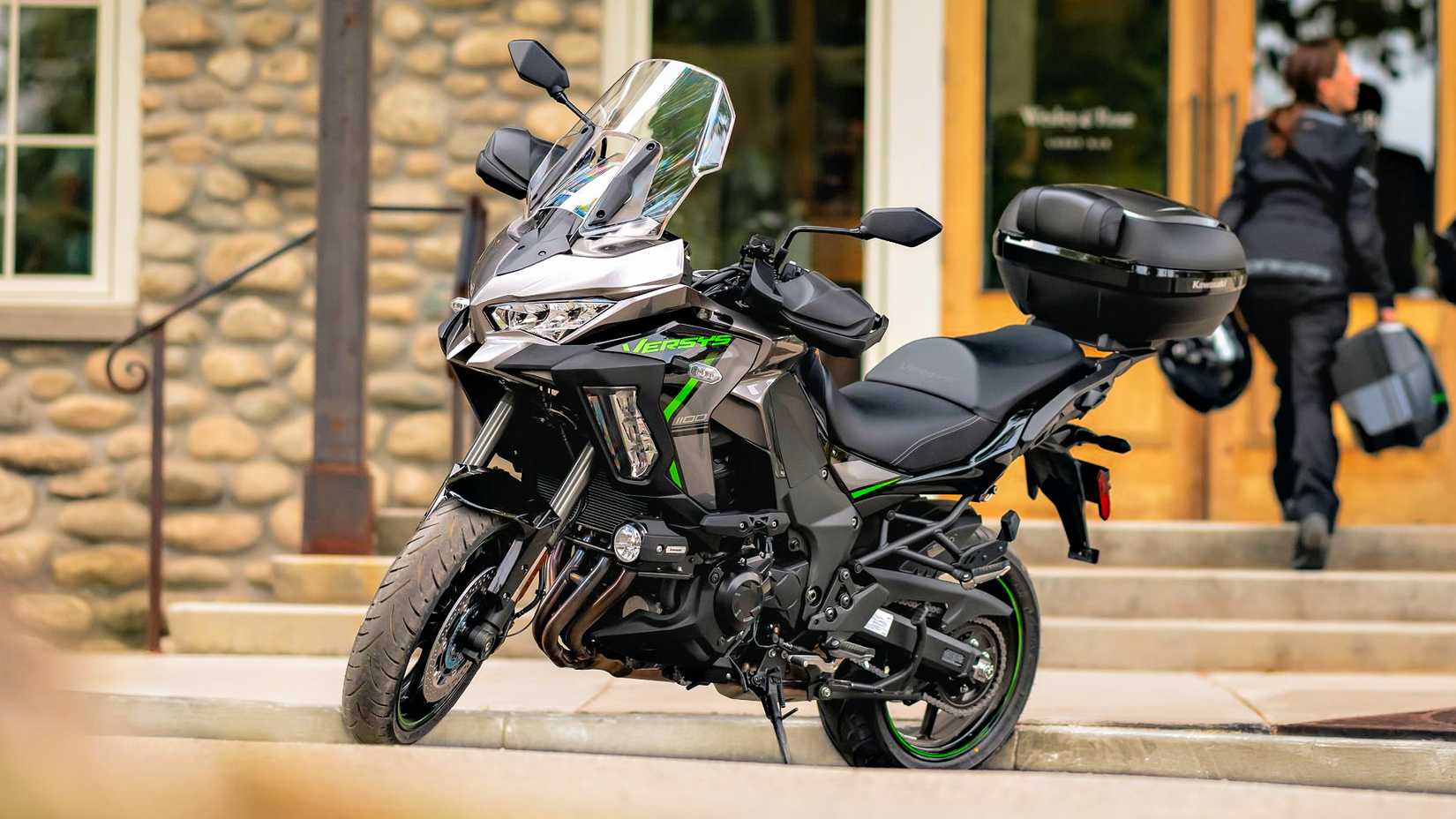
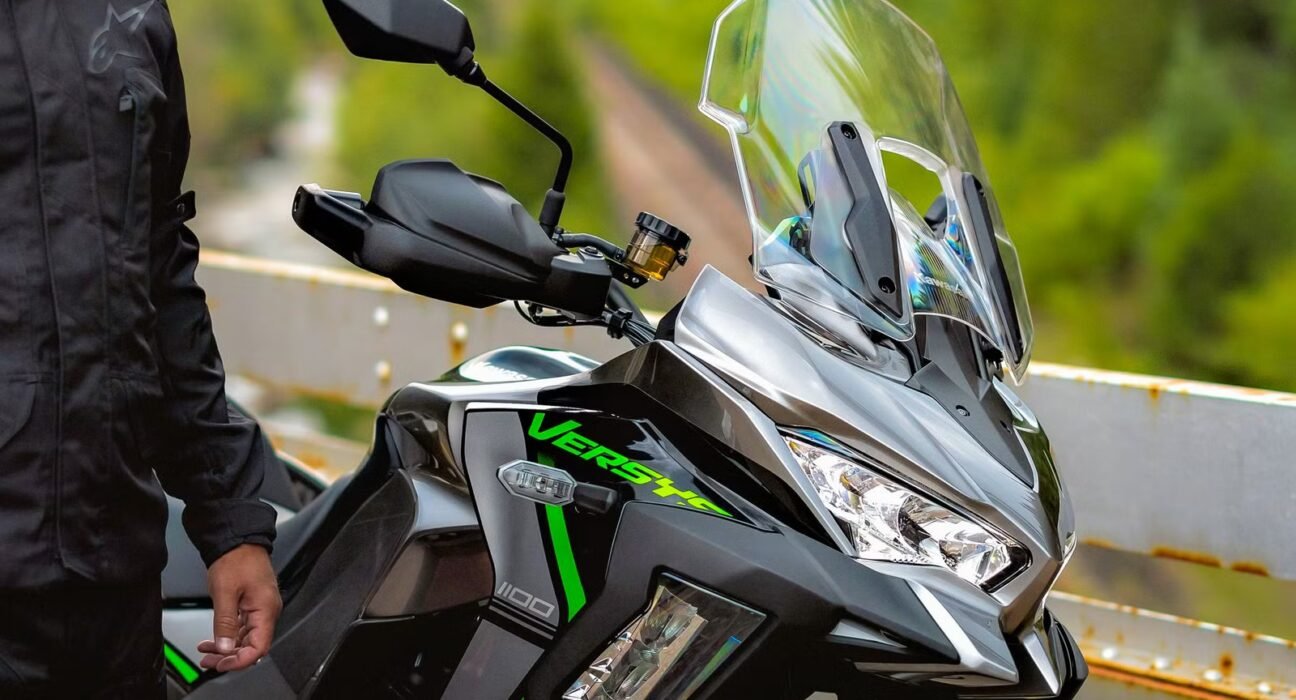
The Versys 1100 SE LT is what happens when Kawasaki decides to build a proper sport-tourer rather than just a marketing one. At $19,499, it comes with a factory-fitted electronically controlled suspension, a standard quickshifter, heated grips, hand guards, cornering lights, cruise control, and a pair of 28-liter hard saddlebags. Not available as an option, but as standard fitment. On a bike that costs less than twenty grand, this is significant value for money.
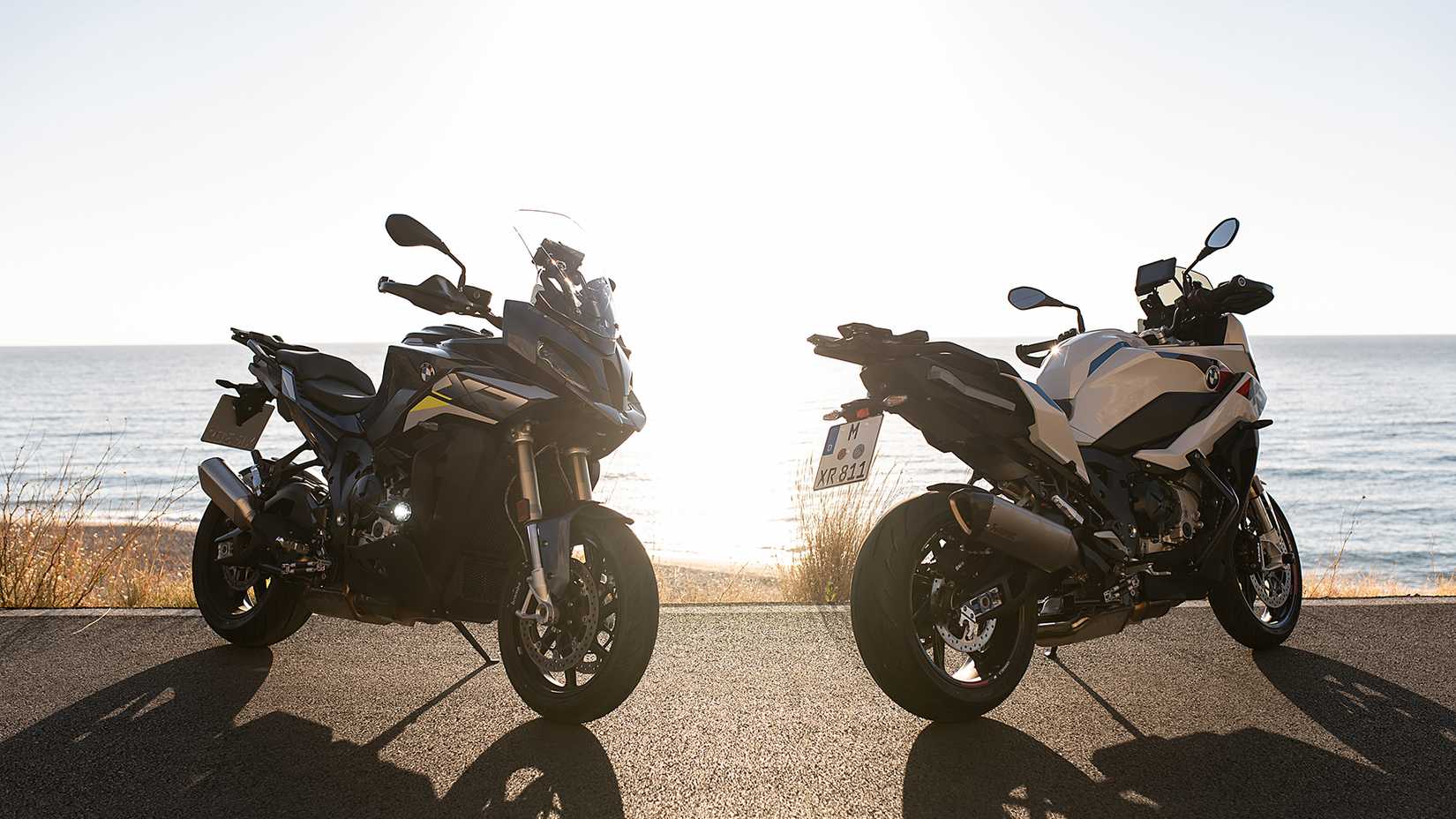
To put it in perspective: the Suzuki GSX-S1000GX+ starts at $18,749, but it does have a few drawbacks. Pricing for the Yamaha Tracer 9 starts at a more accessible $12,599, but comes without a quickshifter or cruise control. And if you want a BMW S 1000 XR of the same level as the Versys, you’re looking at north of $22,000 by the time the accessories catalog is factored in. Kawasaki doesn’t just match the competition – it pushes value in a way that its rivals rarely bother with.
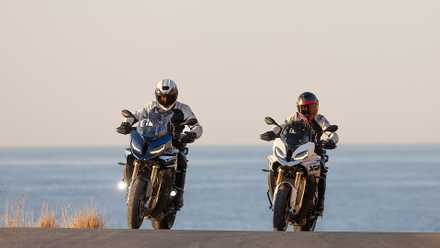

Sport-tourer that feels fast, forgiving and surprisingly practical
The S 1000 XR will attack corners with the same ability after which it will let you go back home. Even in traffic.
A new 1,099cc inline-four is the heart of the beast
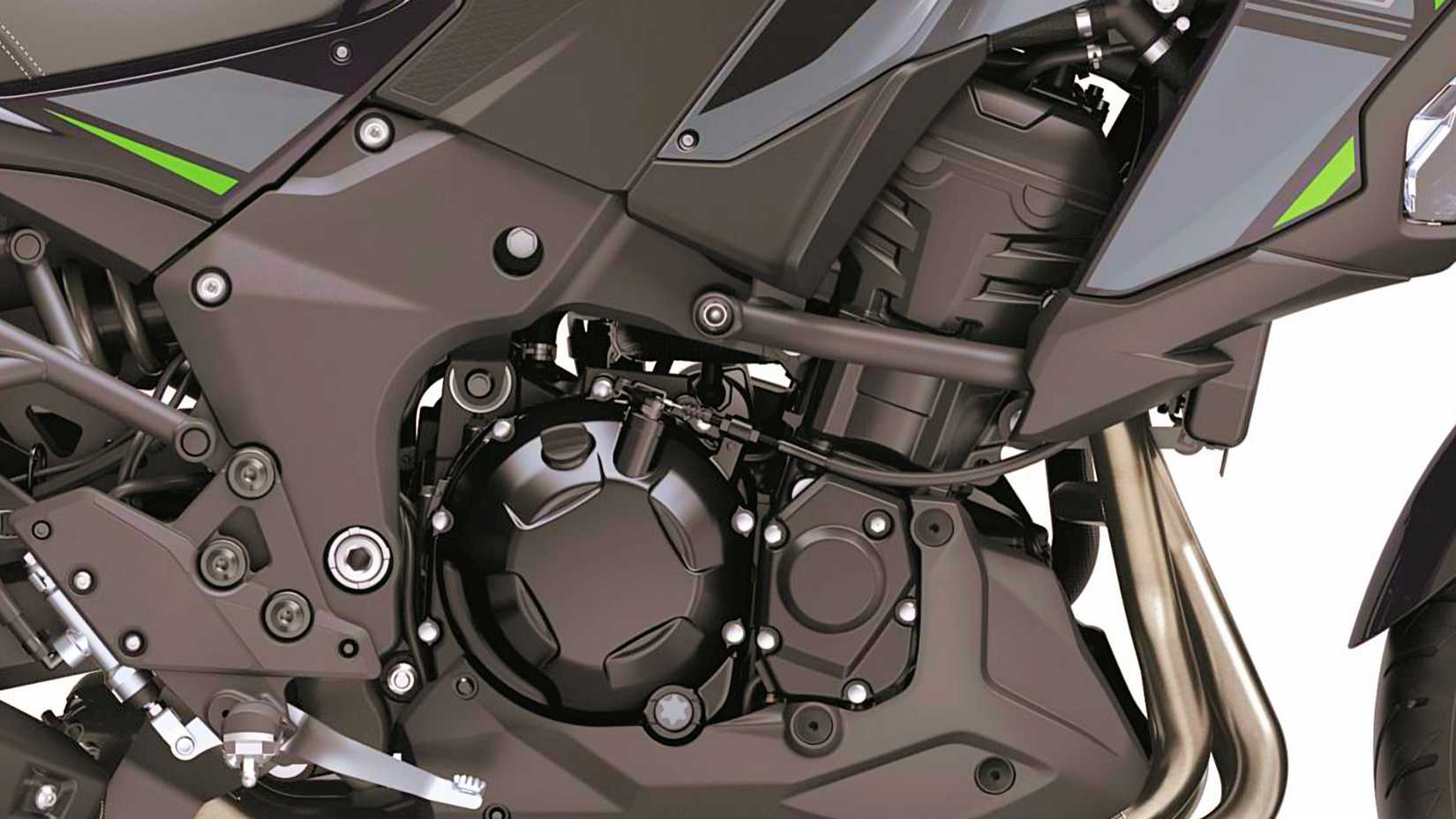
The engine powering the 2025 Kawasaki Versys 1100 SE LT is a new 1,099 cc configuration – shared with the Ninja 1100 SX – and the path to that extra displacement tells you something about Kawasaki’s intentions. Instead of simply boring out the old engine, engineers lengthened the stroke by 3 mm, redesigned the intake funnel to be 1.7 inches longer, narrowed the intake ports, and recalibrated the cam profile for a gentler, more linear lift curve. The result is 133 horsepower at 9,000 rpm and 82.5 lb-ft of torque at 7,600 rpm – a 13 hp gain over the outgoing Versys 1000 SE.
Real-world applicability compared to paper specifications

Peak power figures are one thing, but the more interesting numbers are what the engine does between 2,000 and 7,000 rpm. This is the range in which a touring rider really lives – overtaking on the highway, pulling through a long sweeper, launching from a stop with luggage. In that area, the 1,099cc inline-four is a real highlight.
A heavy flywheel contributes to smoothing out low-rpm behavior, keeping power delivery progressive rather than abrupt, and narrower intake ports push the torque curve further into the mid-range, where it’s really useful on the road. It’s also worth noting what you don’t feel on Versys. At speeds of around 65 mph, the gearbox keeps the engine right at 4,000 rpm – deep into the torque band, with almost no vibration reaching the bars or pegs. You can ride like this for hours.
Flagship tech without premium tax

Kawasaki’s Electronically Controlled Suspension (KECS) is the kind of system you’d expect to find as an add-on on a BMW S 1000 XR, and here it comes standard equipment on the $19,499 motorcycle. The suspension setup features a 43mm upside-down Showa fork up front and a Showa BFRC-lite gas-charged rear shock with a piggyback reservoir, both equipped with sensors that monitor stroke speed every millisecond. That data feeds into the KECS ECU, which cross-references input from the six-axis Bosch IMU – every 10 milliseconds – and adjusts the compression and rebound damping in real time.
Simply put, the suspension is reading the road faster than you can react, and making adjustments before a problem is even detected. Over a long day on mixed surfaces, that cool ability increases. Spring preload is also electronically adjustable directly from the cockpit, with four preset configurations – solo, solo with luggage, two-up and two-up with luggage. Converting from a single run to a loaded two-up setup takes seconds, no wrenches.
Modern cockpit with advanced safety and connectivity
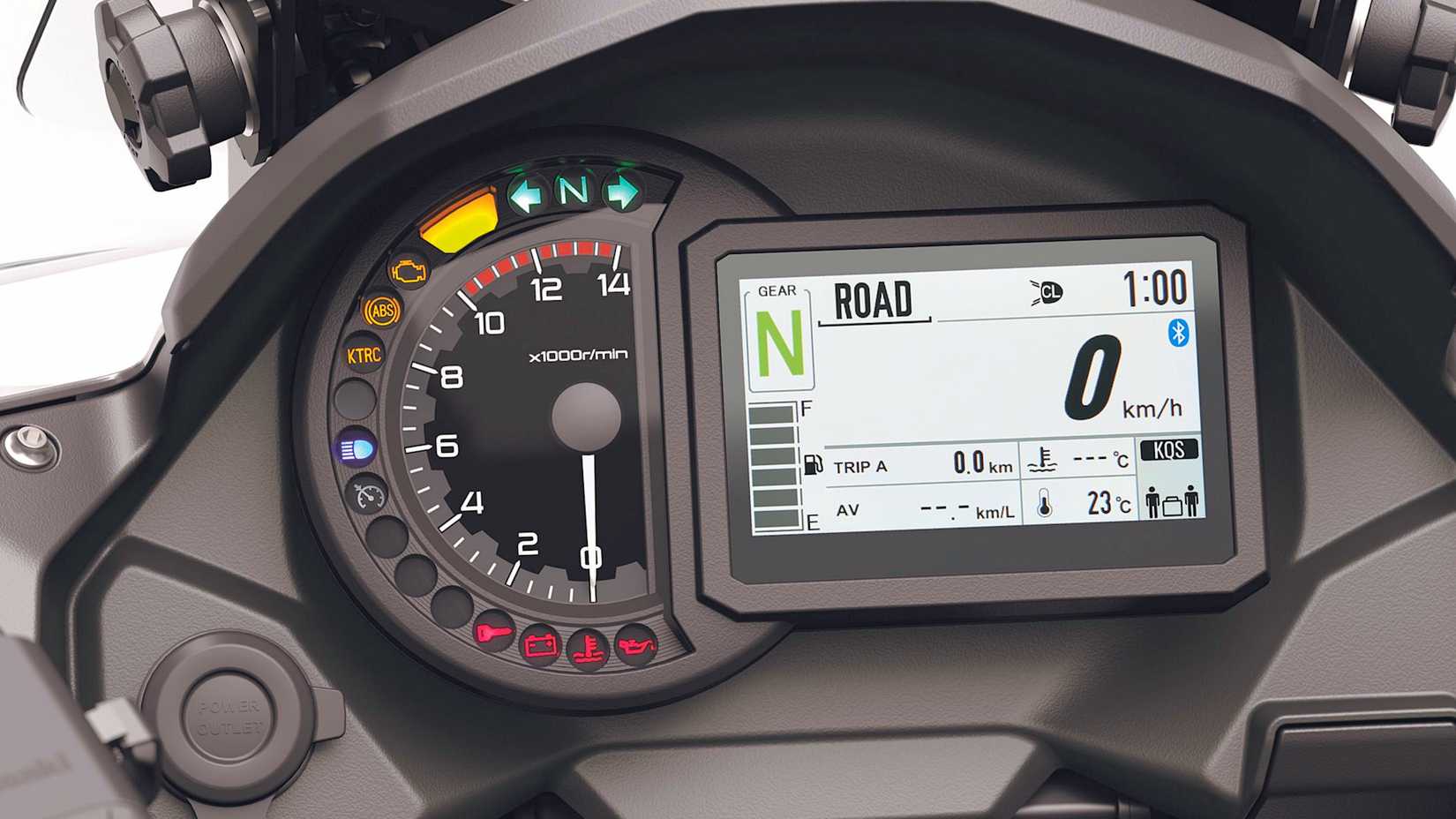
The 2025 update brought meaningful improvements elsewhere. The operating range of the quickshifter is reduced from 2,500 rpm to 1,500 rpm. It may seem like a small thing, but in practice it means seamless transitions out of parking spots, away from traffic lights and into slow city traffic. Additionally, a new handlebar-mounted USB-C port handles device charging, while Rideology app integration, updated with voice command functionality that learns the rider’s pronunciation over time, enables hands-free access to ride data, navigation and vehicle settings via Bluetooth. The full-color TFT display ties it all together.
A serious security architecture exists beneath the connectivity layer. The six-axis Bosch IMU controls a network of systems working in concert: KIBS (Kawasaki Intelligent Anti-Lock Brake System), Kawasaki Cornering Management Function (KCMF), and KTRC (Kawasaki Traction Control). You also get four riding modes – Sport, Road, Rain and a fully configurable rider mode. Leslie, dual 310 mm petal discs with radial-mount 4-piston monobloc calipers handle the front stopping power, with an upgraded 260 mm rear disc – 10 mm larger than the previous generation – at the other end.
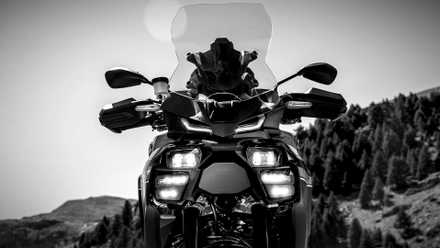
Yamaha is built for riders who want it all
This is a bike that blends sport, comfort and chaos into a single ride that can travel, tour and carve corners without breaking a sweat.
Includes luxuries like quick-release saddlebags
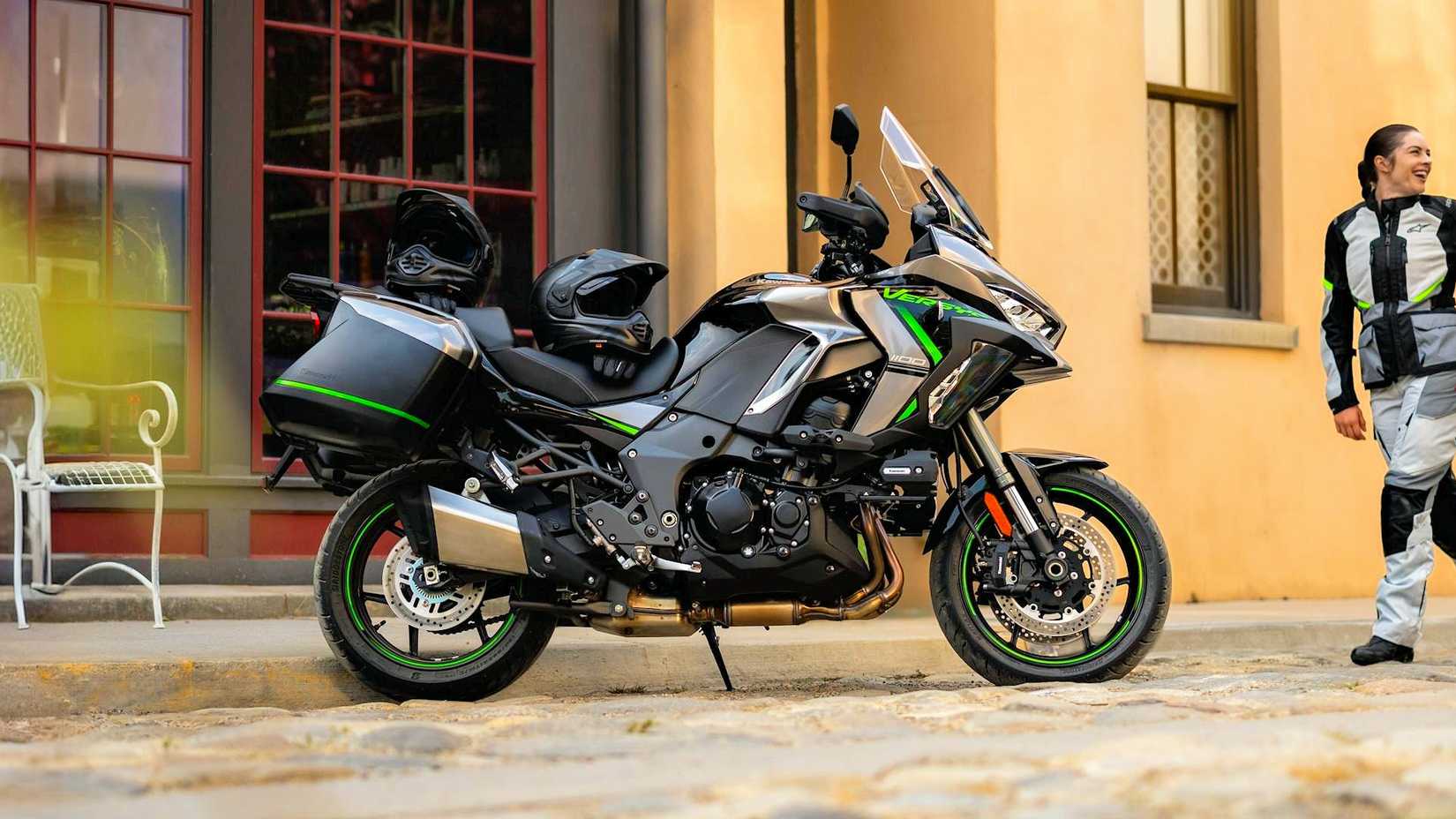
The “LT” designation on the Versys 1100 SE LT is not decorative. This means light touring, and Kawasaki has supported this by including a pair of KQR (Kawasaki Quick Release) 28-litre hard saddlebags as standard equipment. These cases use a tool-free quick-release mounting system and a one-key setup, meaning a single ignition key locks, unlocks, and releases the bag. Each case is color matched to the body and is large enough to fit a full face helmet.
The mounting system keeps them close to the bike’s centerline for a clean, integrated appearance, and the Versa can also accommodate an accessory top case if more storage is needed. Compared to comparably priced European competitors, equivalent luggage systems typically add between $800 and $1,500 in out-the-door costs.
Ergonomics and all day comfort
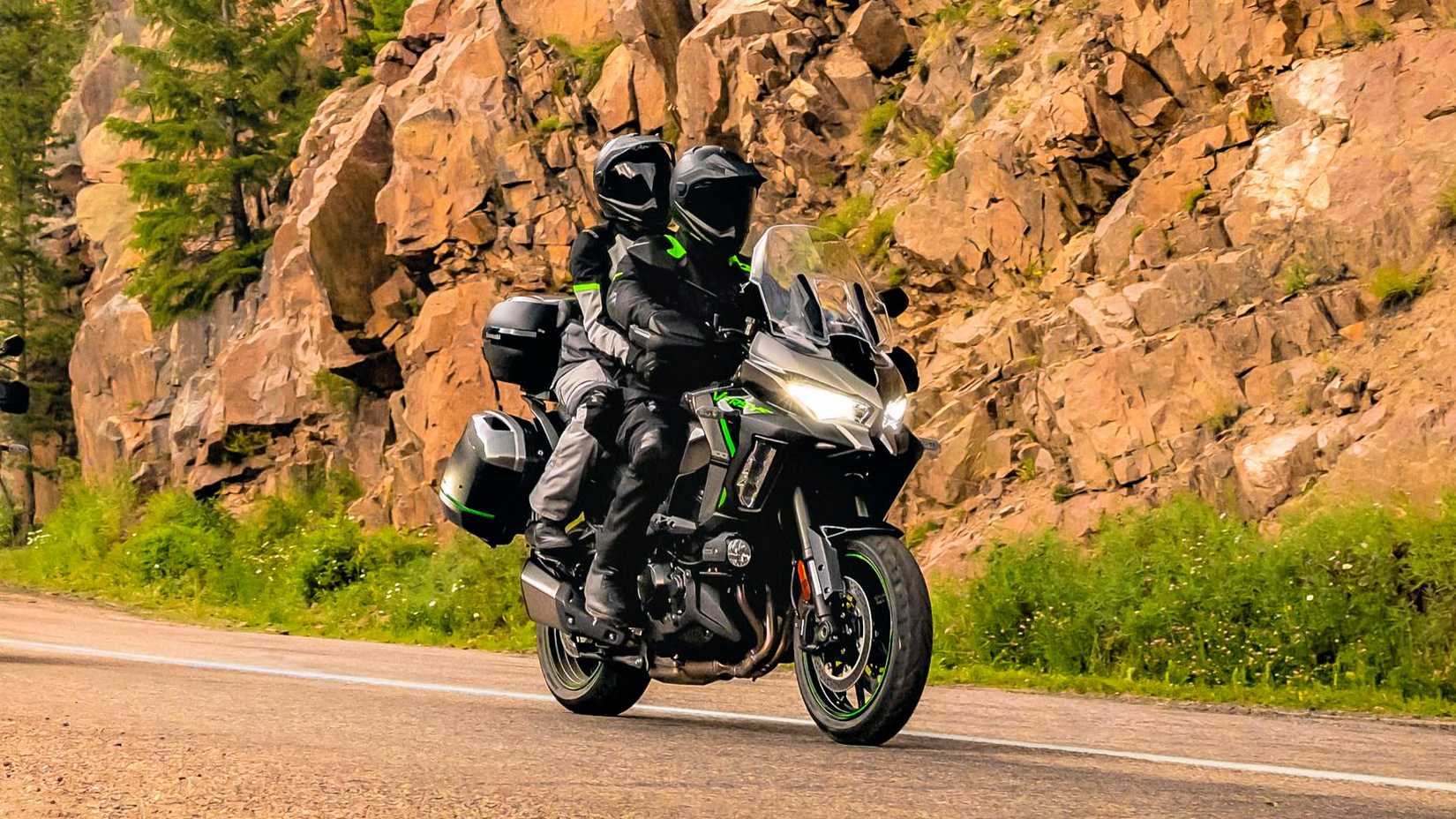
The Versys 1100 SE LT is designed for two people. The passenger seat is one of the largest in the sport-touring segment, with a combined payload capacity of 485 pounds. Standard heated grips and hand guards are included, the windscreen is fully adjustable without any tools, and Kawasaki’s ERGO-FIT system allows for customizing handlebar position and footpeg placement for different rider sizes.
However, there are also honest bargains worth accepting. Weighing in at 571 pounds of curb weight – even before the 20-pound saddlebags go on – the Versys demands some respect in parking lots and tight low-speed maneuvers. That mass in turn gives you rock-solid stability at highway speeds and a planted character in fast corners. The 59.8-inch wheelbase and wide aluminum twin-tube frame keep it composed even when the road gets rough, the crosswind whips up, or a two-up load shifts the weight to the rear.
Source: Kawasaki