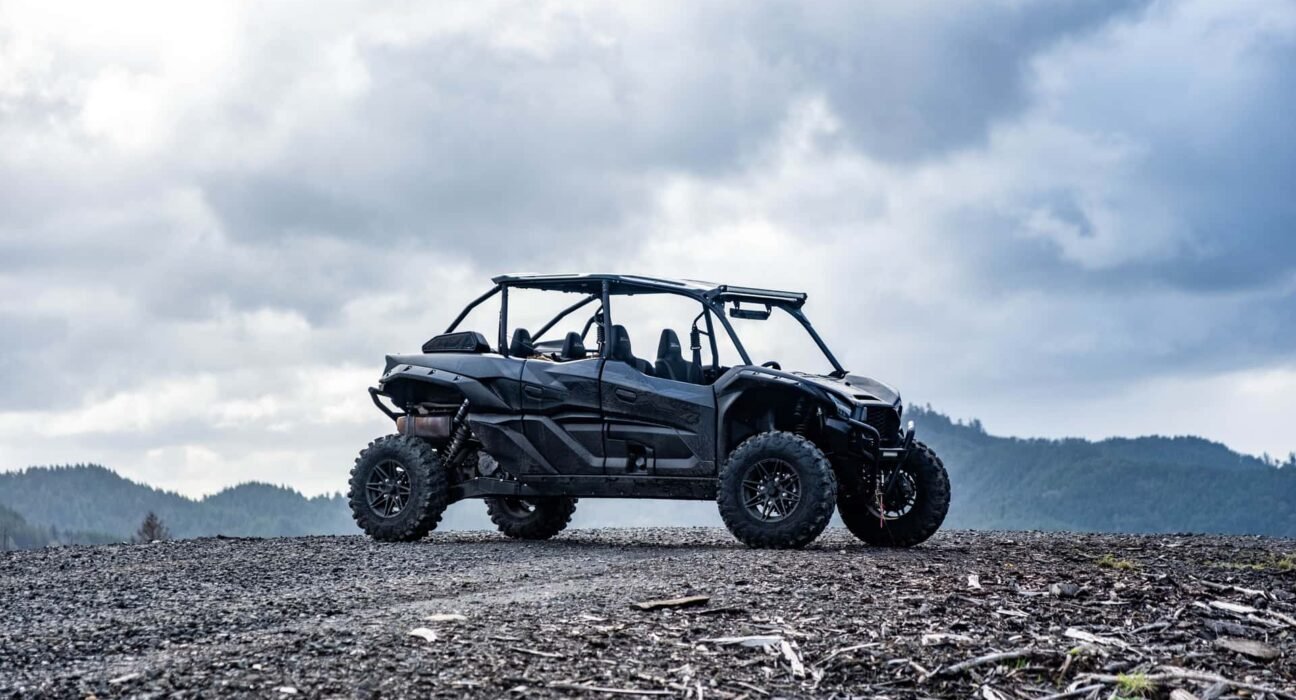
Rule may be too strong a word, but you’d be hard-pressed to find another side-by-side that covers all the bases as the Kawasaki KRX4 Blackout UTV does.
Are there more powerful machines? Absolutely. More cargo capacity? Yes. But what you get in the factory offering is adequate. I could tell you about the specifications, and they would all sound great on paper, plus the extra features Kawasaki has thrown in for the Blackout Edition. But instead, I decided to basically try it out to see how well it works in different situations.
Not only that, I had planned a hunt with a few companies, and borrowing this model would make for some great testing ground to see how well it would perform in all conditions, as the Cascade Mountains in central Oregon are rugged, jagged, and made up of copious amounts of lava rocks, cinders, and dust.
The OHV trail system here is fantastic and can take you from high lake to high lake, with plenty of hidden playgrounds of fine volcanic soil and sand everywhere. After picking up the KRX4, we took it to the mountains right next to Hoodoo Ski Area, as snowparks become great staging areas in the spring, summer, and fall as soon as most of the snow melts. Midsummer is brutal when it comes to dust, but spring and fall, when the air is cool and the ground is damp, make the ride incredible, surrounded by some active volcanoes and rock formations.
There is land for everyone.


Photos: DangerSoup
The first thing I noticed while taking a few laps around one of the sand pits was how smooth the ride was. The trails are pretty rough and I didn’t have any problems with it bouncing around or losing control. My youngest son and one of his friends were in the back seat, and despite gaining a little weight, it was a comfortable ride for them. The long wheelbase (125.8″) is almost identical to the Nissan Frontier Crew Cab with a short bed, which makes it tight on some corners of the OHV trail, but the ride is smoother than a Barry White ballad of a third date. However, the overall body length is about 4.5 feet shorter than similar pickups, which actually makes for superb ground clearance on technical terrain and for squeezing around tight spots.
Speaking of music vocalists, the advanced Hifonics stereo package on the Blackout Edition is fantastic for being OEM. It easily connects to Bluetooth and has a special dirt/dust/mud/water-free space with a USB charging port that keeps your phone safe while traversing dunes or bouncing down a trail. The 6.5-inch sub, 10-inch sub and 600-watt sub speakers get quite loud when moving around. If you want something that’ll wake up the entire campground or pout like a teenager in a Honda Civic, this isn’t really going to do it, but Barry White would look great… and there’s a back seat. They’re bucket seats with more than enough room for two adults, which are really comfortable for sitting, any other activity, and your comfort level is entirely your responsibility.
Photo by: Dangersoup
The kill was a Roosevelt elk on the Oregon Coast, just down the road from the small town of Reedsport. From where we were hunting, I could almost see Winchester Bay, which, if you’re from the West Coast, you probably know as the home of DuneFest. Being so close to the coast means the forests are incredibly dense and the chance of rain is a certainty any day of the week.
This particular hunt was a partnership with the Rocky Mountain Elk Foundation, Leupold Optics, Christensen Arms and Nosler. Elk in general are a conservation success story, and Roosevelt elk are no exception.
Numbers were really low in the late 1800s and early 1900s due to unregulated market hunting and poaching, but now, with modern efforts, including habitat management, regulated harvest, and trophy hunting (that’s right, trophy hunting is a conservation tool and it may not be what you think), Oregon now has one of the largest Roosevelt elk populations in the world. And that tradition continues, as the state’s elk herds are funded by hunting revenues, donations, and organizations like RMEF and the Oregon Hunters Association.
Combine this with the self-imposed Pittman-Roberston federal excise tax, which companies like Leupold, Nosler and Christensen Arms pay with each sale ($18.66 million for Oregon in FY 2025 and nearly $1 billion nationally), it gives states the tools to successfully manage wildlife. There are now more than 59,000 Roosevelt elk in Oregon and more than 74,000 Rocky Mountain elk in eastern Oregon.
Photos: DangerSoup
Elk in the coastal area are really good at staying hidden and somehow slip through bushes and wooded meadows without any problems, so the plan is always to catch them when they come out and feed in the morning and evening. The logging roads that descend to the peaks make great places to set up a Leupold spotting scope and see if you can find the herd roaming around.
Two more important additions to the Blackout Edition are the Warn Winch and the K-Glo Light Package. I don’t know that I have to tell you how important the winch is, but the light package is surprisingly useful. The multiple light bars front and rear are controlled by factory-installed controls, making it easy to use and with no additional mess from aftermarket installation. What’s more, since it is factory installed, it also has a factory warranty.
Being right on the seashore, the weather also becomes a bit unpredictable.
It may first be light and sunny rain until lunch, then full-blown rain by dinner time, so it’s important to pack on your rain gear and head out when the weather turns bad. By the second morning, we not only found a herd of elk, but we also managed to catch them in the open. Like most wild ungulates, they prefer to graze either at night or at first and last light. We managed to get them between a field by the river and back into the dense cover of the rainforest.
The two elk in a short time and within about a quarter mile of each other became two happy hunters and one happy guide. And a quick pack out, especially when a Kawasaki is involved.
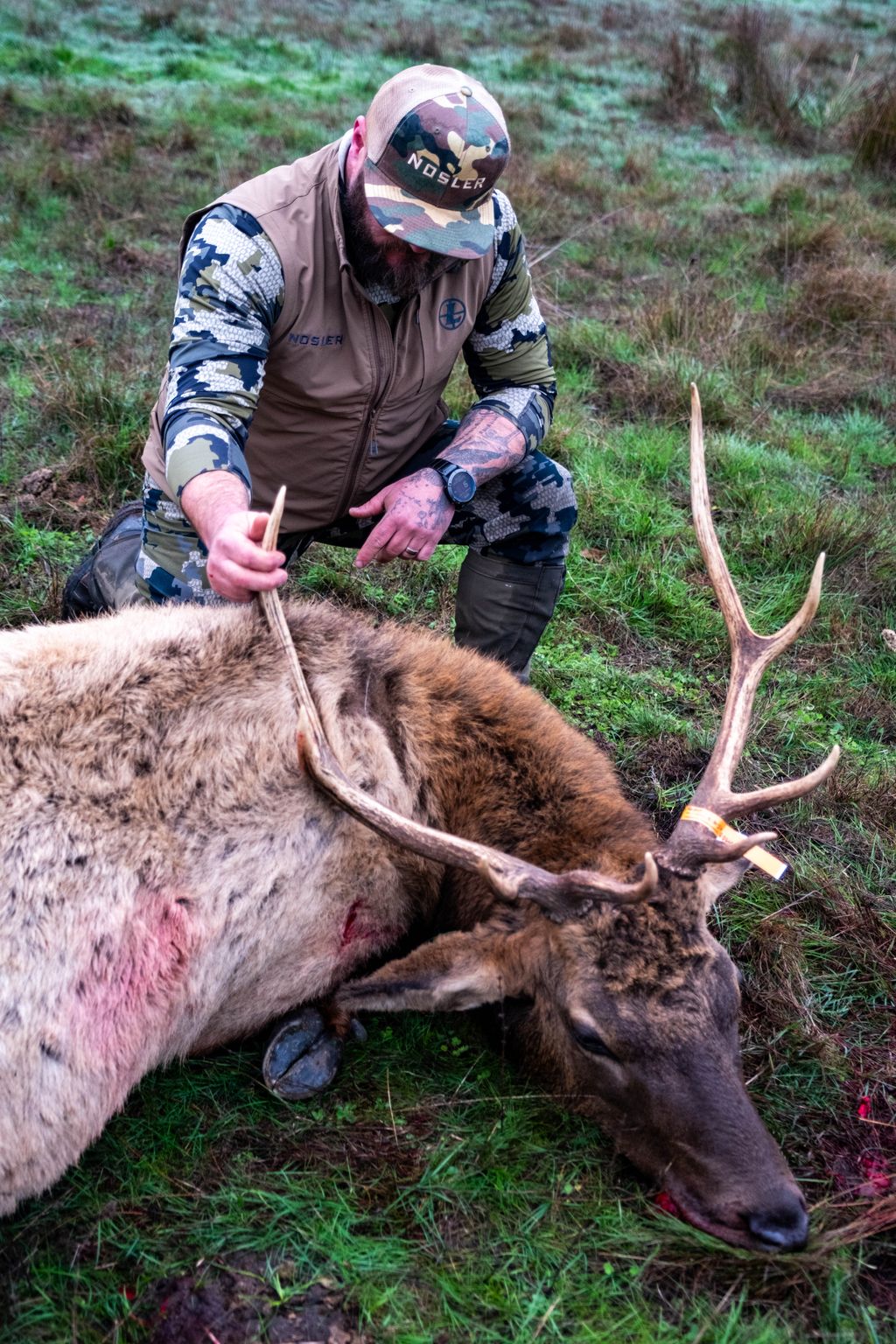
Photo by: Dangersoup
After cleaning the animals and placing them in the cooler, it was back to camp to plan where to hunt next. The herd we met that day was probably going to disappear for a short time, even if they weren’t really that scared. It’s important to remember that these animals see all the time that some of their herd gets killed by hunters, so when one of them lies down after the slightest crack of a rifle (thanks to suppressors), it’s actually not that stressful for them.
Let’s not forget the other thing that rainforests do really well… they grow mushrooms! Elk backstrap and wild chanterelle mushrooms, you’d be hard-pressed to find a better pairing at any Michelin star restaurant.
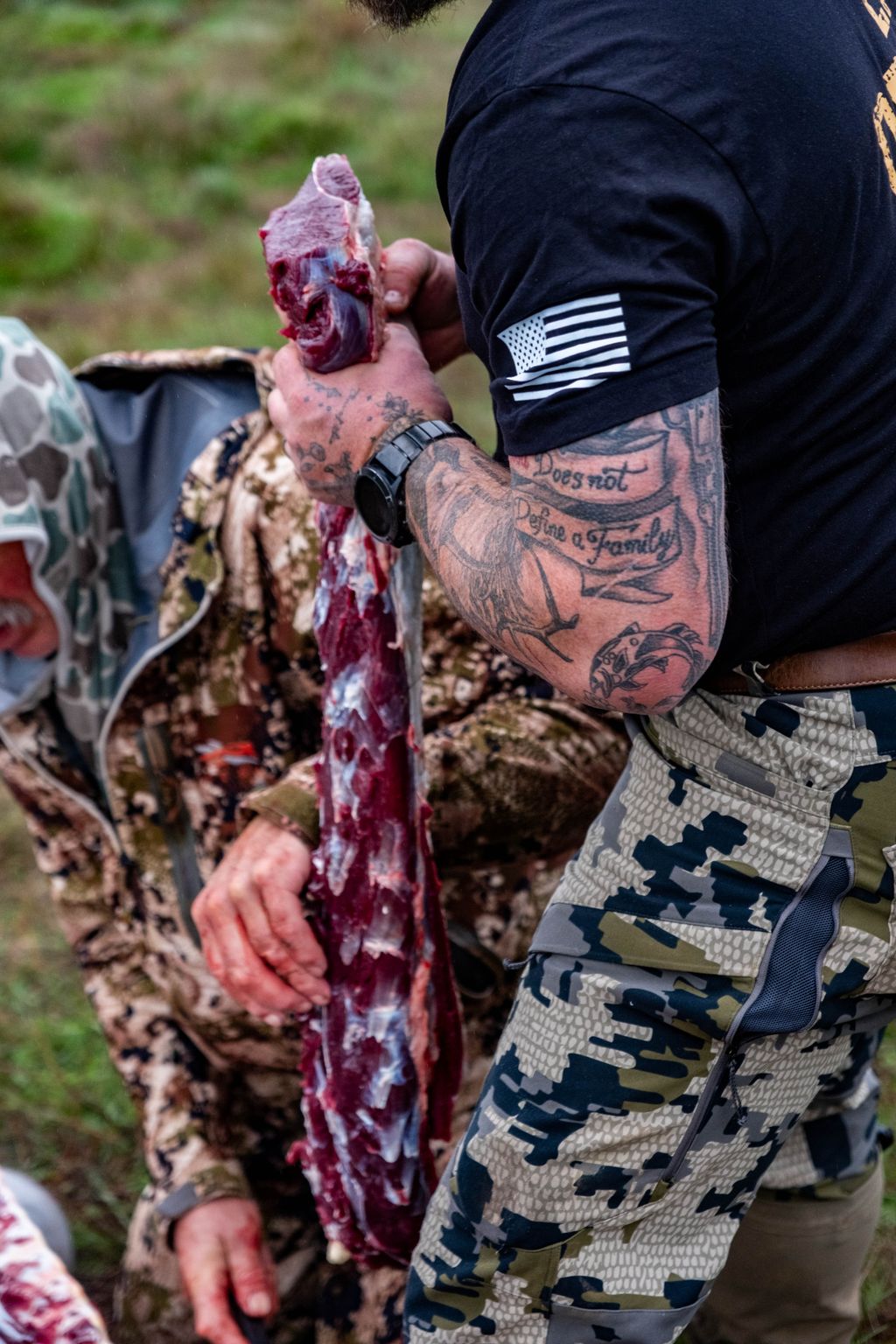
Photo by: Dangersoup
By the next evening, we had a third bull. Another property about 5 miles away, same strategy, same results. We had enough weather allowance to accomplish this in a few days. Once we got back to camp, it actually started raining, right up until we left. Ray of hope; This gave us even more opportunity to test together.
As it turns out, our guide, Jody Smith of Jody Smith Guide Service, used to race dirt bikes when he was younger, so I handed him the keys, and we went for a ride. It’s a good thing we waited until the last night for the joyride, because we eventually arrived back at camp without an ounce of dry clothes. Jody was impressed with the machine, and we were properly entertained, we had a freezer full of elk, and we never had to go out in the pouring rain again.
Every piece of gear performed flawlessly, and the Kawasaki KRX4 covered all the bases and then some.