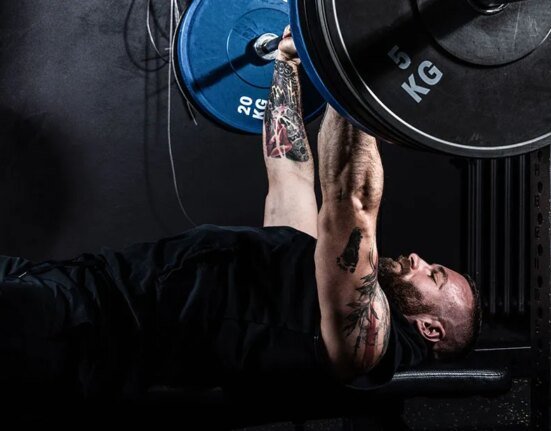
In weight rooms filled with benches, barbells, and other new-age training hardware, the pec deck rarely gets as much love as it deserves. Because the exercise is so isolation-focused, many lifters don’t take this move as seriously as other heavy barbell-based chest staples. Or they just think of it as something you throw on as a finisher after the “real work” is done.
But the peck deck is not meant to replace the bench – but rather complement it. This gives you the chance to add chest-specific volume while minimizing the involvement of the front delts and triceps.
For lifters pursuing chest development, this is foolproof. That is useful.
Like many discredited exercises, the pec deck gets no love for not looking the part. But muscle doesn’t care about your preferences. It cares about stress and effort. here’s why.
Why is the pec deck one of the most underrated chest exercises?
The pec deck is frustrating because there is no barbell to load or dumbbells to press. There’s no “it’s all you, bro” and no easy way to brag about racking up numbers. In many gyms, this is enough to get it out the gym door.
Also called “non-functional”. When do you find yourself sitting down and bringing your arms together to press your chest? The pec deck isolates the horizontal adduction and removes much of the coordination and full body stress that comes with bench and overhead pressing. Critics see it as a machine that makes pumps but nothing else.
Then there is machine bias. Some lifters hear “machine” and think “inferior.” Never mind that the machine’s fixed range of motion and increased stability means more muscle love. In their minds, if an exercise doesn’t demand balancing, grinding, or a near-death experience, it’s useless. This is a big reason why peck decks are overlooked.
4 Major Drawbacks of Peck Deck
No exercise is perfect; Many have flaws, and Peck Deck is no different
you can’t load
Lifters turn off the pec deck because you can’t load it like a bench press or overhead press, and many believe it is less effective at building muscle. Heavier automatically means better.
it is non-functional
The PEC deck is also criticized for isolating the horizontal joint. It offers no leg drive, no upper-back arch, no triceps lockout and no need for coordination of other muscles. For lifters who judge the value of a lift based on how much muscle it engages, the pec deck may seem limiting.
Machines are looked down upon
There is also an inherent bias against machines. For some lifters, if the path is fixed and you are stable, the exercise is over. Never mind that less stability can sometimes mean more muscle. The pec deck is ignored not because it fails to train the chest, but because it fails the gym’s mock-toughness test.
This can cause irritation in the front shoulder
The pec deck is not automatically bad for the anterior shoulder, but it can become a problem if you load it too much, or force a stretch for which your shoulders are not prepared. For some lifters, that deep-end position can irritate the anterior shoulder or create a pinching sensation. However, if it causes persistent pain, it is better to lower the range, lighten the load, or change it to a better tolerated exercise.
What the research says about pec decks and muscle growth
Research comparing free weights and machines Concluded that when programs are matched as closely as possible for volume and intensity, machines can be just as effective for muscle hypertrophy. 2023 research by Haugen and colleagues found no significant differences in hypertrophy between free-weight and machine-based training in a direct comparison. This matters here because it challenges the lazy idea that deck decks are somehow inferior because they are machine-based. For muscle growth, the question is whether the target muscle receives adequate quality, tension, effort, and volume over time.
Advantages of peck deck machine
The next time you see a peck deck unattended and inaccessible, know why you use it.
direct chest isolation
Stressful exercises spread the workload. The triceps and front delts assist, sometimes helping until the pecs end up playing second fiddle. Peck Deck changes that. This allows you to train horizontal adduction – the work of the pecs – without stealing the performance of other muscles.
chest volume
Adding more pressurized volume to build the chest can be problematic as recovery becomes an issue. But the pec deck lets you add chest-specific volume without the same systemic fatigue. This makes it a smart choice for lifters who want more pec work without turning every chest session into a bench fest.
It improves mind-muscle connection
Many lifters have difficulty feeling their chest during the press. The pec deck makes the mind-muscle connection easier because you can slow down, control the reps, and feel the pecs shorten and tighten. For overgrowth, this is valuable, because if you can feel it, you can grow it.
stability can be a good thing
The stability of the machine is considered a weakness, yet it is one of the greatest features of Peck Deck. Since you’re not expending as much energy stabilizing the load, you can focus more on the muscles being worked. This makes the pec deck ideal for chest finishers, high-rep sets or accessory work, without cutting into your recovery.
Who should and who should not use a peck deck machine?
The Pecs Deck is for lifters who prioritize chest hypertrophy and want a more direct way to train the pecs. This makes more sense for bodybuilders, physique-focused lifters, or anyone who struggles to feel their chest when pressing.
This is a great option for lifters who want to increase chest volume without putting too much stress on already tired shoulders, elbows and triceps. Machine-based training can be as effective for hypertrophy as free weights when effort and volume are matched.
Who should leave it?
Lifters whose only goal is maximum pressing power can probably skip the pec deck. The pec deck can help build muscle, but it will not replace heavy benching, incline work or other compound presses for strength.
It is also a poor choice for people who mostly feel movement in their front shoulder. Poor setup and excessive stretching can transfer stress away from the peak toward the anterior shoulder.
Finally, if you already get plenty of chest stimulation from pressing and don’t need more volume, you don’t need to force pec decks into your week. This isn’t a must-have lift, but it can be a smart choice for lifters aiming for more chest development with less drama.
Is Peck Deck Right for You?
The pec deck falls into the low-risk, high-reward category, especially when the goal is hypertrophy. There are risks, but they are easy to manage. Poor setup, excessive speed, and chest tension rather than chasing limits can all be corrected.
The rewards are real. The pec deck trains the pecs through horizontal insertion, making it easy to add chest-specific volume and allowing many lifters to maintain quality tension on the target muscle without straining the triceps or front delts.
The decision is simple: If your goal is chest development, the pec deck offers significant gain with relatively little downside. This is not a strength exercise, nor is it a replacement for pressing, but it is not required. It’s a muscle-building exercise, and based on that standard, the reward usually outweighs the risk.
Does a peck deck make a bigger trunk?
Peck deck is not useless.
What it does well is train the chest in isolation, maintain upright tension, and let you add volume without the same fatigue cost as heavy pressing. For overgrowth, that’s gold.
Yes, it is machine based. Yes, it looks less fancier than grinding out a heavy set of presses. But muscles don’t care about appearance. It cares about tension, effort and constant repetition. The pec deck may not win style points, but chest growth is no popularity contest.
If your goal is to build your chest, improve pec engagement, and get more quality volume with less wear and tear, the pec deck earns its place.