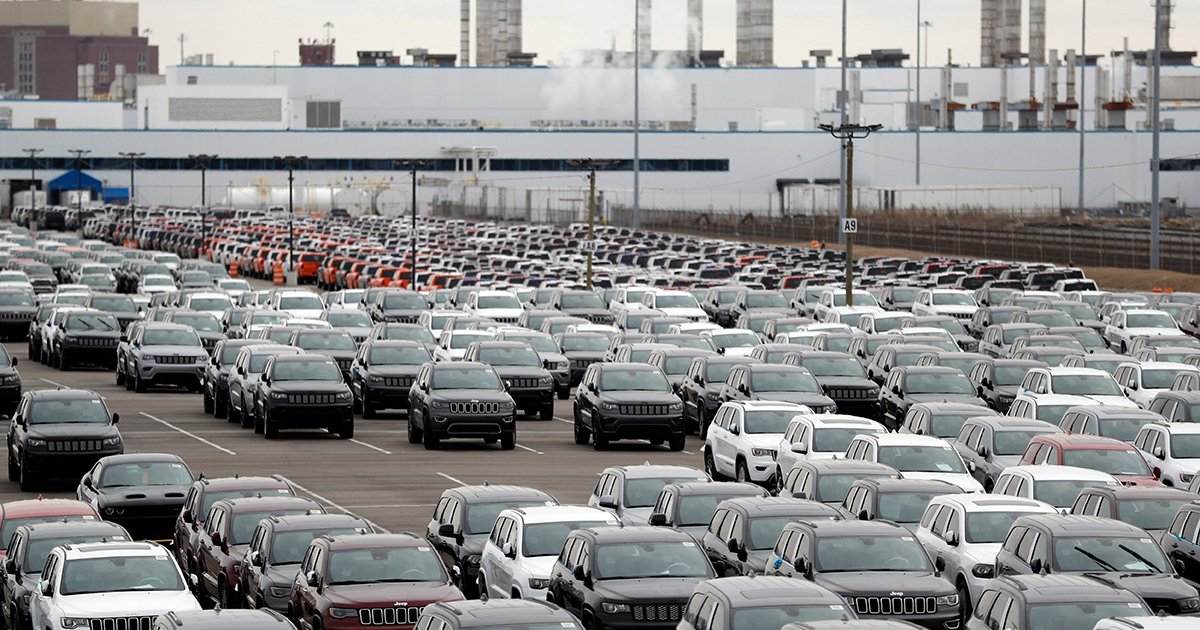
Jeep vehicles are parked outside the Jefferson North Assembly Plant in Detroit. (Carlos Osorio/AP/File)
key takeaways:
- US wholesale inflation fell 0.3% in June, the biggest monthly decline since April 2025, as gasoline prices fell 12% and food prices also declined.
- The report matters because annual producer inflation slowed to 5.5% from 6% in May and came in below economists’ expectations.
- Energy prices have risen since the US announced a blockade of the Strait of Hormuz, while Fed Chairman Kevin Wersh said the central bank was focusing on inflation.
WASHINGTON – U.S. wholesale inflation declined from May to June on the back of falling energy prices, but rising hostilities with Iran are clouding prospects.
The Labor Department reported on July 15 that its producer price index – which captures inflation before it reaches consumers – fell 0.3% from May, the biggest decline since April 2025 and a reversal from a 0.6% rise a month earlier. Compared with a year earlier, wholesale prices rose 5.5% in June, slower than a 6% increase a month earlier.
Gasoline prices fell 12% in June but are still up nearly 43% from June 2025, fueled by the Iran war. Food prices also declined in June.
Excluding volatile food and energy prices, so-called core wholesale prices were up 4.7% from June 2025 and 0.2% from May.
Wholesale inflation was lower than economists had forecast.
The producer prices report came a day after the Labor Department said consumer prices fell 0.4% from May to June, the largest monthly decline in four years. Compared with a year earlier, they were up 3.5% last month, down from 4.2% in May. Inflation data in June were better than forecasters expected, reducing pressure on the Federal Reserve to raise interest rates this year. Still, inflation is running above the Fed’s 2% target.
PPI for final demand in June declined by 0.3%; 1.4% decline in goods, 0.2% growth in services #BLSData https://t.co/pShf0kKwpi
– BLS-Labor Statistics (@BLS_gov) 15 July 2026
In his first appearance before Congress since becoming Fed chair on May 22, Kevin Wersh said on July 14 that the central bank “has no tolerance for persistently rising inflation.”
Energy prices have surged since President Donald Trump on July 13 announced a new blockade of the Strait of Hormuz, through which a fifth of the world’s oil and natural gas passes. Many Americans are already frustrated by the high cost of living, hurting Trump’s Republican Party prospects in the November midterm elections.
Wholesale prices can provide an early indication of where consumer inflation may be headed. Economists also keep an eye on it because some of its components, particularly healthcare and financial services, flow into the Fed’s favorite inflation gauge – the personal consumption expenditure, or PCE, index.