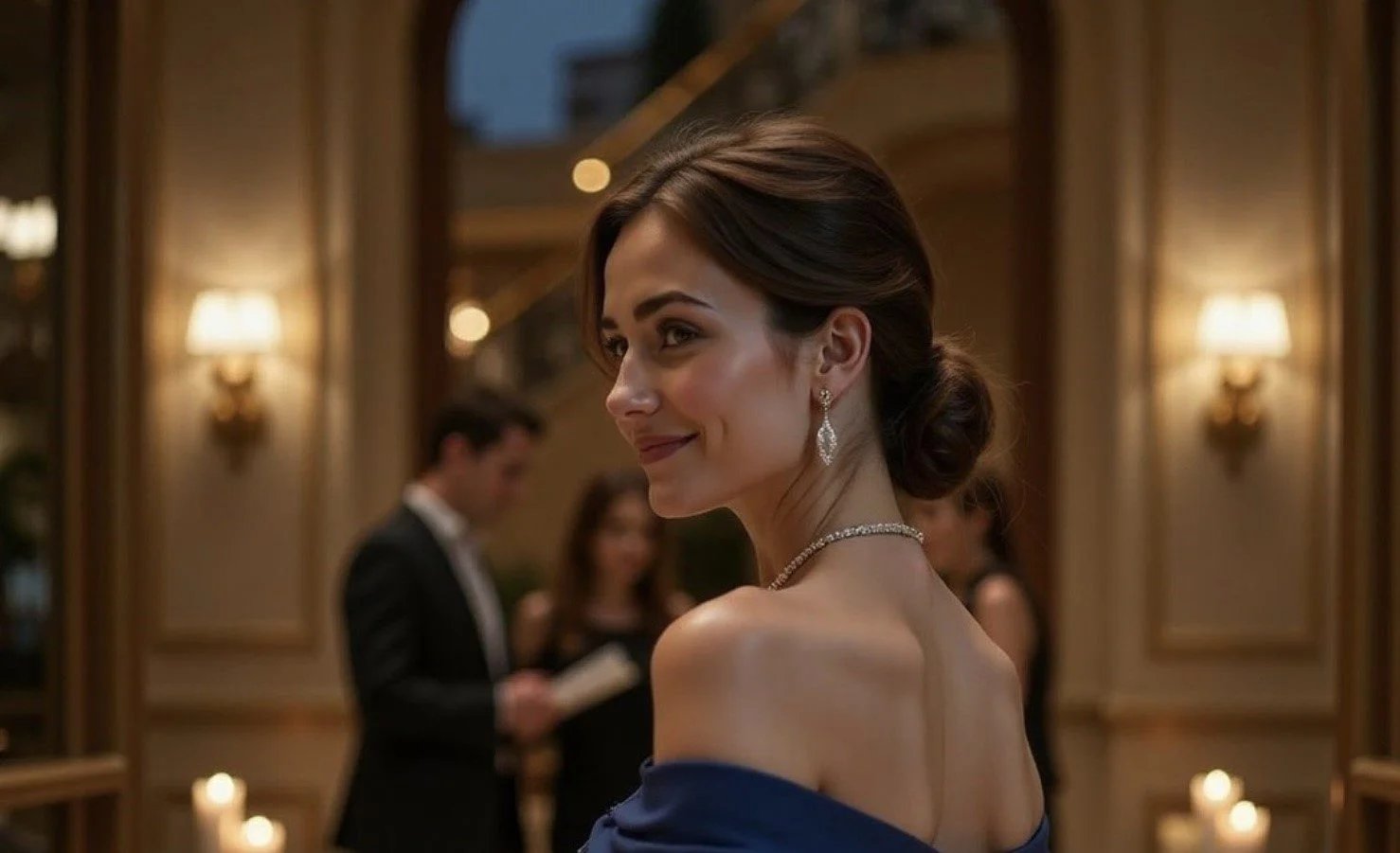
Crystal Beaumont isn’t just another AI influencer.
She is part of a new generation of fictional personalities that can interact, form relationships and redefine the meaning of celebrity in the age of artificial intelligence.
He doesn’t exist. So why is everyone following him?
For decades, the influence has been real people.
Film stars sold luxury watches. Athletes launch fashion brands. Entrepreneurs created global businesses. Social media creators have turned carefully crafted lifestyles into billion-dollar empires, inviting millions of followers into their world, one post at a time.
Artificial intelligence is starting to rewrite that formula.
meet Crystal Beaumont.
She is not an actress. She didn’t walk red carpets or star in any blockbuster movies. He doesn’t exist in the traditional sense at all. Yet she’s already building a following online, sharing glimpses of her glamorous life filled with rare diamonds, private jets, exclusive celebrations and impeccable style.
However, unlike previous generations of virtual influencers, Crystal isn’t just another digital face posting polished photos.
She talks back.
Followers can interact with her, ask questions, get personalized responses, and watch her personality evolve over time. The result feels less like following a fictional character and more like knowing someone.
This is an early glimpse of what could become one of the most fascinating frontiers of artificial intelligence: characters that not only appear inside stories, but live on long after the story ends.
From virtual influencers to AI personalities
Virtual influencers are nothing new.
Over the past decade, fashion brands, entertainment companies and luxury labels have experimented with computer-generated personalities to front campaigns, appear in advertising and build social media audiences. While visually impressive, most remain carefully worded marketing tools.
Their posts are written in advance. His personality rarely develops. His interaction with followers is limited.
Crystal Beaumont represents something completely different.
Created as the AI-powered hero of diamond jewels matchGFAL’s upcoming mobile game exists both inside and outside of Crystal Game’s universe. Long before players can experience her story, she’s already living on Instagram, sharing moments from her glamorous life, responding to comments and developing relationships with followers as if she were a real person.
Instead of just promoting a game, she’s inviting viewers into an ongoing story.
One day she is attending a special function. Next she’s discussing a rare diamond, sharing travel recommendations or reflecting on life as the heir to one of the world’s most prestigious jewelry empires.
Each conversation adds another chapter to his story.
the character who answers
Perhaps the most attractive aspect of Crystal isn’t what she posts — it’s how she communicates.
Ask her where she’s traveling next and she’ll answer.
Comment on one of her outfits and she’ll respond.
Start a conversation about luxury, jewellery, fashion or her family’s heritage, and she’ll engage naturally rather than repeating scripted promotional copy.
The experience feels surprisingly authentic.
For generations, audiences have formed emotional connections with fictional characters through novels, films, and television. However, those relationships always had limits.
When the story ended, the conversation also ended.
Artificial intelligence changes that.
Characters like Crystal can continue to exist long after the credits roll. They can remember conversations, develop personalities over time and be active every day, building communities in ways fictional characters never could before.
The audience is no longer just consuming the story.
They are attending a.

Luxury’s latest storytelling tool
Luxury has always been based on aspiration.
Consumers rarely buy a watch, handbag or diamond solely because of its craftsmanship. They invest in the heritage, uniqueness, identity and stories associated with those products.
For decades, brands have relied on celebrities, supermodels, and ambassadors to tell those stories.
Artificial intelligence offers another possibility.
Instead of borrowing someone else’s fame, brands can create completely original personalities whose world, history, and values are designed from the ground up.
inside the diamond jewels match Universe, Crystal Beaumont is the sophisticated heir to a renowned jewelery dynasty. Outside of the game, he is an AI-powered personality capable of introducing viewers to that world through conversation, storytelling, and daily interactions.
Instead of waiting for launch day, followers begin to form a relationship with the character months in advance.
It’s less like advertising and more like world-building.
When intellectual property comes to life
Entertainment has always created unforgettable characters.
James Bond.
Lara Croft.
Sherlock Holmes.
Harry Potter.
One thing they all have in common is that audiences can only watch them again when a new book, movie, or game comes out.
Artificial intelligence removes that limitation.
Now characters do not disappear between stories.
They can comment on current events, share moments from their daily lives, answer fan questions and continue to grow with their audience.
In many ways, they are becoming intellectual property with a vibrant social presence.
This is a remarkable opportunity for entertainment companies.
For the audience, this creates a relationship that feels less like fans and more like friendship.

more than marketing
It’s easy to dismiss AI personas as just another clever marketing tactic.
This would ignore what is actually happening.
Crystal Beaumont isn’t just promoting a mobile game.
She’s testing a whole new form of entertainment.
Where fictional personalities exist independently of the stories that feature them.
Where the audience can build a relationship with the characters instead of just watching them.
The implications of this extend far beyond gaming.
Fashion houses can introduce AI designers who discuss upcoming collections.
Luxury hotels can create digital concierges with distinct personalities.
Automotive brands can develop imaginary ambassadors who will stay with customers throughout the course of ownership.
Film studios may allow beloved characters to remain active long after their final scene.
Story telling should not stop when the story ends.
future of impact
Artificial intelligence has already changed the way we discover, create, and communicate.
Its next revolution may be far more personal.
It could redefine the relationships we build with the imaginary worlds we love.
Crystal Beaumont offers an early glimpse of that future.
Whether she’s unveiling a breathtaking diamond collection, attending a fancy event or chatting with followers over coffee, she represents something much bigger than a single mobile game. She offers a preview of a world where influence is no longer limited to real people and where some of the most recognizable celebrities of tomorrow may be entirely fictional.
For over a century, audiences have fallen in love with fictional characters.
The only limitation was that those characters eventually disappeared when the story ended.
Artificial intelligence may have removed that last hurdle.
The next generation of celebrities may not be actors, athletes or influencers.
They may be characters who never leave the stage.