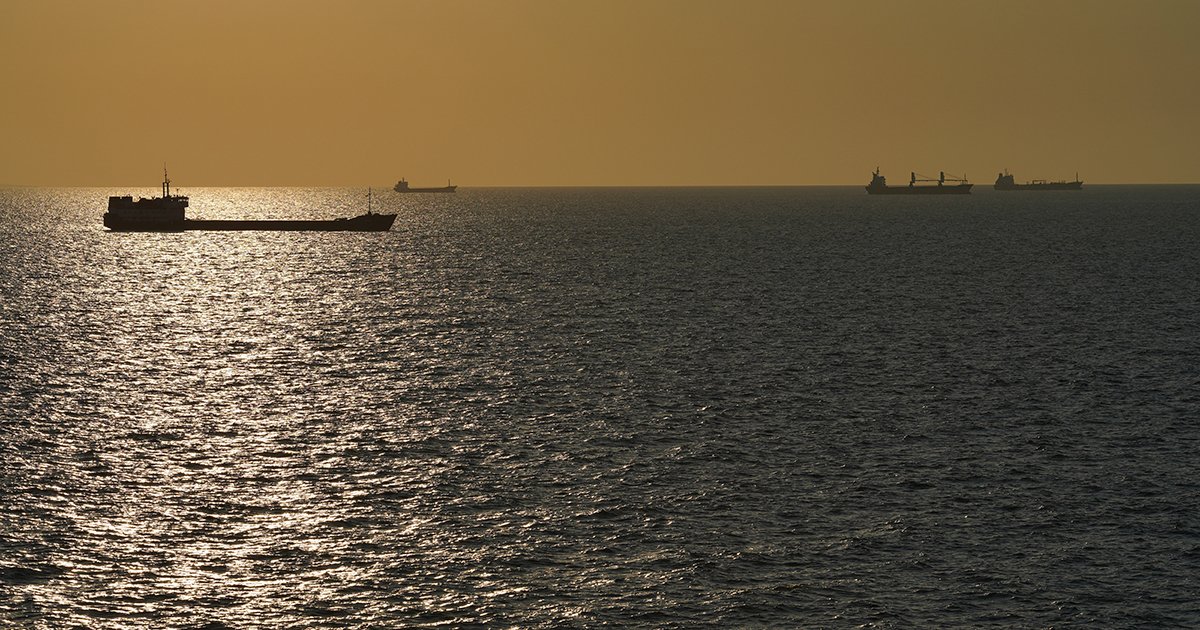
Strait of Hormuz. (Andrea Campanu/Bloomberg via Getty Images)
key takeaways:
- The US reinstated a naval blockade on Iranian shipping through the Strait of Hormuz, ending a brief relaxation of sanctions allowing exports.
- During the gap, Iran supplied at least 57 million barrels, about 2.2 million barrels per day, which helped control global oil prices.
- The renewed blockade and the proposed 20% transit reimbursement could disrupt flows, limiting Iran sales and impacting near-term oil market dynamics.
Iran managed to export at least 57 million barrels of crude oil during the short interval between two US naval blockades, highlighting the threat it poses to the global oil market now that sanctions have been reimposed.
Trump said on July 13 that the US would reinstate its blockade on ships departing from or entering Iranian ports and demanded a 20% reimbursement on all other cargo transported through the Strait of Hormuz.
His social media post came less than a month after an interim agreement was reached between Washington and Tehran to ease sanctions and lift the ban on sales.
In the period between the two sieges, Tehran was able to ship at least 2.2 million barrels per day, a very high level by recent standards. The actual flow may still be higher, as the country has a long track record of hiding cargo flows. The flow includes shipments from its export facilities and from carriers that were blocked at an Iranian port in the Gulf of Oman.
The huge volume of oil being pumped out is being sent in the direction of customers and could provide Iran an economic lifeline, and vastly increase supply, if Tehran can find a willing buyer for the barrels.
Trump said on social media on July 13, “We are reinstating the Iranian blockade, so named because it prevents only Iranian ships or customers from entering or leaving. All other countries will have fair and open use of the strait.” “The United States will, from this point forward, be known as the “Guardian of the Strait of Hormuz,” but as such, and as a matter of fairness, will be reimbursed at a rate of 20% on all cargo shipped for any and all costs necessary to perform the task of providing security to this extremely unstable section of the world.
Additional Iranian barrels had helped keep oil prices cool in the first two weeks after the signing of the memorandum. International benchmark Brent futures were up 4.7% at $79.67 a barrel on July 13.
The initial blockade left Kharg Island, Iran’s main export facility in the Persian Gulf, idle for several weeks, and cut the country’s production.
Written by Julian Lee, Prejula Prem and Grant Smith