MotoGP Front Holeshot Device Gone
MotoGP’s start-line technology race will begin again at the Dutch Grand Prix, with the Grand Prix Commission confirming that front ride-height devices, or holeshot devices, will be removed from all MotoGP machines from Assen onwards.
The decision was announced overnight by the Grand Prix Commission, consisting of representatives from the FIM, IRTA, MSMA and MotoGP, and following consultation with all MotoGP teams. Riders have also been given additional practice-start sessions before the change, allowing them to recalibrate their launch procedures without a front-end device in use.
Front-end launch devices removed
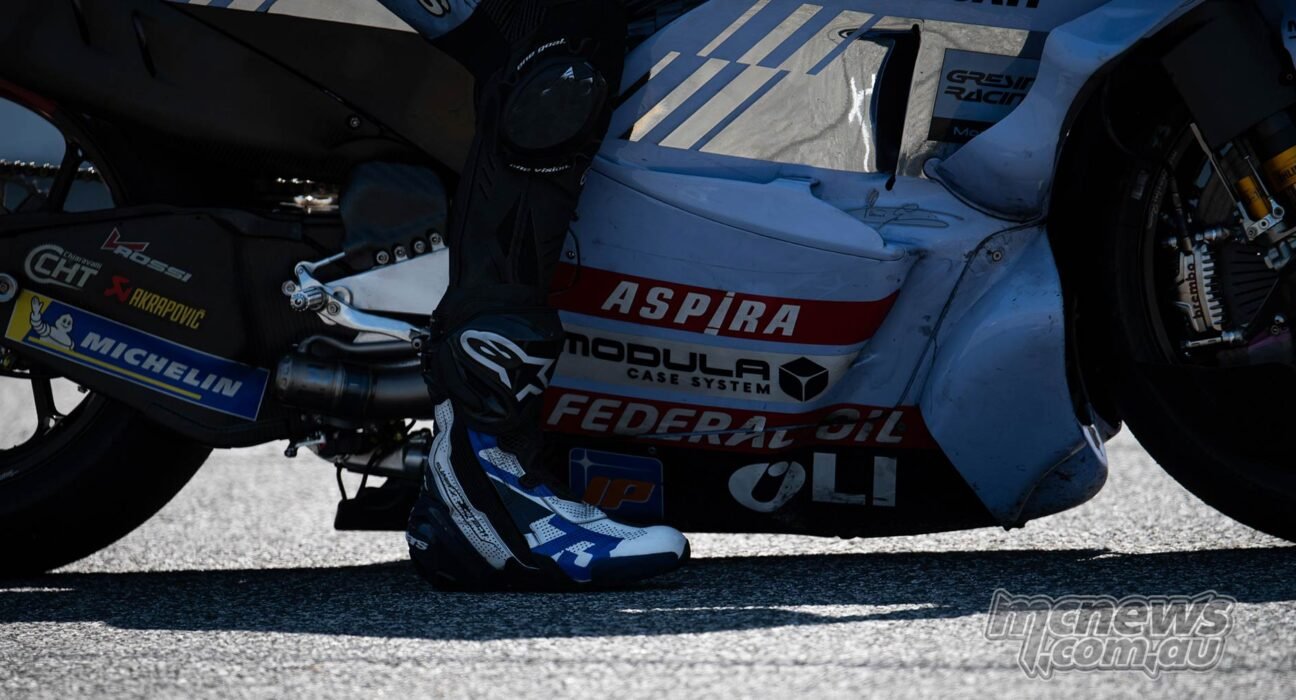
Holeshot devices are mechanical systems that are activated before the start of a race to lower the motorcycle and reduce the tendency to wheel out under hard acceleration. By holding the machine lower, teams have been able to put more drive into the rear tire and reduce the amount of electronic or rider intervention required in the first phase of the launch.
These devices became one of the more visible technological battlefields of the modern MotoGP era after Ducati first introduced the holeshot-style system at the end of the 2018 season. The idea quickly spread across the paddock and evolved into more complex ride-height systems, particularly at the rear of the bike, where lowering the rear under acceleration improved exiting corners.
Front-end systems have been more controversial. True front ride-height devices used when moving a motorcycle were outlawed by 2023, but only start-front holeshot devices remain legal. This new decision removes those front start devices from the grid ahead of a wider 2027 regulation reset, which will see ride-height devices disappear from MotoGP altogether.
Because electronically controlled suspension is not allowed in Grand Prix motorcycle racing, MotoGP’s ride-height and holeshot systems have always been somewhat clever mechanical workarounds compared to semi-active suspension systems in the road-bike sense. Modern production machinery can now use sensors, ECUs and electronic adjusters to change suspension behavior on the fly, but MotoGP’s front and rear ride-height devices remain essentially ‘dumb’ mechanical/hydraulic systems, manually triggered by the rider rather than automatically managed by electronics. This makes the technology both fascinating and somewhat anachronistic: extremely complex in its details, but deliberately crude in principle compared to the electronic suspension systems found on many high-end street bikes.


For riders, the immediate impact will be felt in the launch phase. With no front lock now, there will be more emphasis on clutch feel, throttle control, body position and anti-wheelie tactics of the bike at the start. Bad starts can be difficult to disguise, while riders who have always been particularly strong off the line can regain a little more of that advantage.
Grid spacing will be increased from Germany
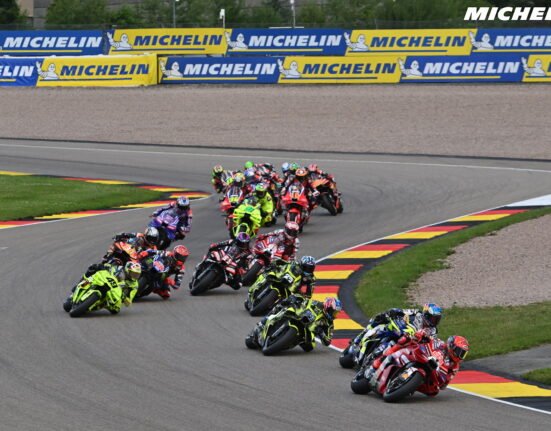
The Grand Prix Commission has also confirmed changes to the standard grid layout for all classes since the German Grand Prix.
The vertical distance between rows will increase from three meters to four metres. With three riders in each row, the distance between each row of three riders increases from nine meters to 12 metres. The stated aim is to improve safety at the start of the race, especially important during the first few seconds when riders are racing in close proximity and any stalled or slow-starting machine can quickly become a hazard.
This change will not only apply to the premier class, but also to MotoGP, Moto2 and Moto3.
Six bikes per manufacturer from 2028
Another rule change has also been confirmed for the MotoGP class from 2028, allowing a maximum of six motorcycles on the grid from any one manufacturer.
In practical terms, this means that a manufacturer will be able to supply its own factory team and up to two additional teams. However, the rule is conditional, and will only apply if at least five manufacturers are competing in the championship at the time.
The 2028 cap appears to be designed to help preserve manufacturer diversity across the MotoGP grid and prevent any one marque from dominating the entry list through numbers alone. It also gives factories and independent teams a longer runway to plan supply arrangements beyond the upcoming 2027 technical regulations.
However, for now, the most immediate change will be seen at Assen, where the front-end squat-and-fire launch era comes to an end.