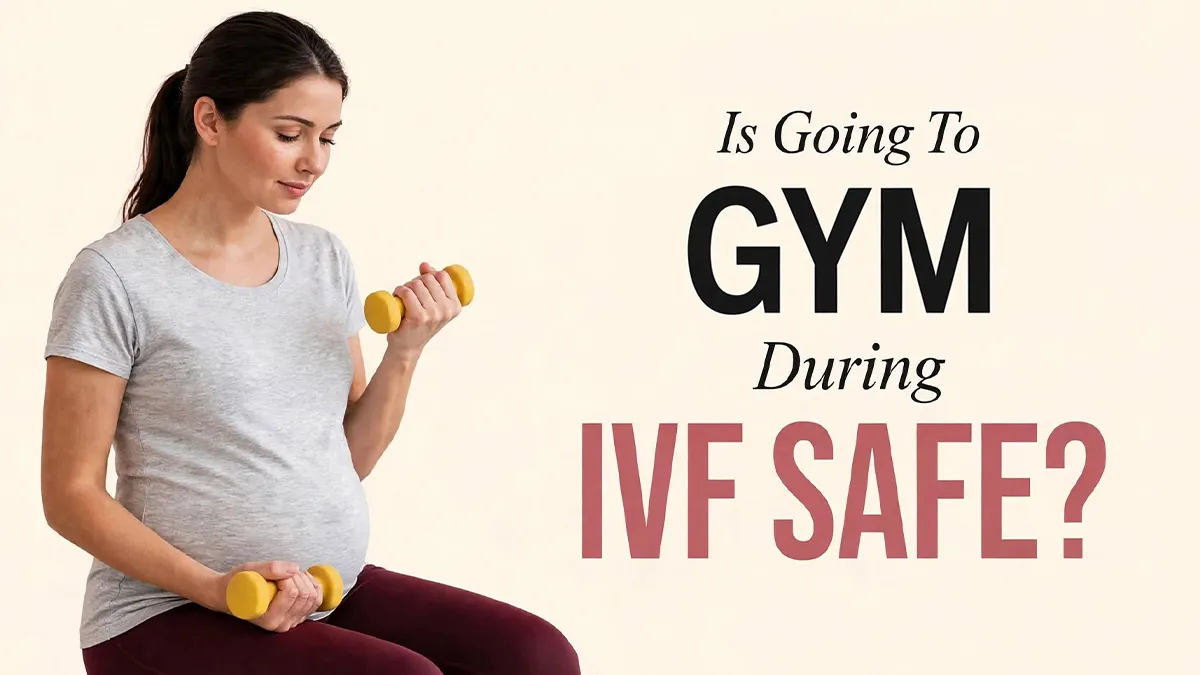
IVF is physically and emotionally demanding. Many women wonder if they must give up their fitness routine. Some fear that a workout could harm the treatment. Others worry that stopping will affect their health and mood. So, can you continue going to the gym while undergoing IVF? In most cases, yes, but you will need to change how you train. Gentle exercise is usually fine. Intense workouts need to be reduced or paused at key stages. Read on for two fertility doctors’ advice, and what research says.
Is Going to Gym During IVF Safe? The Short Answer
Dr Lavanya Kiran, Director and Lead Consultant, Obstetrics, Gynaecology, KIMS Hospitals, Electronic City, Bengalurusays, “Yes, in most cases, but you will need to change how you train. Light to moderate exercise is usually safe through the early part of IVF.”
Dr Shaweez Faizi, Fertility Specialist, Nova IVF Fertility, Mangalore, adds that women “do not necessarily need to stop going to the gym, provided their exercise routine is tailored to the stage of treatment.”gym during ivf
Why Does Exercise Need to Change During IVF?
Dr Kiran explains, “The fertility injections make the ovaries grow bigger and heavier, often to several times their normal size.”
- Enlarged ovaries are more likely to twist on themselves. This is called ovarian torsion, and it is a medical emergency.
- Jumping, running, twisting and heavy core work raise this risk.
- Very intense exercise also adds stress to a body that is already working hard.
Dr Faizi describes torsion as “a condition in which an enlarged ovary twists around its supporting tissues.”
It is rare. A2026 study in the Journal of IMABreviewed 5,683 patients and 8,932 egg collections. It found 11 confirmed cases of torsion, or 0.12 per cent. The authors call it “a rare but significant IVF complication.” Most cases came after a fresh embryo transfer in early pregnancy, even without OHSS. OHSS is ovarian hyperstimulation syndrome, a reaction to fertility drugs. Risk was higher in multiple pregnancies.
ALSO READ- What Happens If You Miss An IVF Injection? Fertility Specialists Explain
Gym Workouts During IVF: What to Do at Each Stage
Before and early in stimulation: Dr Kiran says moderate exercise is “generally fine”. This includes brisk walking, light strength training, easy cycling and yoga.workout during ivf
- Later in stimulation: Switch to gentle activity. Avoid high impact, heavy lifting, sit-ups and twisting.
- After egg retrieval: Rest for a day or two. Dr Faizi says the body “needs time to recover from the procedure.”
- After embryo transfer: Most clinics advise avoiding strenuous exercise for about a week. Gentle walking is usually encouraged.
Safer Exercises During IVF vs Exercises to Avoid
Dr Faizi says women may continue “gentle activities such as walking, light stationary cycling and stretching.”
- Walking
- Gentle yoga, avoiding deep twists
- Light stretching
- Easy swimming, if your clinic allows it
- Light weights with controlled movements
- Running, jumping and high intensity interval training
- Heavy weightlifting
- Hot yoga or very hot rooms
- Contact sports
- Intense abdominal work and twisting moves
Does Exercise Affect IVF Success?
Dr Kiran says, “Moderate activity does not appear to harm IVF outcomes.” The evidence is mixed. A 2022 review in Archives of Gynecology and Obstetricspooled 12 studies of 3,431 women. The pooled effect on live birth was uncertain. The authors said the evidence is “still insufficient” to reach firm conclusions. Very intense or extreme training has been linked to poorer results in some studies. Being very sedentary is not recommended either.
Do You Need Bed Rest After Embryo Transfer?embroy transfer
No. Dr Faizi says women should follow individual guidance “rather than assuming that complete bed rest is necessary.” He adds, “There is no established evidence that ordinary movement causes an embryo to dislodge.” Dr Faizi adds moderate activity “can support cardiovascular health, improve mood, reduce stress and help maintain a healthy weight.”
When to Stop Exercising and Call Your Doctor
Dr Kiran lists these warning signs. They can mean ovarian torsion or OHSS and need urgent care:
- Sudden, severe pain in the lower abdomen or pelvis
- Nausea or vomiting with abdominal pain
- Rapid weight gain, or a swollen belly with worsening bloating
- Shortness of breath or very little urine
- Heavy bleeding
Dr Faizi adds dizziness to the list and advises contacting the fertility team promptly.
ALSO READ- Is The Second IVF Cycle More Successful Than The First One? Gynaecologist Answers
You do not have to stop moving. Dr Kiran advises choosing “gentle, low impact exercise” and scaling back as the ovaries grow and after retrieval and transfer. Dr Faizi says the key is “to prioritise safety over workout intensity.” Ask your fertility team for stage-by-stage advice, since clinics differ.
-
1. Can Male Partners Keep Training Hard During IVF?
Moderate exercise is usually fine. Extreme training, very hot environments and anabolic steroids can harm sperm. If your partner trains hard, he should speak to the fertility specialist.
-
2. Are Pre-Workout Supplements and Protein Powders Safe During IVF?
Evidence is limited. Some products contain strong stimulants or herbal ingredients. Tell your clinic about every supplement you take. Ask before starting any new one.