Swearing has quietly built a track record in exercise science laboratories. Across a series of controlled experiments, participants who repeated a taboo word before or during short, intense physical tasks have produced measurable gains: more power on a stationary bike sprint test, stronger handgrip contractions, longer holds in punishing isometric positions, and faster explosive lifts. Now, a perspective paper published in Frontiers in Sports and Active Living asks the question that naturally follows from those results: if swearing works in the lab, should coaches, athletes and exercisers actually be encouraged to use it in the real world? The authors’ answer is a carefully argued no, at least for now.
The paper, written by Nicholas Washmuth of the University of Alabama in Huntsville, Lia Jiannine of Nova Southeastern University and Christopher Ballmann of the University of Alabama at Birmingham, applies Rogers’ Diffusion of Innovations framework to the swearing question. That framework, originally developed to explain how new ideas spread through populations, evaluates an innovation on five criteria: relative advantage, compatibility, complexity, trialability and observability. The authors use each criterion to weigh whether swearing is ready to be promoted as a performance-enhancing strategy outside controlled settings. Their conclusion, based on the limitations of the available evidence, is that broad promotion is premature, even though the evidence is strong enough to justify continued investigation.
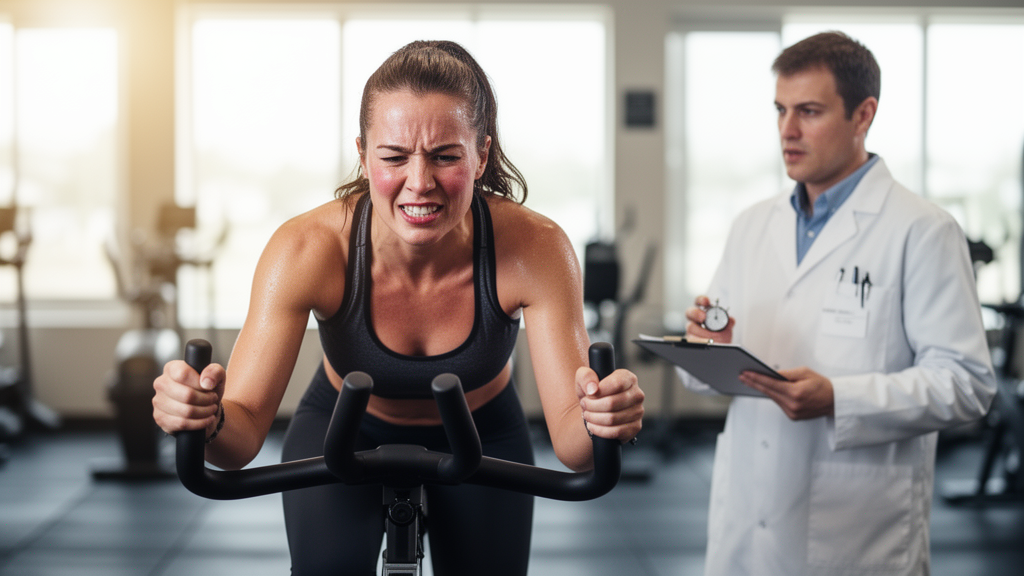
The laboratory evidence itself is striking. The initial investigation into swearing’s ergogenic effects came in 2018, when Stephens and colleagues tested swearing’s influence on the Wingate Anaerobic Test and grip strength. Swearing produced a 4.5 percent increase in power during the Wingate test and an 8 percent increase in grip strength compared with repeating a neutral word. A replication study again found an 8 percent grip strength improvement. In a chair push-up task, in which participants supported their body weight on their hands and arms for as long as possible, swearing allowed participants to hold the position 10 percent longer. Jiannine and Antonio later reported that swearing increased grip strength by 9 percent, push-ups to fatigue by 15 percent, wall-sit time to exhaustion by 22 percent and plank time to exhaustion by 12 percent. Most recently, Nguyen and colleagues had participants shout a swear word or a neutral word as loudly as possible before bench press exercises; shouting a swear word did not change repetitions to failure but did significantly improve explosive bench press performance.
Yet the authors are careful about what these
Yet the authors are careful about what these numbers mean. The studies showing swearing’s ergogenic effects relied on convenience samples of young adults, primarily college students, and much of the work has come from a relatively small research network. In the Wingate and grip strength experiments, for example, the participants were young adults whose training status was not clearly identified, and the Nguyen study of resistance-trained males included only 11 participants. Although some studies reported moderate-to-large effect sizes, the authors note that the practical significance of these effects for athletes and exercisers remains uncertain given the limited evidence from trained populations and naturalistic settings. Whether laboratory improvements translate into meaningful benefits during training or competition remains unknown.
The relative advantage criterion highlights another gap. Swearing is cost-free, equipment-free and readily available, which makes it attractive on paper. But it faces competition from an established alternative: music. Listening to self-selected music shows consistent ergogenic benefits across a variety of exercise modes and, unlike swearing, includes beneficial effects on endurance-based tasks, with moderate-to-large effect sizes. It is unknown whether swearing offers greater or comparable benefits than music, or whether the two are additive. Interestingly, one study found that listening to music with censored lyrics led to a decrease in bench press performance compared with music with explicit lyrics, leading the authors to speculate that swearing and music might even have a synergistic effect, though they stress this is speculative. A more fundamental problem is that existing studies compare swearing with repeating a neutral word, not with silence. It is unknown whether both swearing and neutral-word repetition benefit performance, with swearing doing so to a greater degree, or whether both decrease performance, with swearing doing so to a lesser degree. A no-vocalization condition would also help rule out alternative explanations such as expectancy effects, motivational self-talk, attentional cueing and placebo-like responses.
Compatibility, the second criterion, is where swearing’s real-world prospects get complicated. Swearing is highly prevalent: most people admit to swearing sometimes or often, 70 percent of adults hear others swear in public, most workers swear in the workplace, and only 9 percent of college students report never hearing a professor swear. But the effects of swearing are context-dependent, and unlike nutritional supplements or equipment, swearing must be evaluated within the social context in which it occurs, including the relationships and demographics of those involved and the perceived intent behind the words. Swearing is often less socially acceptable for women than for men, and both males and females report swearing more comfortably in same-gender interactions and hesitating in mixed-gender groups. The authors suggest that the impact of swearing on performance may depend on both the gender of the swearer and the gender of the audience, and that swearing by or in the presence of younger or older populations may blunt its ergogenic effects through violations of age-related profanity norms.
Context can also cut in swearing’s favor
Context can also cut in swearing’s favor. Locker rooms have been described as obscenity factories, organizations where swearing is part of a member’s identity, both expected and treated as routine, and swearing is often perceived as banter or an expression of affection that increases solidarity between swearer and audience. Informal norms and rituals, which could include swearing among in-group team members, are discussed as practical strategies to foster team cohesion in sport. But swearing can also produce negative outcomes. Because swearing provokes an emotional response in the listener, it has been described as a cognitive imposition. Taboo words capture attention, so athletes may respond more slowly to coaching cues when the cue is accompanied by a swear word, focusing on the expletive rather than the instruction. A coach swearing at a player may be perceived as unsupportive and alienating. Notably, one study found no significant overall effect of externally delivered verbal encouragement with swearing on Wingate test performance, but participant sex emerged as a moderator: males showed lower average power when receiving swearing encouragement, while females showed no significant difference. Swearers are also often perceived as socially inept, untrustworthy and incompetent.
Complexity presents a paradox. Swearing itself is simple: it can be self-generated at any time and requires no coach, app, equipment, certification or financial obligation. Its implementation, however, has nuance the research has not resolved. Studies showing ergogenic effects asked participants to self-select their swear word, typically in response to imagined mishaps like banging their head or stubbing a toe, with fuck and shit the most common choices. Whether milder profanity such as hell or damn offers a similar benefit is unknown. Dosage has also been inconsistent: some studies had participants swear for 10 seconds before testing, others had them swear during the task itself, and frequencies ranged from every 2 seconds to every 5 seconds to a steady pace, with most studies using normal speech volume and one asking participants to shout as loudly as possible. The authors also flag habituation as an open question. Research on swearing’s pain-modulating effects found that people who swear more frequently in daily life get less hypoalgesic benefit, and whether similar habituation applies to performance effects has not been explored.
Trialability may be swearing’s most convincing criterion. Individuals can try it immediately, in private, and at no cost, comparing swear-word and neutral-word conditions within the same training session while adjusting word selection, dosage and task. But public testing carries a potential social cost if the swearing offends others or violates norms. Observability, the final criterion, is limited: swearing’s ergogenic effects are embedded in strenuous tasks where many factors influence the outcome, so an observer may notice the profanity far more easily than the performance improvement, potentially perceiving the swearer as antisocial or uneducated rather than purposeful.
The mechanisms behind swearing’s benefits remain poorly understood
The mechanisms behind swearing’s benefits remain poorly understood. The original theory assumed a psychophysiological mechanism linked to autonomic arousal, supported by evidence that swearing produces a fight-or-flight response, but the initial experiments found swearing benefited performance in the absence of measurable psychophysiological arousal. Attention shifted to state disinhibition, the idea that swearing violates social norms and diminishes internal psychological barriers, allowing individuals to take full advantage of physical strength, attentional focus and determination. Psychological flow, distraction and self-confidence were found to be significant statistical mediators, though state disinhibition explained only a modest 14 percent of the variance in swearing’s effect on performance. Sympathetic activation remains plausible, possibly obscured by insensitive autonomic measures, and swearing-induced hypoalgesia is another candidate, although swearing increased grip strength without reducing pain perception in the one study that assessed both. The authors conclude that swearing may serve as a performance-enhancing strategy under certain conditions, but that privacy, social context and cultural compatibility factors remain unknown, and future research must determine when, how, if, where and with whom swearing can enhance physical performance before it can be promoted.
Subject of Research: Whether swearing should be promoted as a real-world physical performance aid based on evidence from controlled experimental studies
Article Title: Swearing as a performance aid: promising evidence, premature promotion
Article References: Washmuth, N. B., Jiannine, L., & Ballmann, C. G. (2026). Swearing as a performance aid: promising evidence, premature promotion. Frontiers in Sports and Active Living, 8, 1930904. https://doi.org/10.3389/fspor.2026.1930904
DOI:10.3389/fspor.2026.1930904
Keywords: swearing, physical performance, ergogenic aid, diffusion of innovations, exercise, strength, anaerobic power, state disinhibition, sports science, psychology, laboratory studies, real-world translation
News. Swearing May Boost Short, Intense Exercise, But Scientists Say Promotion Is Premature. Scienmag