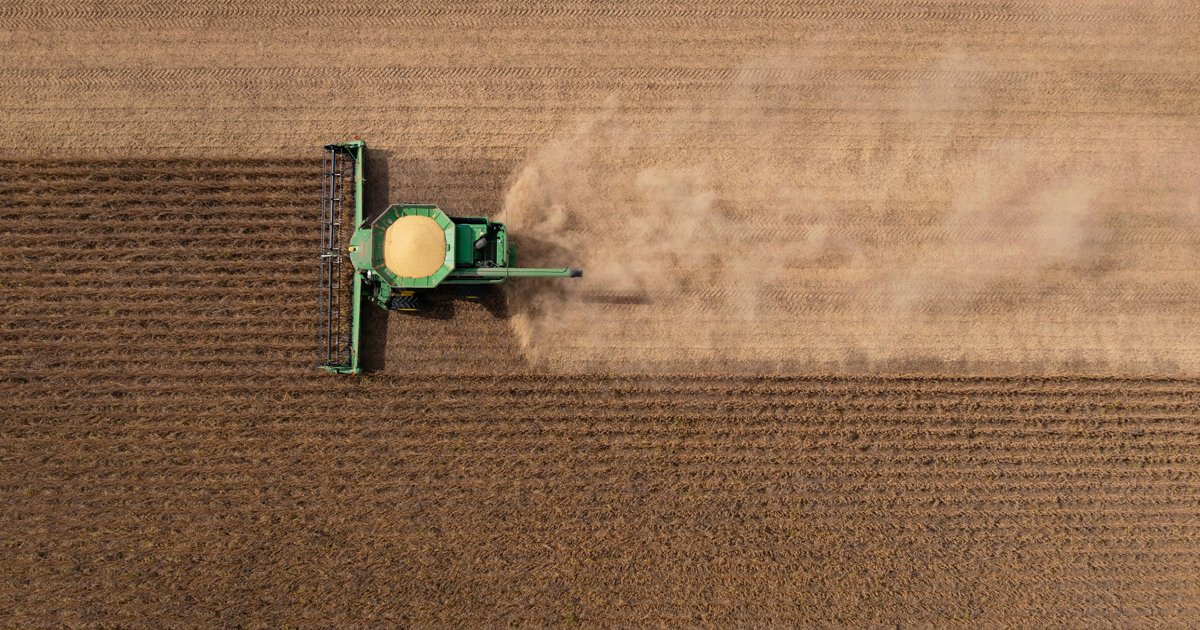
A combine harvester during soybean harvest outside St. Peter, Minn. (Ben Brewer/Bloomberg)
key takeaways:
- The European Commission on July 7 set a target of sourcing 35% of animal feed protein crops domestically by 2035, up from 25% last year.
- The move aims to reduce reliance on imports from the US and Brazil and address supply risks and environmental concerns associated with deforestation.
- The strategy includes boosting domestic production, diversifying imports toward partners such as Ukraine and supporting farmers while easing strict emissions regulations.
The EU aims to increase the amount of protein feed crops, such as soybeans, that are sourced from within the 27-nation bloc, which would reduce its dependence on top suppliers such as the US and Brazil.
The European Commission, the bloc’s executive arm, wants 35% of oilseed and protein crops used in animal feed to be grown in the EU by 2035. That compares with 25% domestically last year, according to the bloc’s livestock strategy and protein plan published on July 7.
Europe is the world’s largest supplier of food products, from grains and dairy to pork and olive oil. But its livestock industry is heavily dependent on imports of protein crops, making the sector vulnerable to supply disruptions.
Meanwhile, its citizens have long been concerned about deforestation in places like Brazil, with farmers in recent years protesting against a trade deal with the Mercosur countries that includes Brazil and Argentina.
The EU is also trying to diversify its imports away from the US. According to a Commission official, increasing trade with Ukraine is one way to achieve this. Ukraine, which benefits from preferential trade rules, formally began the first phase of membership negotiations with the bloc last month.
Today, we work for EU agriculture.
2 strategies. Objective 1 👉Strengthening European food security
🐄Livestock Strategy
🫛 protein planFor the first time, a single approach across the entire value chain.
↙️Dependency
➕ Flexibility
➕ Opportunities for farmershttps://t.co/bQiEjfD98U pic.twitter.com/SPP6gyGmsH– Christoph Hansen (@CHansenEU) 7 July 2026
The bloc will also consider using trade talks to boost Europe’s agricultural sector and enforce EU food safety standards, Bloomberg previously reported. The plan for livestock seeks to support a sector that generates 400 billion euros ($457 billion) in annual turnover and employs about 7 million people across Europe.
The strategy focuses on supporting farmers and avoiding strict emissions-reduction norms, a reversal from the EU’s Green Deal era. Still, it includes emissions monitoring and animal welfare measures, including a plan to phase out cages for chickens and pigs.