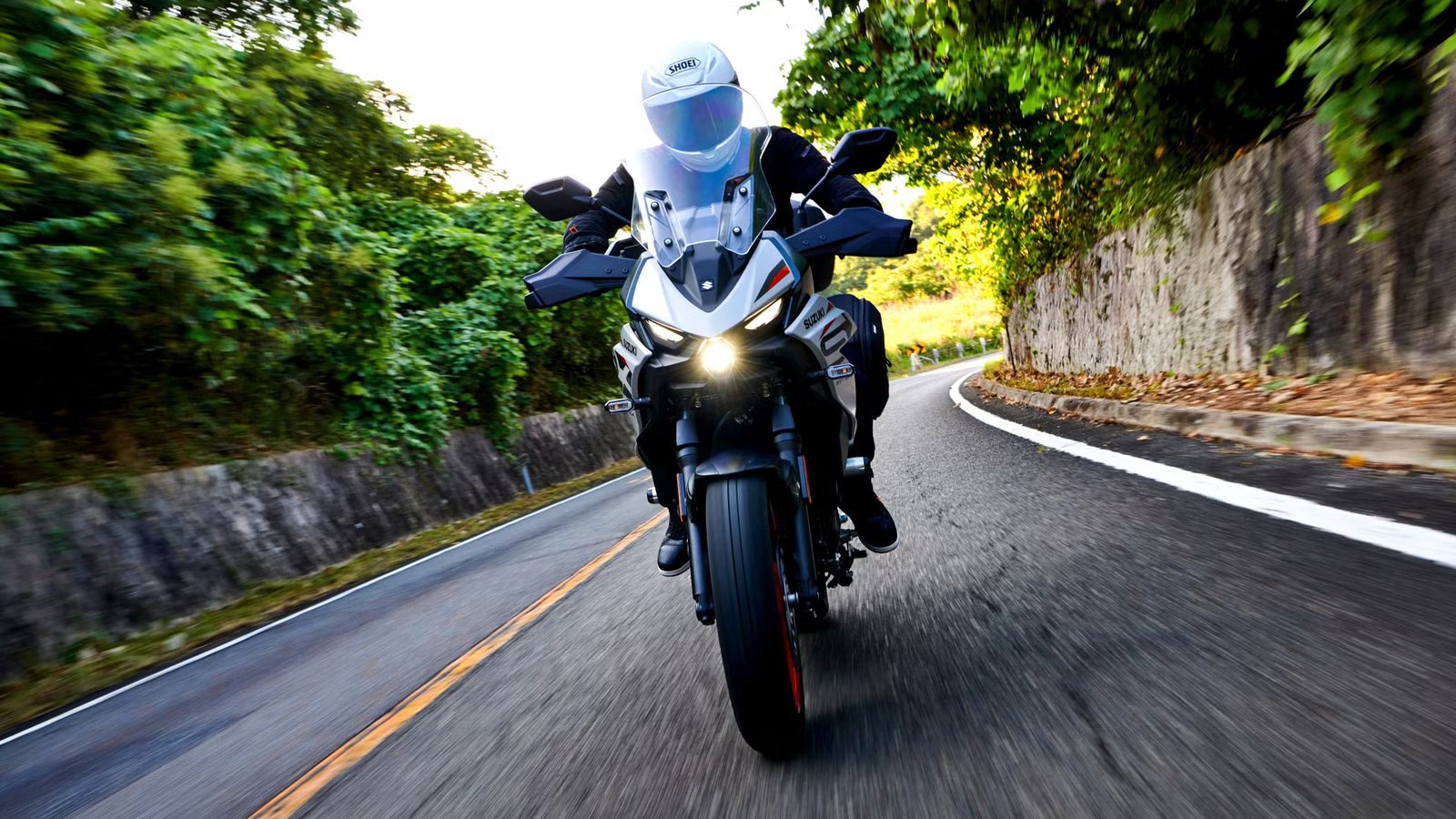
With the increasing demand for more versatile motorcycles, manufacturers continue to introduce exceptional all-rounders one after the other. Adventure bikes of all shapes and sizes are the most popular, but we’re also seeing a rise in the popularity of middleweight ADV-type touring bikes. For those of us who aren’t interested in taking the odd dirt road shortcut, these bikes actually make a lot of sense. Sales are also clearly on the rise, as new brands join the party. The latest entrant is Suzuki with its V-Strom 650 replacement.
Mid-capacity sport-tourers are traditionally underserved
Not long ago, if you were looking for a middleweight touring bike, the Kawasaki Versys 650 was a bit of a cakewalk. As good as the venerable Versus was, and is, the competition wasn’t fierce until recently. But the market for all things versatile has grown to such an extent that even this unloved segment has seen some activity.

Honda recently refreshed the NC750X, which is basically a hybrid between a maxi-scooter (it rides on a maxi-scooter platform) and a motorcycle. For the right buyer, it offers exceptional value, but the Triumph Tiger Sport 660 presents itself as an altogether more interesting option in this price range. It has certainly taken away some sales from the Versys, but this is the bike that has the potential to really shake up this value-oriented segment.
Budget tourer that feels stable and comfortable at 80 MPH on interstate travel
The Triumph Tiger Sport 660 defies its ‘budget’ label with a triple-cylinder engine, stable chassis and long-range features.
The Suzuki SV-7GX looks like a potential bargain
MSRP: TBA

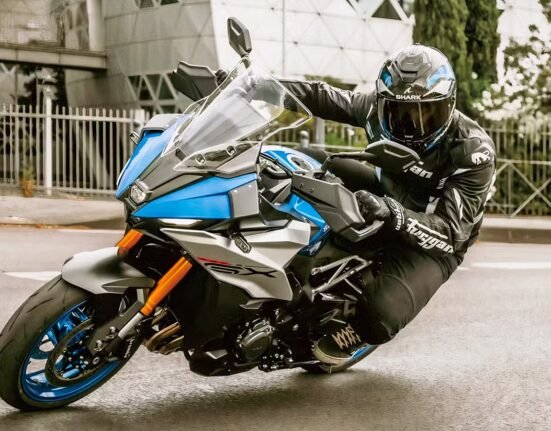
You could argue that the SV is not on sale here. But Suzuki has already received CARB approval for the machine, which means it’s a matter of when, not when. Although US pricing has not been announced yet, the bike has already been launched in the UK with a base price of £6,999. This translates to $9,300, but history tells us this is almost never a straightforward conversion. However, the US price will almost certainly be below the magic $10k mark (in all likelihood out-the-door). It’s a bargain for a lightweight tourer that offers a reliable V-twin and a host of modern tech features.
Suzuki’s famous V-twin is here to stay
Power: 72 hp

In 1999, the Hayabusa grabbed all the headlines, but that same year, this V-twin also quietly made its debut in the SV650. It has seen incremental updates over the years (it is now Euro5+ compliant), but in terms of basic architecture it is still the same engine. Some people will balk at the fact that it has been in production for 27 years and will be tempted to ignore it.
When the new 800cc unit was announced we certainly thought its time had come to an end, but now it’s clear that it’s not going anywhere in the near future. Apart from the overall power output, the main difference between this lump and that new parallel-twin is the overall cost. Suzuki is able to offer bikes equipped with this engine at a much lower price than any bike equipped with the new engine.
Reliable doesn’t always mean boring

Over the years, this twin has proven metronomically reliable, and riders have rarely achieved reliable mileage on bikes equipped with it. It is not only reliable but also attractive. Unlike modern parallel-twins, which all have a certain “similarity”, this little V-twin feels alive. It also offers the same midrange performance as those newer engines, meaning it’s more or less ideal for a light sport tourer.
The 645cc Suzuki V-twin that regularly runs 100,000 miles
The smartest long-distance riders are abandoning sophisticated electronics in pursuit of an engine that delivers 100,000 miles of range despite its size.
Lots of tech features sweeten things up
In the past any bike equipped with this powertrain came with a cable-activated throttle. With the SV-7GX, it will get ride-by-wire throttle for the first time as well as several other electronics. You get a TFT dash with ride modes, a quickshifter, switchable traction control and smartphone connectivity. ABS is the only feature that isn’t new, but for some strange reason, Suzuki neglected to include cruise control.
This is reminiscent of the time when Triumph brought the original Tiger Sport 660 without it, only to have it added later with updates. Still, it’s a strange omission for a modern touring bike. Almost all the bikes it competes with have cruise control, and for some buyers, this could actually be a dealbreaker.
10 sport touring bikes that balance fun and practicality
These motorcycles prove that comfort, convenience and smile-worthy performance can go hand in hand.
Promises to be an impressive all-rounder

The lack of cruise control in an otherwise impressive package for this end of the market is arguably the only point of contention. The suspension and chassis are lifted directly from the existing SV650, which isn’t a bad thing at all. Its fork is non-adjustable, and the rear shock only offers preload adjustment, but the chassis is a peach.
Its steel-trellis chassis more than makes up for the budget-friendly nature of the suspension, and will give the small tourer truly sporty handling. With a wet weight of 465 pounds, it’s light and nimble enough to handle the daily commute, then comfortable enough to cover weekend distances or blast down a canyon road.

Cynics will point to the fact that Suzuki added a bunch of wind protection and tech to the SV650, but there’s nothing wrong with this approach when it offers so much value. This is not the first time we have seen Suzuki doing this. The current GSX-S1000GT+ applies the same formula to the liter class, and it offers incredible bang for the buck.
If this were a new 800-based tourer, it wouldn’t cost less than $10k. Case in point is the V-Strom 800, which already has a base price over $10k and a more touring-friendly trim that costs a little more. Suzuki has become adept at getting the most out of old platforms, and we’re certainly happy to see the old V-twin getting the treatment here, offering us a bike that has the potential to become the touring deal of the year.
CHASSIS, SUSPENSION, AND WEIGHT SPECIFICATIONS
|
The wheels of the aircraft |
steel mesh |
|
front suspension |
41mm conventional telescopic fork, coil spring, oil damped (4.9-in travel) |
|
rear suspension |
Link Type, Coil Spring, Oil Damped, Spring Preload Adjustable (5.1-in travel) |
|
weight |
465 pounds |
Source: Suzuki Global