- 99th The Bugatti Mistral concludes the W16 story that began with the Veyron in 2005.
- The Mistral is the fastest open-top production car in the world.
- Production of the new V16-powered Tourbillon has not yet begun.
2026 will go down in history as one of the most important years for Bugatti. Not only is it leaving the Volkswagen Group, but it’s also saying goodbye to the long-running W16. 99th And the final Mistral marks the end of the road for the quad-turbocharged 8.0-litre engine, which made its production debut in the 2005 Veyron. The Roadster is Molsheim’s last road car to feature the venerable engine, which also powers the Bolide, an extreme track-only machine limited to 40 units, all of which were built until November 2025.
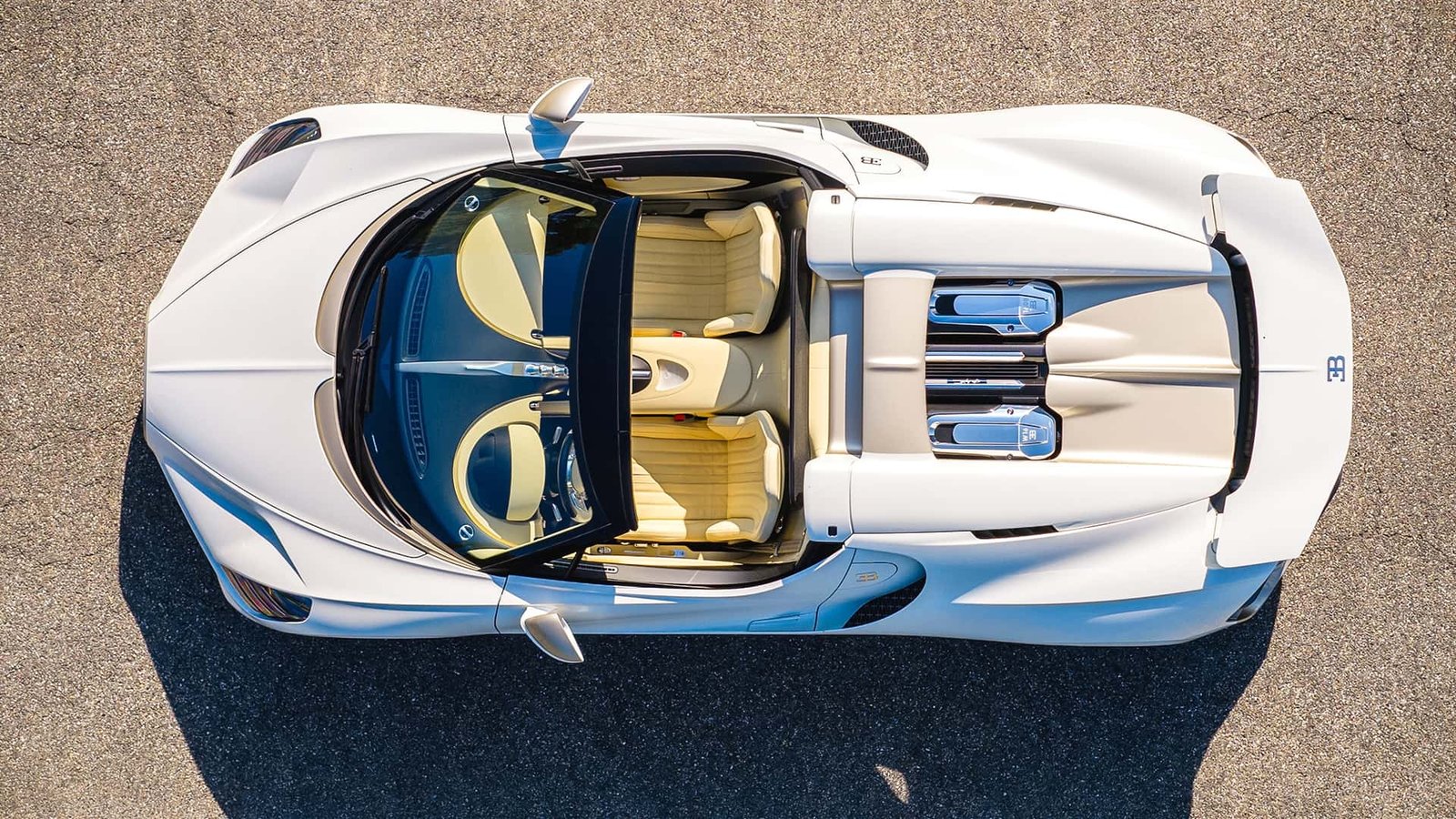
The last Mistral is aptly called “The Last of Its Kind” and wears a two-tone pearl and sparkle paint finish. Like the 98 cars before it, this Roadster is essentially a unique car, as Bugatti invites wealthy customers to personalize their cars down to the smallest detail. Whoever ordered the final W16-powered model chose magnolia and gray carbon matte accents for the interior, where Ettore Bugatti’s signature appears on the interior trim of the headrests, aluminum door sills, and even the engine cover.
Like every other Mistral, the final example underwent 248.5 miles (400 kilometres) of testing before delivery. Each roadster was driven at speeds of up to 186 mph (300 km/h) on an airfield at Colmar Airport in northeastern France before being handed over to its rightful owner. Bugatti carefully selected three highly qualified test drivers to put the Mistral through its paces and ensure that each car met the brand’s exacting standards.
Photo by: Bugatti

Bugatti once said it was in pursuit of the record, but in November 2024, the €5 million Mistral won the title of world’s fastest open-top production car. With Andy Wallace, the sole W16 Mistral world record car reached 282 mph (453.91 km/h) at ATP Automotive Testing Papenburg in Germany.
As far as what’s going to happen next, we already know some of the answers. Earlier this month, Bugatti inaugurated La Manufacture, a new facility capable of producing 200 cars per year. It’s reasonable to assume that models beyond the Tourbillon will eventually be built there, given that the new V16-powered machine is limited to just 250 units. Production of the naturally aspirated, Cosworth-powered hybrid hypercar has not yet begun, as the company is currently building a new facility.
Although Bugatti has stopped building new W16-powered production cars, the ultra-rich can still commission one through the program Solitaire. This is a special initiative for something and even a one-off based on existing models, as Pagani has been doing with the Zonda for years. Only two cars will be built annually, and we’ve already seen a few Chiron-based projects: the Brouillard and the Veyron-inspired FKP Hommage.
10
Source: Bugatti
Motor1’s Opinion: It’s truly the end of an era as the W16 has been officially retired. Still, the future looks just as exciting, even if the Tourbillon remains reserved for one percenters, much like the Chiron and Veyron before it.
It still feels a little strange that Bugatti has parted ways with Volkswagen Group after 28 years, but with an enthusiastic guy like Mate Rimac at the helm, the future looks bright.