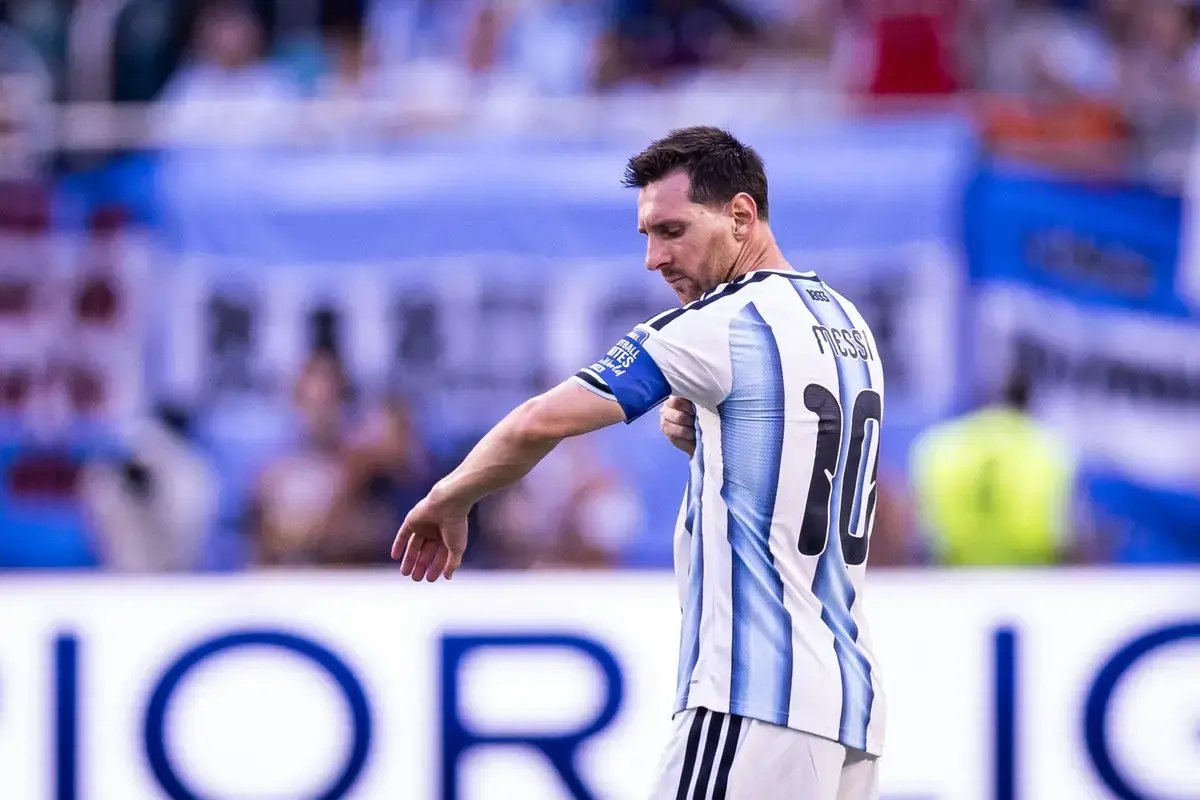
The possibility of an Argentina team without Lionel Messi is no longer a distant dream but an imminent reality as the 2030 FIFA World Cup approaches. The legendary forward, who has been synonymous with La Albiceleste’s identity for almost two decades, will be 43 by the time of the tournament – making his presence on the pitch extremely unlikely even for the eight-time Ballon d’Or winner. The world of football now faces a seismic question: who will carry Argentina’s torch in the post-Messi era?
Attention is already turning to the country’s rising stars, with the talented Nico Paz and Franco Mastantuño tipped to lead Argentina’s next generation. These young talents are expected to lead the attack, marking a bold new chapter for a country long defined by the genius of Messi. Still, the anticipated 2030 roster won’t rely solely on youthful enthusiasm; A cadre of battle-hardened veterans is expected to provide the required leadership and stability as Argentina adapt to life without their charismatic captain.
The last time Argentina participated in a World Cup without Messi was in 2002, a campaign that underlined the void created by his absence. Drawn into a challenging Group F with England, Nigeria and Sweden, La Albiceleste started their campaign with a narrow 1–0 win over Nigeria, with Gabriel Batistuta scoring the decisive goal. However, fortunes soon changed. In the decider against England, Mauricio Pochettino’s foul on Michael Owen earned David Beckham a penalty, which he converted for the only goal of the match. The defeat proved costly.
Argentina, desperate for a win in their final group game against Sweden, conceded a superb free-kick goal from Anders Svensson after a foul by Matias Almeida, with Hernán Crespo’s late equalizer not enough to prevent elimination. England’s draw with Nigeria sealed Argentina’s fate, as they exited in the group stage for the first time since 1962 – a painful reminder of the challenges that can arise without a generational icon to inspire the team.
Now uncertainty is looming over Messi’s future. He has yet to confirm that the 2026 World Cup will be his swan song, although widespread speculation suggests it will mark his international farewell. His illustrious career with Argentina is expected to draw to a close by 2030.
The question is not just about Messi’s international future. Goalkeeper Emiliano Martínez has publicly announced that he will retire if Argentina successfully defends their World Cup title in 2026. “If (Argentina) make consecutive World Cup appearances this summer, I will retire the next day,” Martínez said, sparking speculation of further changes in the team’s core leadership.
As the countdown to 2030 accelerates, Argentina faces the daunting challenge of forging a new identity – a challenge that will define the country’s football future in the post-Messi era.