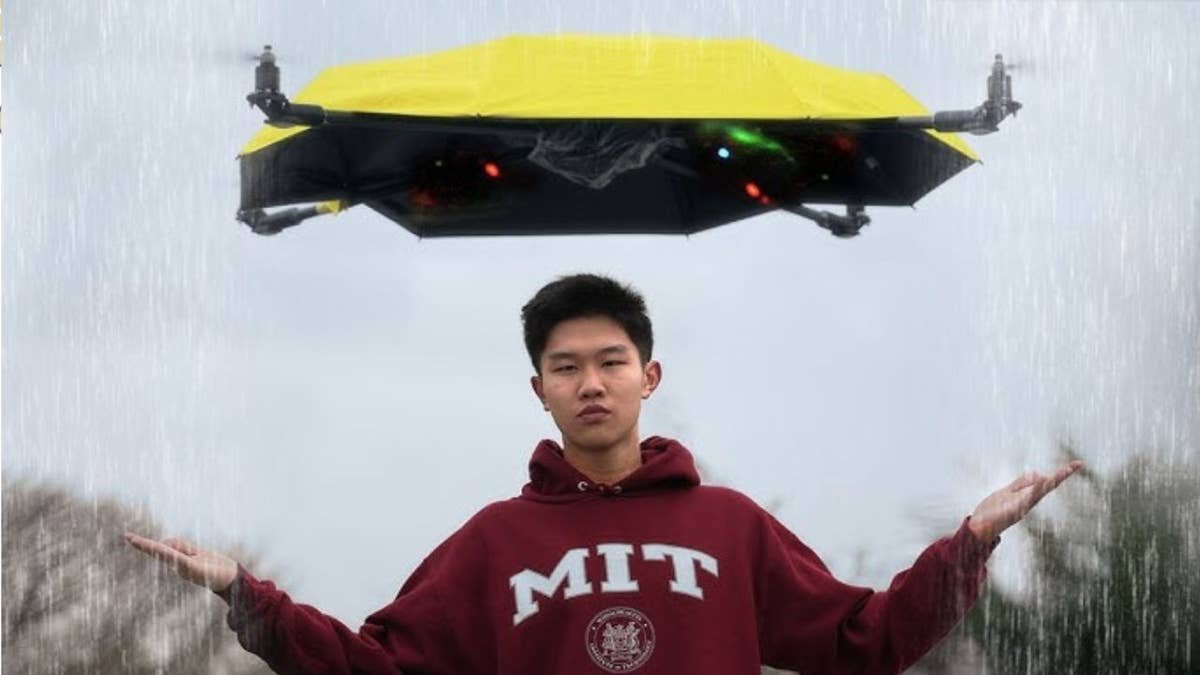
A video circulated by The clip was viewed millions of times and raised immediate, justified suspicions: Is it AI-generated? It is not.
Tse runs a YouTube channel i make stuffAnd this autonomous umbrella is an actual, documented DIY creation, the latest iteration of a project they first showed off as a remote-controlled version in 2024. The upgrade replaces manual piloting with computer vision: A time-of-flight depth camera reads the user’s head position in real time, a Raspberry Pi crunches the data, and a quadcopter frame hidden under the canopy adjusts its position accordingly, even in heavy rain.
Well, congratulations, gentlemen: You’ve finally outsourced the one emotion that requires zero strength, zero skill, and yet requires just a hint of basic caution. Now your hands are truly free; For what exactly? More scrolling? Another coffee?
Autonomous umbrella technology is the answer to the question no one asked, except perhaps the person who fears rain more than irrelevance. But note the irony: You’ll trust the Raspberry Pi to track your crown, yet you won’t trust yourself to simply stand still, hold a shaft, and share its arc with someone else. The future, according to Tse, is a slip of permission to forget that heroism was never about the Pole.
Engineering sound, premises suspect
Technical performance is valid. Folding carbon-fiber arms collapse the rig for storage, waterproofing protects the electronics, and vibration isolation keeps the depth sensor’s readings clear. But engineering potential and practical utility are different claims, and commenters under the original post quickly picked them apart.
One widely liked answer included a photo of a simple umbrella with a neat strap around the bearer’s chin, stating that it never loses charge or hums upside down:
“Unfortunately, someone else has already invented a more affordable one that doesn’t lose charge at inopportune times or annoy everyone with constant buzzing noises.”
Another flagged the obvious failure mode: the propeller spinning inches above a person’s skull in windy conditions. One commentator in Norway offered a stark forecast, estimating that the device would last about two hours before turning into an expensive kite of the wind. Perhaps the most worrying comment came from user @RightWingJax:
“It seems like a cool science experiment, until high-speed winds blow it to a random pedestrian, who gets cut by those drone blades.”
Canadian engineer John Tse has gone viral after unveiling a self-driving umbrella that autonomously follows its user. pic.twitter.com/xgbCuXoOx1
– Massimo (@rainmaker1973) 6 July 2026
Ten minutes of drought, if you’re lucky
Battery life lasts about 10 to 15 minutes, which includes a short walk and some more time. Tse himself presents it as a proof of concept rather than a finished product, and there is no indication of commercial ambitions, mass production, or price tag beyond the speculative “$1,000” figure floated by users online.
The safety mathematics is also unresolved: no matter how beautiful the tracking algorithm, unshielded rotors above head height are a liability, and no amount of depth-camera precision compensates for crosswinds.
None of this diminishes Tse’s technical achievement, and we certainly think it’s cool to make stuff. Autonomous following via ToF sensing on a consumer-grade quadcopter platform is a real engineering feat, and we applaud it. But the Internet’s verdict, which was mostly delivered in jokes about propeller injuries and toothbrush drones, comes down to some objectivity: Cleverness and practicality solved the same problem in a different way, and only one of them cost five dollars.