Listen to this article
Estimated 11 minutes
The audio version of this article is generated by AI-based technology. Mispronunciations can occur. We are working with our partners to continually review and improve the results.
Authors Zak Jones and Robert Moor are among the winners of the 2026 Writers’ Trust of Canada Awards, recognizing the country’s best writers and books of the year.
Eight prizes were given out, totalling over $400,000, for fiction, non-fiction and debut 2SLGBTQ+ books, plus editing, mid-career and lifetime achievement awards.
The winners were announced on Tuesday at a ceremony in Toronto, hosted by Canadian poet Moez Surani.
Jones, Moor win top book prizes

Zak Jones, left, and Robert Moor are among the winners of the 2026 Writers’ Trust of Canada Awards.(Carmen Cheung, Remi Morawski)
Jones’ debut novel Fancy Gapwon the $70,000 Atwood Gibson Writers’ Trust Prize for fiction, recognizing the best novel or short story collection by a Canadian author.
Fancy Gap tells the story of three generations of an Appalachian family as they navigate poverty, illness, religious fundamentalism and the eternal struggle of finding one’s place in the world.
Nana Grace has become a cult leader; her daughter Jane is struggling with breast cancer and Jane’s son Dalton is dishonorably discharged from the army because he was caught having sex with a friend and colleague of his.
-
Zak Jones’ new novel explores the beauty and despair of Appalachia

While Jones now lives in Toronto, he grew up in Appalachia and wanted to bring its unique culture to the page.
“It’s a gateway between regions, between the lowlands of North Carolina and Virginia to the Blue Ridge Mountains in Appalachia,” he said on an episode of Bookends with Mattea Roach.
“In these interstitial spaces, I feel quite at home and also always dislocated from anywhere else I could possibly be.”
The jury — comprised of writers David Chariandy, Conor Kerr and Kathleen Winter — praised Fancy Gap for its “constant emotion, energy and movement.”
“Beauty, despair, longing and a search for community are all wrapped together — and the reader, like the characters, ends up with their own sense of being saved through the skillful crafting of this novel,” they wrote in a press statement.
Jones is an American Canadian writer, teacher and labour organizer. In 2023, he won the RBC Bronwen Wallace Award in the short fiction category.
“I think it ought to be clear to you that while non-explicit, [Fancy Gap] might be the most politically critical, angry book about the United States this year coming out of Canada. There’s nothing more ‘elbows up’ than reading about this stupid country destroying itself,” said Jones in his acceptance speech.
The four remaining finalists for the Atwood Gibson Writers’ Trust Prize for fiction will each receive $7,500.
They are Téa Mutonji for My Person, Lisa Robertson for Riverwork, Blair Palmer Yoxall for Treat Them as Buffalo and Ashraf Zaghal for Seven Heavens Away.
-
Everything you need to know about the 2026 Atwood Gibson Writers’ Trust Fiction Prize
The books are available in accessible formats through the Centre for Equitable Library Access.
Last year’s winner was Maria Reva forEndling.
Moor’s book, In Trees, won the $75,000 Hilary Weston Writers’ Trust Award for non-fiction, the largest prize for non-fiction in Canada.
In Treesexplores the hidden wisdom of trees. Starting with Moor’s decision to climb a tree on a whim, it follows his adventures around the world as he learns from tree lovers and protectors.
“From trees we can glean a lot of powerful lessons, from the value of patience to the crucial difference between healthy and cancerous growth,” Moor told CBC Books in an email.
“Trees teach us to branch out wildly, to prune carefully, and, perhaps most importantly, to grow deeply rooted, both to local places and to the other beings who live in those places.”
LISTEN | Robert Moor on North by Northwest:

North by Northwest18:01Robert Moor on “In Trees: An Exploration”
Jurors and authors Katherine Ashenburg, Debra Thompson and Joshua Whitehead wrote in a press statement that In Treesoffers a “sophisticated and moving analysis.”
“Drawing on an astonishing breadth of research across science, history, and philosophy, Moor writes with the sensibility of a poet and the relentless curiosity of a philosopher,” they wrote.
Moor is an author and journalist based in Halfmoon Bay, B.C. He also wrote the book On Trails.
“It took me nine years to write this book,” said Moor in his acceptance speech. “It is no secret that this is a very weird time to be a writer and reader of books, witnessing the birth of so-called artificial intelligence, and the death of so much we hold dear.
“Because let’s face it, [we’re] people who devote their lives to literature, to words arranged beautifully on paper. We’re open minded. We’re rigorous. We are deeply rooted to the living world. We are defenders of the slow and the old and the radically new, defenders of the other, defenders of one another.”
The four remaining finalists will each receive $5,000. They are Richard Kelly Kemick forDecadence, Trina Moyles for Black Bear, Julian Brave NoiseCat for We Survived the Night and Dan Werb for Our Wild Familiars.
-
Everything you need to know about the 2026 Writers’ Trust Hilary Weston Prize for Nonfiction
Last year’s winner was Leanne Betasamosake Simpson for Theory of Water.

Poet Misha Solomon won the $12,000 Dayne Ogilvie Prize for 2SLGBTQ+ prize for My Great-Grandfather Danced Ballet.
The $12,000 prize is awarded annually to a Canadian writer from the LGBTQ2S+ community for a debut book in any genre.
My Great-Grandfather Danced Balletis a collection of narrative poems that weaves together an alternate history of his great-grandfather’s life in Romania and experiences from modern-day gay life in Montreal.
-
Gwen Aube, Tiana Reid and Misha Solomon shortlisted for $12K 2SLGBTQ+ emerging writers prize
“This book was written while thinking about myself … but it was also written while thinking about the future, a progressive Jewish future, that celebrates our diasporic identity, that understands that our safety can’t and shouldn’t be dependent on an ethnostate,” said Solomon in his acceptance speech.
Remaining finalists Gwen Aube and Tiana Reid each received $2,000.
Inaugural award for nonfiction editing

Rachel Rose is a Vancouver-based editor.(Ayelet Tsabari)
Rachel Rose won the inaugural Nancy Flight Writers’ Trust Prize for Nonfiction Editing.
She was awarded $25,000 for editingHumanitarienne: A Doctor’s Stories from the Conflict Zone by Kirsten Johnson, published by Douglas & MacIntyre.
Rose, based in Vancouver, has written six books, including the poetry collection, Marry and Burn, which was a finalist for the Governor General’s Literary Award, and the short story collection The Octopus Has Three Hearts, which was longlisted for the Giller Prize.
-
katherena vermette among finalists for new $25K prize for nonfiction editing
“This is just the best news. I got to help [Dr. Kirsten Johnson] and now many more will read it,” said Rose in her acceptance speech. “This is the most Canadian award, to recognize editors — who usually get no recognition, ever.”
The remaining finalists, editors katherena vermette and George Galt, won $2,500.
Four authors win career awards

Caption: Margaret Christakos, left, won the Latner Griffin Award and Maria Campbell won the Matt Cohen Award.(Writers’ Trust of Canada)
Margaret Christakos received the Latner Griffin Award, $60,000 given to a mid-career poet in anticipation of their future contributions to Canadian poetry.
Christakos, an author from Sudbury, Ont., who now lives in Toronto, has written 12 poetry books including Excessive Love Prostheses, which won the ReLit Award for poetry, and most recently, That Audible Slippage.
She has also published the novelCharismaand the memoir Her Paraphernalia. Christakos teaches creative writing at University of Guelph-Humber and other Canadian universities.
“You really have to stay with poetry, it doesn’t solve itself. Instead, it invites collaboration and co-listening. And plenty of time,” Christakos said in her speech.
-
25 Canadian poetry titles we’re excited to read this fall
Maria Campbell won the $40,000 Matt Cohen Award, which celebrates a lifetime of distinguished work.
Campbell is a Métis writer, artist, activist and elder. Her memoir, Halfbreed, is a seminal book of Indigenous literature in Canada. She is also the author of other books, plays and scripts, and is an advocate for Indigenous artists.
Campbell is an officer of the Order of Canada and is the recipient of five honorary doctorates. She is based in Saskatchewan.
“I feel really special. When I was little girl my mother would read to us,” said Campbell in her acceptance speech. “You have no idea how books change lives. But there were times when I was a little girl and there was no food to eat — and so we’d listen to stories of my mom reading. And it was what helped us.”
-
What reading and storytelling means to Maria Campbell

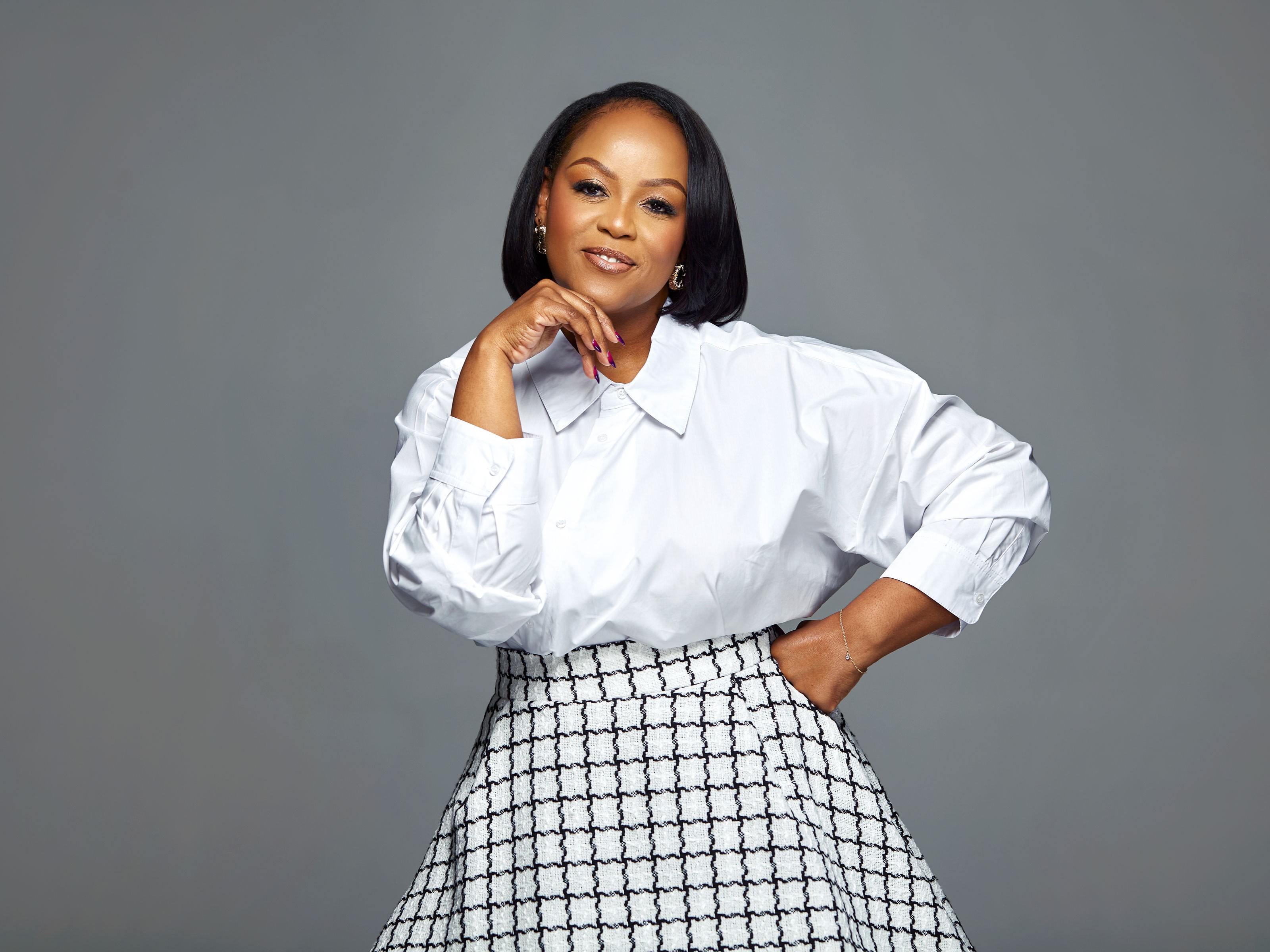
Cherie Dimaline, left, won the Vicky Metcalf Award for Literature for Young People and Shaena Lambert won the Writers’ Trust Engel Findley Award.(Writers’ Trust of Canada)
Cherie Dimaline won the Vicky Metcalf Award for Literature for Young People, a $40,000 prize, in recognition of her lifetime achievement in children’s literature.
Dimaline is an author best known for her YA novel The Marrow Thieves. The Marrow Thieves was defended by Jully Black on Canada Reads2018 and was named one of Time magazine’s top 100 YA novels of all time. It also won the Governor General’s Award and the Kirkus Prize.
Her other books include Red Rooms, The Girl Who Grew a Galaxy, A Gentle Habit, Empire of Wild and Hunting by Stars.She lives in the Georgian Bay Métis Community.
“It has been the greatest honour of my life to write for our future leaders, the young people marching, reading the fascists to filth, claiming and loving their beautiful identities in the face of overwhelming hate,” said Rachel Letofsky, Dimaline’s literary agent, who read Dimaline’s prepared notes and accepted the award on her behalf.
- Q&A
Métis author Cherie Dimaline ‘remixes’ The Secret Garden to reflect Indigenous and LGBTQ+ communities
Shaena Lambert took home the $25,000 Writers’ Trust Engel Findley Award, which recognizes the accomplishments of a predominantly fiction writer in the middle of their career.
Lambert is the author of the novelsRadiance,which was a finalist for the Writers’ Trust Fiction Prize, and, most recently, Petra. She also wrote the short story collections Oh, My Darling and The Falling Woman. Lambert is based in B.C.
“I keep writing into this terrain because of my heart. It’s what I also believe. I believe the world isn’t fixed in place. We aren’t doomed. We do have power to stop climate change, to stop pipelines, to stop the destruction of old growth forest, to care for the wilderness, to care and empathize with each other, to love,” said Lambert in her acceptance speech.
First-ever winner of genre fiction prize
The ceremony also featured a presentation awarding the inaugural Andrew Pyper Prize for Genre Fiction to Nalo Hopkinson.
The $20,000 award, in memory of thriller and horror writer Pyper, recognizes an author who has written at least three books in the horror, thriller or speculative fiction genre.
Hopkinson is the Jamaican Canadian author of many novels and short stories including Blackheart Man, which won the Sunburst Award, andBrown Girl in the Ring, which won the Warner Aspect First Novel Contest and was defended on Canada Reads in 2008 by Jemeni.
-
Nalo Hopkinson weaves Caribbean folklore and dialect into her latest fantasy novel Blackheart Man

Nalo Hopkinson is a Jamaican Canadian writer of sci-fi and fantasy.(David Findlay)
Her other books includeSister Mine,Midnight Robber, The Chaos, The New Moon’s Arms and Skin Folk. In 2021, she won the Damon Knight Grand Master award, a lifetime achievement award for science fiction.
“I can count the awards for speculative fiction on one hand, and this is one of them,” said Hopkinson in her acceptance speech.”[Andrew] was by all accounts a fine human, and I regret missing any chances I might have had to get to know him better.
“There are those who insist that the fantastical genres of literature, such as horror, thrillers, fantasy and science fiction are nothing more than lightweight, childish entertainment unworthy of being considered alongside great works of literature. But what is so wrong about being entertained by the stories that move us? What is wrong with stories that bring us back to a childlike sense of wonderment?
“I write in these genres because I simply love them and always have.”