The middleweight naked motorcycle category used to be fairly easy to understand. These were lighter, cheaper, slightly less intimidating alternatives to full-size superbikes, built for riders who wanted strong performance without paying for four-cylinder horsepower they rarely used. They were fast enough for fun, comfortable enough for travel, and cheap enough that purchasing them didn’t require a long conversation with your bank manager.
Japanese manufacturers have set standards in the industry
Japanese motorcycle companies have spent decades defining what each segment should look like. They set the template for accessible sports bikes, reliable commuters, lightweight dual sports, high-performance superbikes and everything in between. The recipe was generally straightforward: usable performance, reasonable pricing, durable engineering, and enough refinement to make the motorcycle work beyond an ideal riding scenario.
European brands often adopted those formulas and extended them further. They added more exotic materials, more intense styling, stronger engines, and increasingly sophisticated suspension and electronics. In many cases, they surpassed the Japanese originals in full performance. The compromise was generally a high price and a narrow focus, which left Japanese machines in a sweet spot between everyday practicality and weekend fun.
Yamaha has always had the ability to punch above its weight

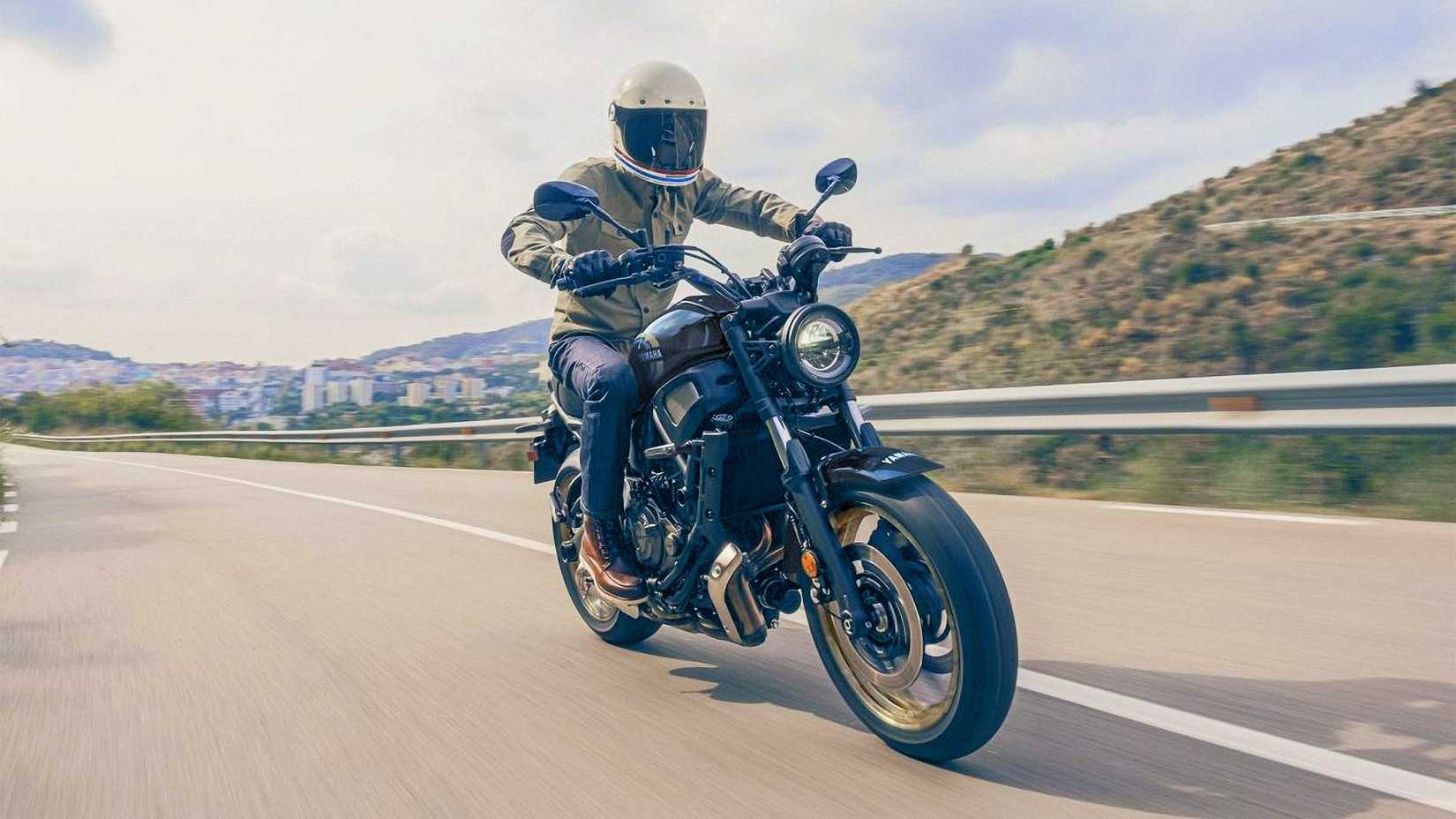
Yamaha has been particularly good at stretching the boundaries of a segment without completely abandoning the original brief. The MT-07 and XSR700 made relatively modest performance extremely enjoyable through low weight, instant torque and simple chassis packages. At the opposite end, the YZF-R1 and MT-10 took Yamaha’s crossplane philosophy and turned it into something far more aggressive, dramatic and expensive.
What’s interesting is what happens between those two extremes. Yamaha does not regard its middleweight motorcycles as watered-down versions of larger bikes. Instead, it has developed engines and platforms with its own identity, then gradually added capabilities around them. The result is a range in which the supposedly sensible middle option is often the one that makes the strongest case for itself.
Yamaha’s middleweight motorcycles are way ahead of the rest
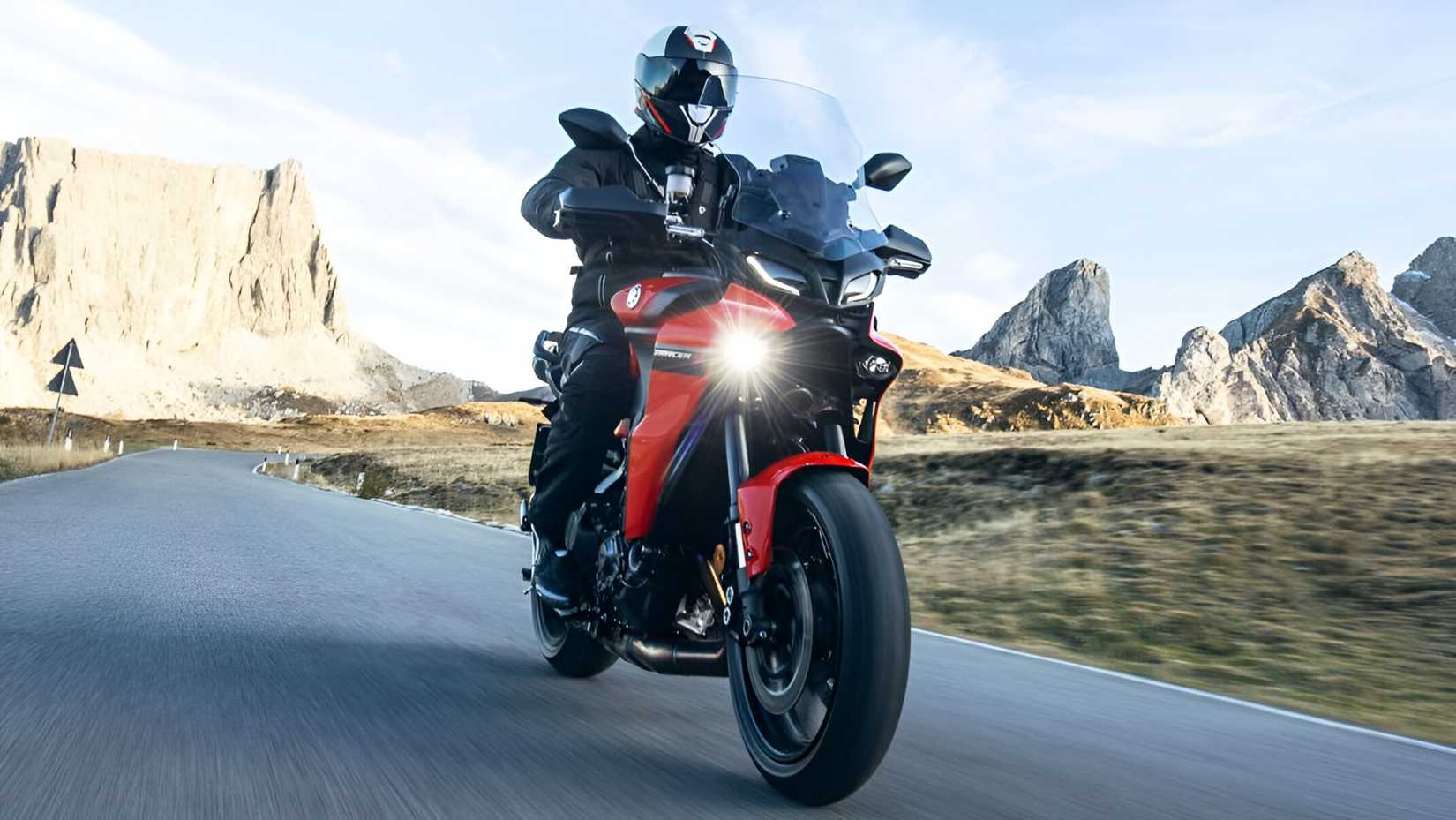
A large part of this comes from Yamaha’s obsession with uneven firing intervals and crossplane crankshaft layouts. The CP2 parallel-twin uses a 270-degree crank to create a strong, distinctive pulse, while the CP3 inline-three combines accessible low-end thrust with a lively upper rev range. Neither engine needs huge displacement figures or astronomical redlines to make regular road driving entertaining.
Yamaha has also become increasingly ambitious with the chassis and technology associated with those engines. Aluminum construction, adjustable suspension, sophisticated throttle-by-wire systems, and electronics derived from larger performance models are constantly filtering down. The bike at the center of this story didn’t abandon the traditional middleweight formula. Yamaha simply kept improving it until the limitations around that formula stopped making much sense.
Yamaha MT-09 SP quietly leaves its competitors behind
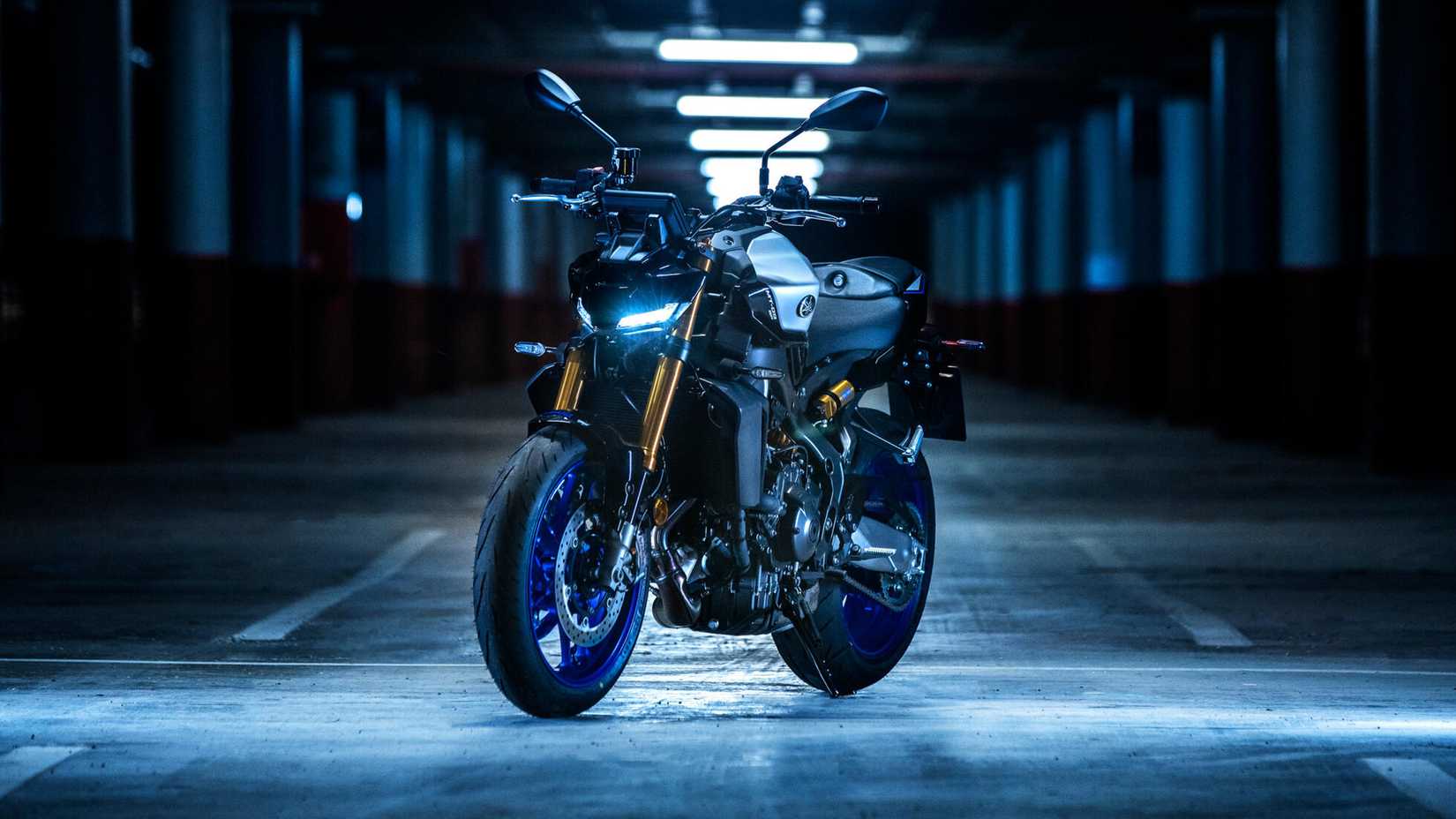
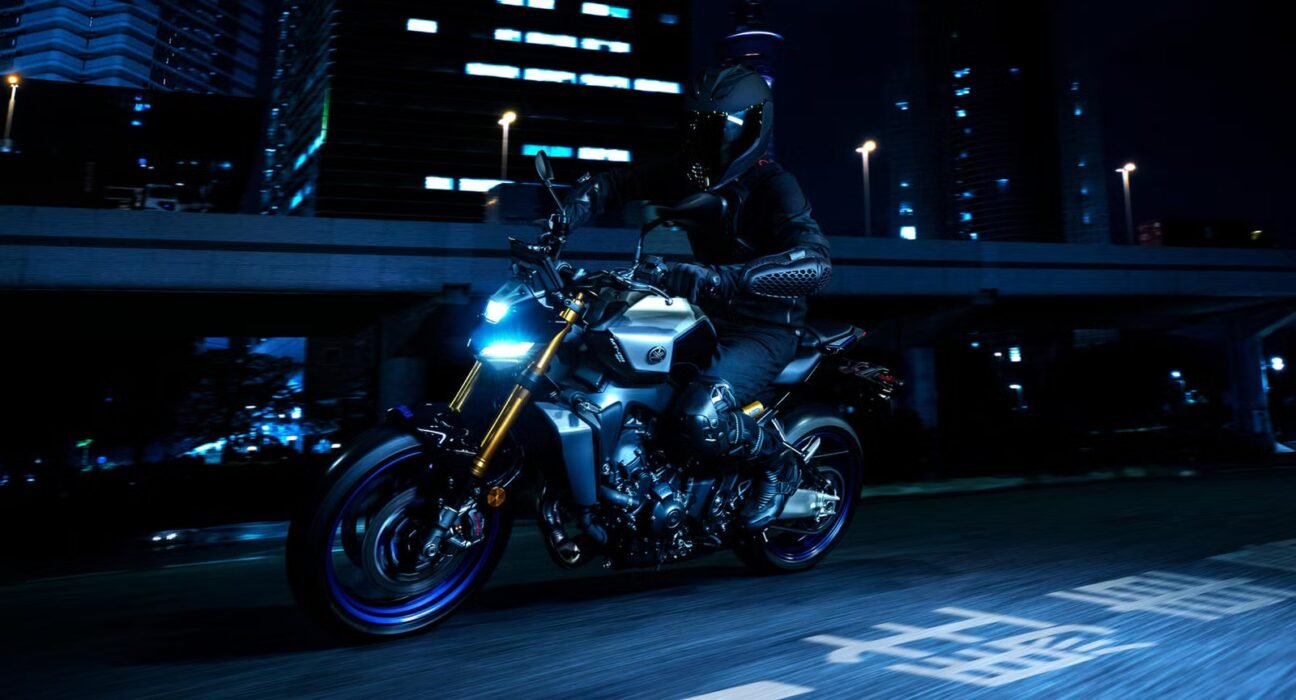
This brings us to the Yamaha MT-09 SP, now priced at $12,699. It is powered by an 890cc liquid-cooled inline-three with four valves per cylinder, fuel injection, Yamaha chip controlled throttle, an assist-and-slipper clutch and a six-speed transmission. Yamaha doesn’t publish official US horsepower and torque figures, but the engine’s broad, immediate delivery always matters more than chasing headline numbers.
The basic numbers show how effectively Yamaha has packed the bike. Wet weight is 428 pounds, fuel capacity is 3.7 gallons, seat height is 32.5 inches and the wheelbase is 56.3 inches. It rides on lightweight spinforged 17-inch wheels shod with 120/70 front and 180/55 rear Bridgestone Battlax HyperSport S23 tyres. Yamaha estimates fuel economy at 48 miles per gallon, giving it enough everyday practicality to avoid becoming a dedicated Sunday-morning toy.
SP changes over hardware badges
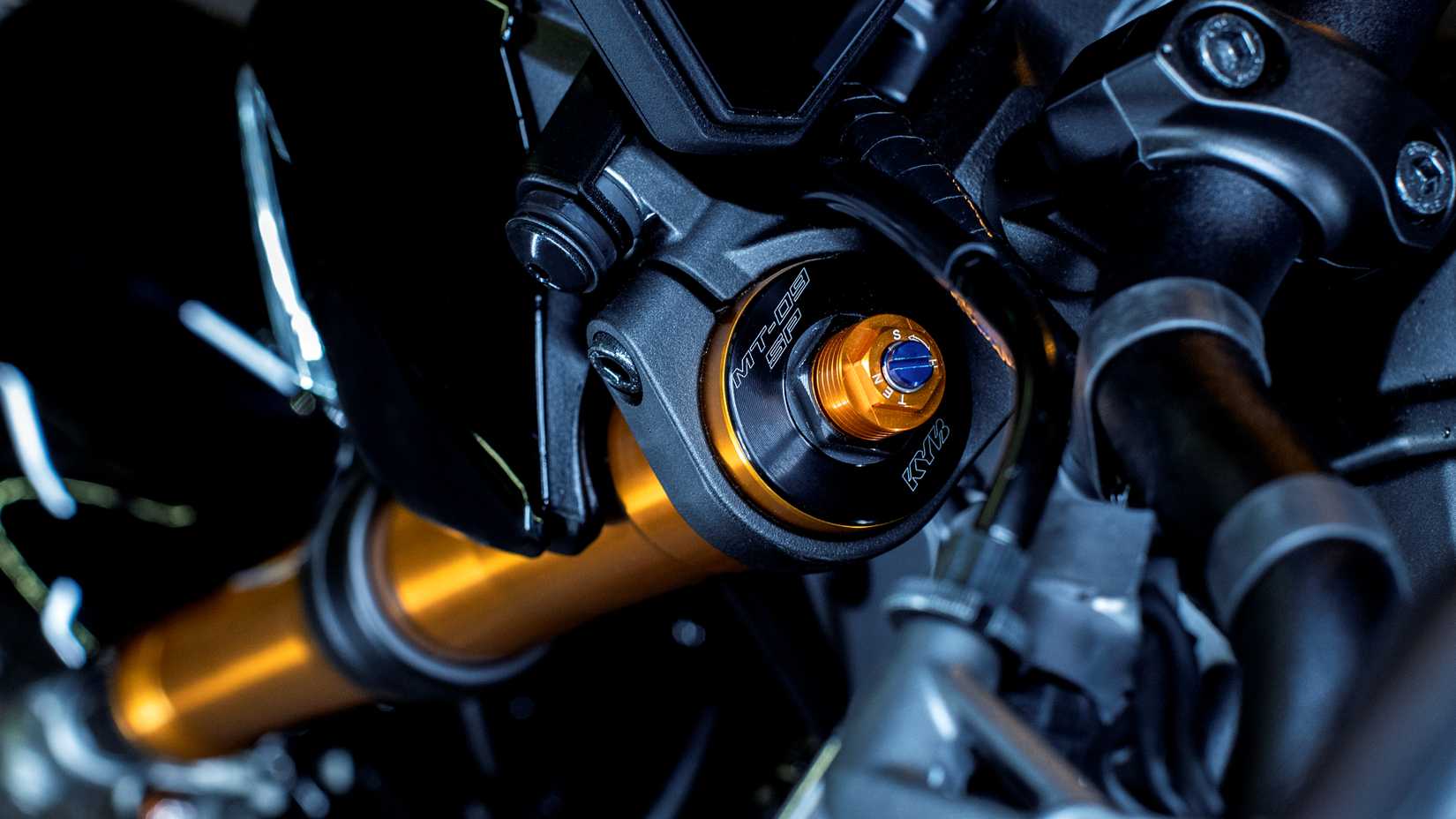
One look at the underpinnings of this bike makes it clear that it’s much more than a sensible commuter. At the front, the SP gets a 41mm KYB upside-down fork with diamond-like carbon-coated inner tubes and separate adjusters for preload, rebound damping, and high- and low-speed compression. The rear uses a fully adjustable Öhlins shock with remote preload adjustment. Suspension travel measures 5.1 inches at the front and 4.6 inches at the rear, providing real setup flexibility rather than a token adjustment screw that barely changes anything.
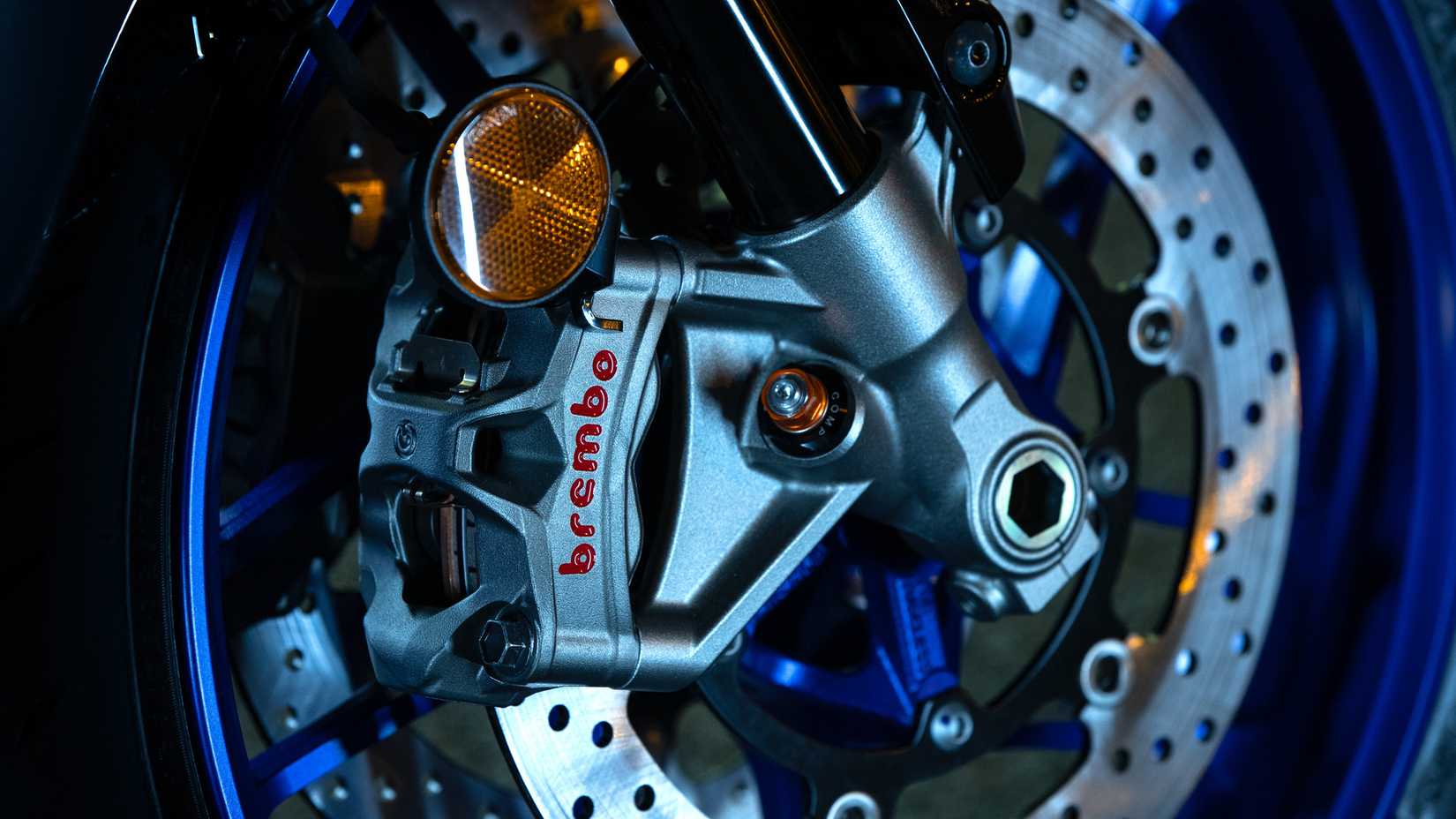
The braking hardware is equally serious. Brembo Stylema monobloc front calipers clamp dual 298 mm discs via a Brembo radial master cylinder, while a 245 mm rear disc handles duties at the rear. The SP also gets its distinctive liquid metal and raven finish, a polished aluminum swingarm and other model-specific details that distinguish it from the standard machine.
Those upgrades matter because they change how much of the engine’s performance a rider can confidently harness. Earlier generations had built their reputation around tremendous acceleration and a playful chassis, but they didn’t always have the suspension composure or braking feel to match. The present SP has filled that gap. It retains the energetic personality that made the platform successful, but removes much of the looseness that once gave the advantage to larger or more expensive rivals.
Its electronics no longer belong to a budget naked bike
Yamaha has built the MT-09 SP’s rider-assistance package around a six-axis inertial measurement unit derived from the technology used on the YZF-R1. The system supports lean-sensitive traction control, slide control, lift control, brake control, selectable engine-braking intervention and multiple riding modes. Riders can choose preset configurations or create customized settings, adjusting the bike’s response to weather, traffic, back roads or track riding.
A five-inch full-color TFT handles the interface and connects to Yamaha’s Wi-Connect smartphone app. Garmin StreetCross compatibility adds navigation support, while cruise control can operate at 25 mph in third gear or above. The bike also includes a smart key system, self-canceling turn signals, full LED lighting, adjustable handlebar and footpeg positions, and a USB-C port under the seat. For 2026, Yamaha supplies two smart keys.
No other Japanese middleweight naked comes close
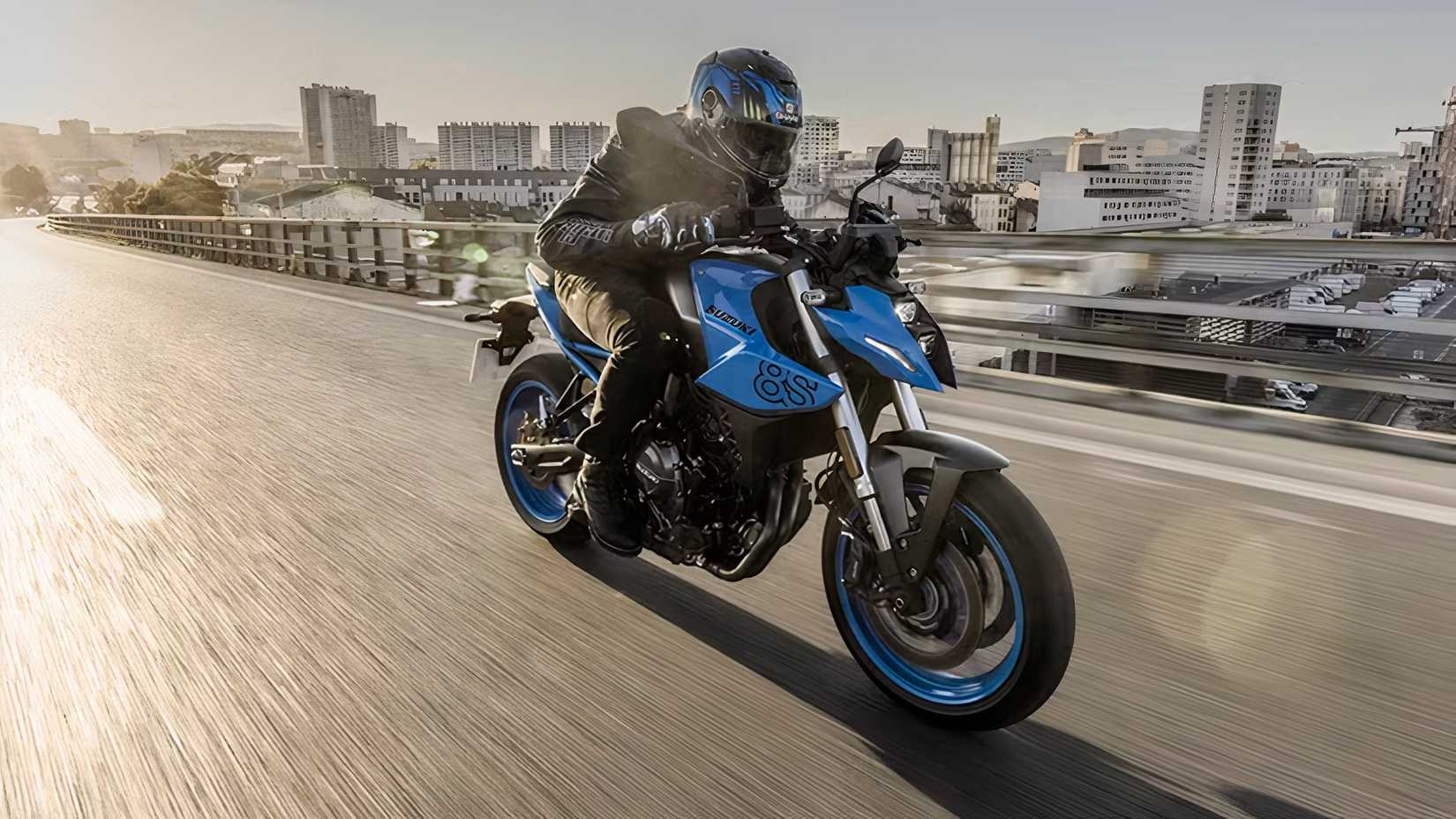
The complication is that the MT-09 SP costs significantly more than a traditional middleweight. Pricing for the Suzuki GSX-8S starts at $9,249, while the Honda CB750 Hornet e-Clutch is priced at $7,999. Both are strong-value parallel-twins, but neither is trying to deliver the same combination of engine output, chassis adjustability, premium brakes and lean-sensitive rider assistance.
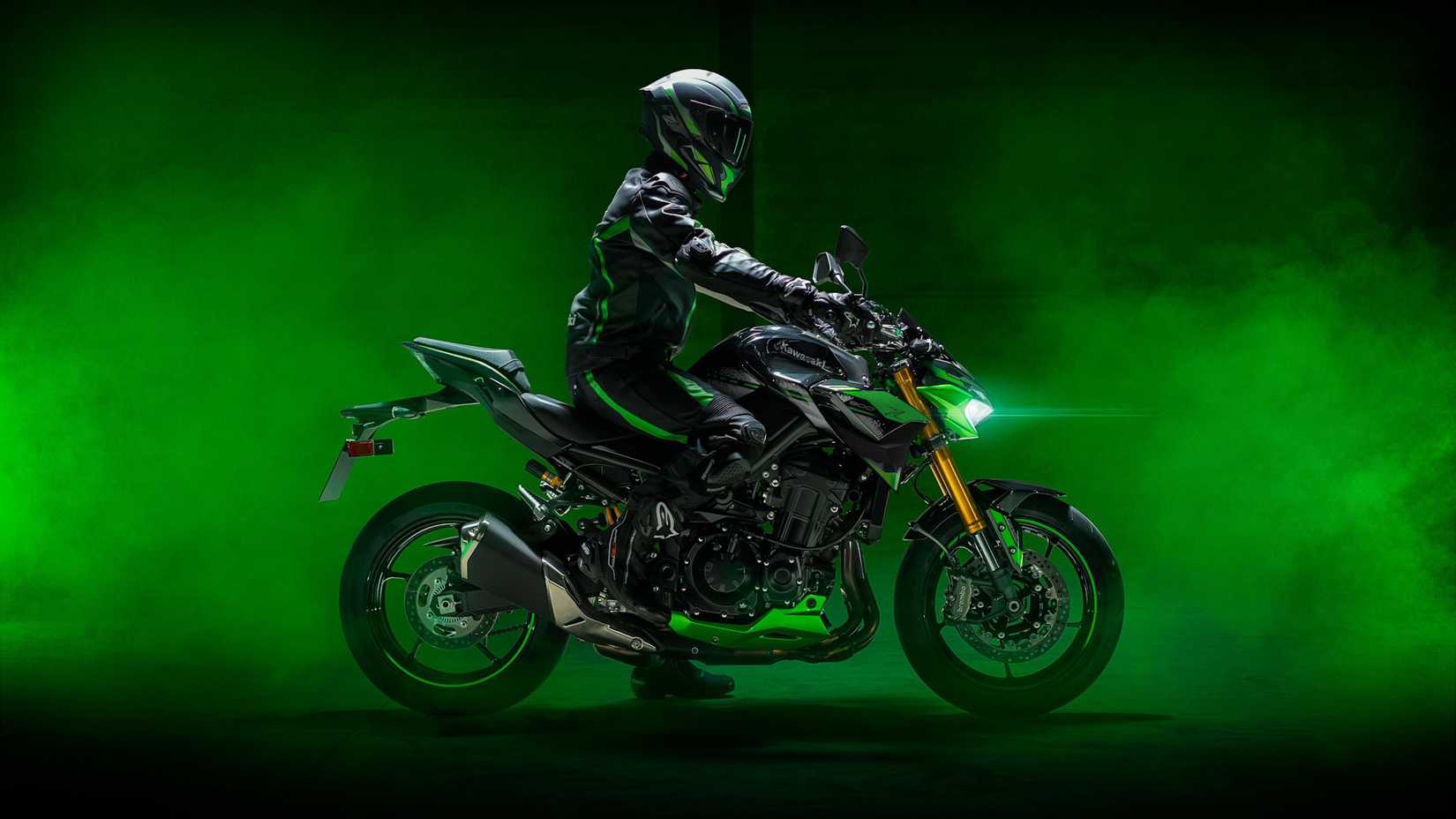
The Kawasaki Z900 presents a difficult comparison. Its 948cc inline-four offers conventional performance for $9,999, while the upgraded Z900 SE reaches $11,999. The Yamaha is still more expensive, but it copes with lower weight, more advanced electronics, cruise control, keyless operation, highly adjustable suspension and a more compact overall package. The MT-09 SP is essentially a rookie bike, but in the best possible sense.
The real competition may now be higher than this
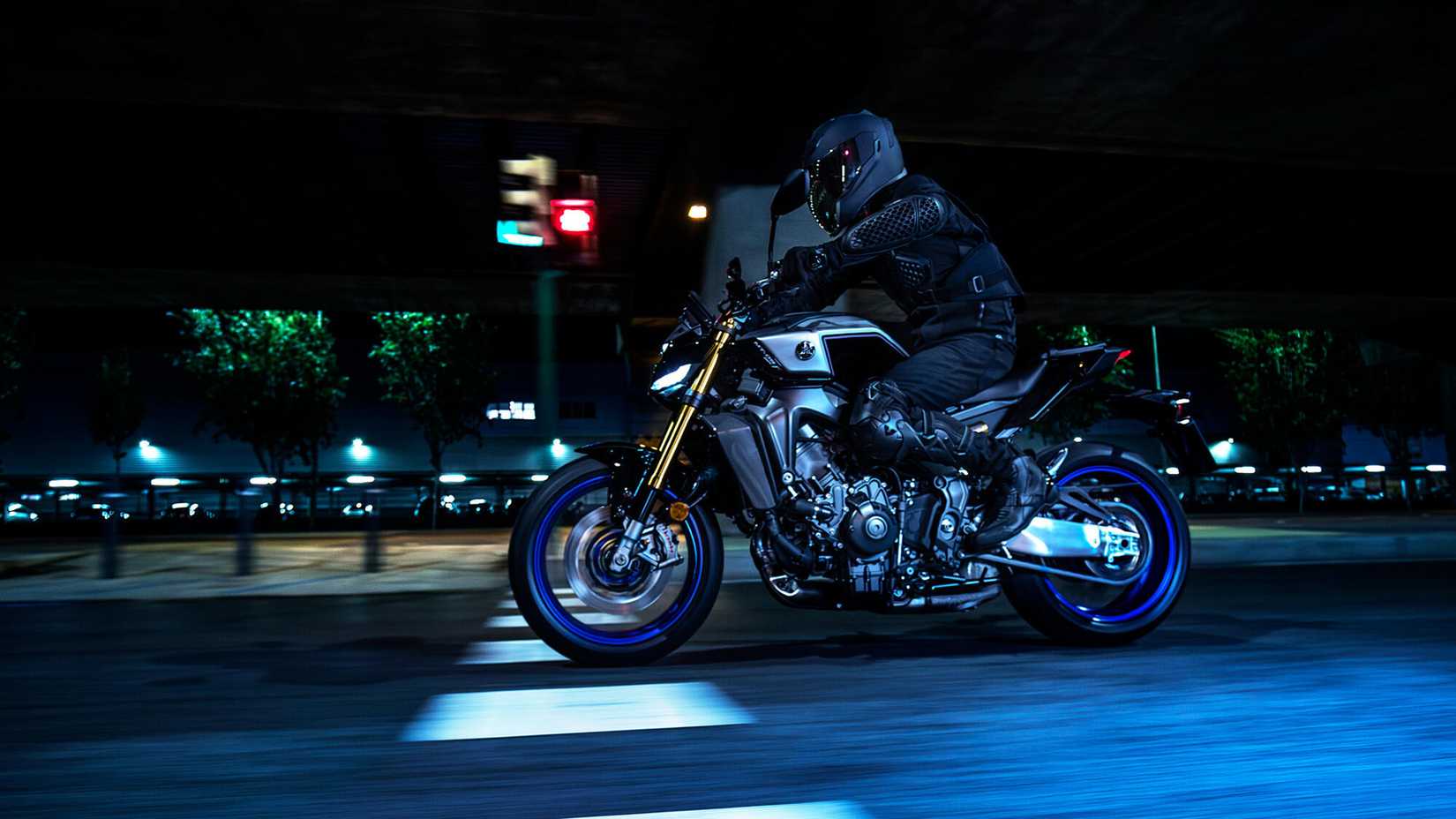
The MT-09 SP is still in the middle zone in terms of price, dimensions and day-to-day accessibility, but its wide range of capabilities puts it within reach of litre-class naked bikes. It doesn’t have their full horsepower, but public roads rarely provide enough room to take advantage of that advantage. What Yamaha offers instead is acceleration that remains exciting at reasonable speeds, a chassis that doesn’t require immediate modification, and electronics that make the performance easy to use.
Yamaha didn’t turn the MT-09 SP into an affordable superbike by chasing huge horsepower numbers. This made it difficult to justify moving forward. The bike outshines its original competition as it offers almost everything most road riders need before the litre-class horsepower tax kicks in. It is still technically correct to call it a middleweight. This doesn’t tell the whole story anymore.
Source: Yamaha