Published July 22, 2026 02:06 pm
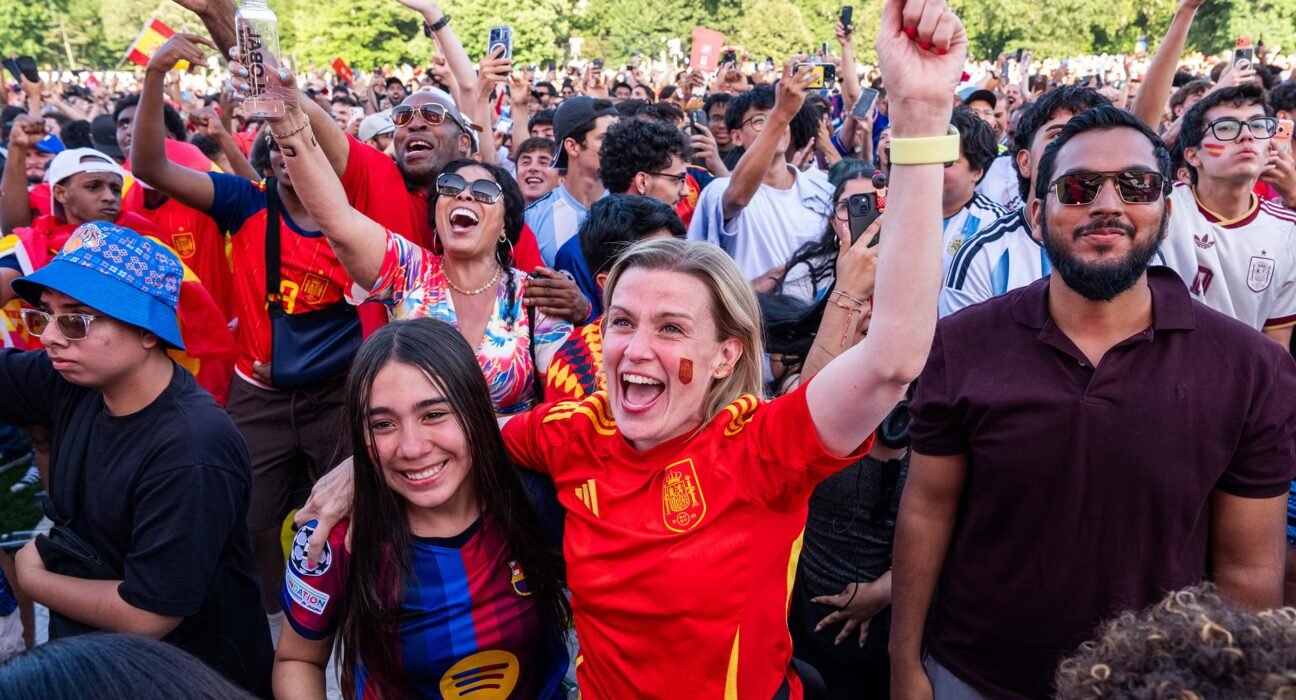
Yesterday I ran on the Manhattan Bridge, and as I came down the Brooklyn side I saw them tearing it down. The Big Watch Party sponsored by Adidas was being destroyed near the Brooklyn Bridge Park beneath the carousel. The scaffolding is coming down in sections. The banners are being tied with zips. Yes, the World Cup tournament ended Sunday in New Jersey with confetti in Spanish colors. But that’s what happened in that rare moment when you knew everyone everywhere was seeing the same thing.
I’ve never been to a single official watch party. There was no need. From airport lounges to bars, there was a watch party everywhere I went. For big games I would wander up to Dumbo and go to the Time Out Market, where matches were played on about a half-dozen screens surrounded by tourists. It’s a rare time when out-of-towners feel like they’re adding to the experience. You learn involuntary choreography faster. The whole room breathes on a through ball. Strangers holding the arms of strangers. Hands on head as the shot goes wide. Are people taught this, or is it just in our DNA?
These moments are rare. With the Olympics every four years. The World Cup measures teams, but in a way it also measures you. Where were you in 2010? 2014? Who were you seeing and do you still have their number? I can associate every World Cup of my adult life with a version of myself – the magazine-office ones, the ones watched half-standing in conference rooms; staying up late to watch the Japan World Cup at Corner Bistro; Which my daughters were too young to remember; This one, they’ll remember.
The tournament also has its own measures of mortality. Cristiano Ronaldo, 41, in his announced departure, departed after Spain eliminated Portugal in the round of 16. Manuel Neuer retired at 40 for one last tournament, then was gone for good after Germany lost to Paraguay. Neymar’s international career ended against Norway. Guillermo Ochoa, 40, kisses the post in Mexico City after England beat Mexico 3-2 in one of the most exciting games of the round. And Messi, who won the whole of 2022, sat on the field after the defeat to Spain, reflective, perhaps even admiring, considering how his entire career feels.
The clock strikes for everyone, even the immortals. Especially the immortal ones.
But if the watch takes things from the legends, look at what it gives to those who stay away from the spotlight. The best story of this World Cup belongs to Cape Verde, an island nation of about half a million people, which is playing in its first World Cup with the diaspora’s Bad News Bears, a group of players who grew up an ocean away from the islands they will represent.
Their goalkeeper Vozinha is 40 years old. In the opening match, he made seven saves and held Spain to zero. Yes, Espana, the eventual champions, a team that had not lost a competitive match in two years. Then came Argentina’s knockout: eight saves in regulation, several saves against Messi, including a free kick in the 73rd minute. Cape Verde lost 3–2 in extra time. This is a game that people will be watching again for years. His teammate Roberto “Pico” Lopes was recruited to the national team by a LinkedIn message that he ignored for months because he thought it was spam!

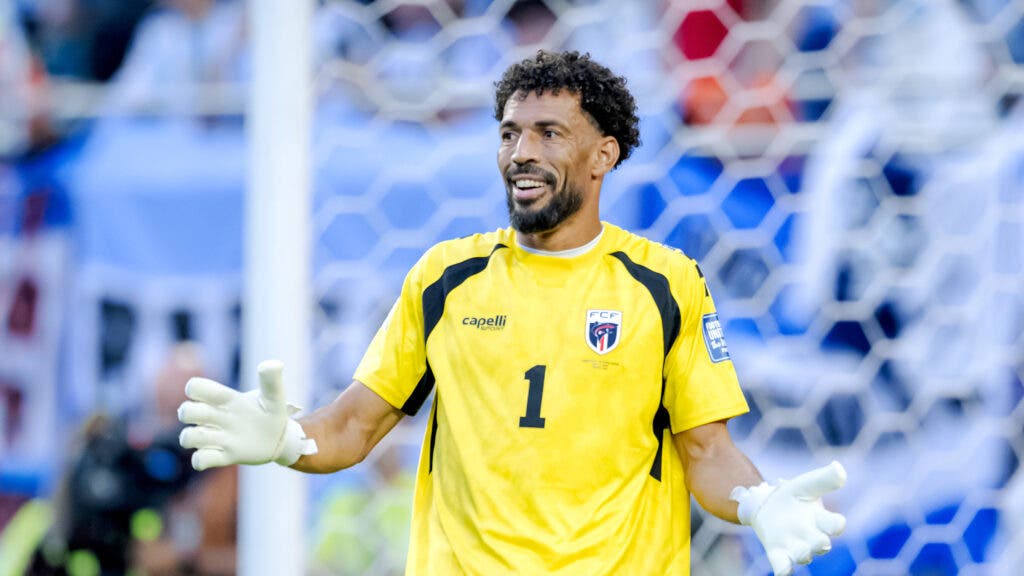
The Internet, naturally, decided that Vojinha came from nowhere. He went from about 50,000 followers on Instagram to over 18 million followers in a month. But, as any troubled coach will tell you, no one comes from nowhere. A 40-year-old goalkeeper’s four decades of workouts and practice unraveled in 14 days. If you’re a reader of this magazine, you already know it in your bones.
The Egypt-Argentina match caught me in a Gondola in Whistler, 2,000 miles from Brooklyn. I shared a cabin at the bottom of the mountain with an Egyptian family – a father and his two grown children, receiving alerts on their phones. At the bottom we reached the square to watch the match live on the big screen. Egypt led 2–0 with 11 minutes remaining. Argentina then scored three times, the last time in stoppage time. There were mostly cheers. I was standing near father. I saw his face. I had inherited something on that mountain, and it was generating interest: for the rest of the tournament, I was rooting for someone other than Argentina.
It’s the summer of no skin in the game. Once America moved out, I didn’t have a team, so I turned to stories. For a 40-year-old keeper, whose entire country came together to ferry his mother across the ocean to watch him play. To a father sitting in a Gondola, refreshing his phone. This is why the final, which was supposed to be the match of the decade, felt unfavorable. Argentina could not make a single shot in the first 90 minutes. Spain probed and passed until Ferran Torres finished it off in the 106th, 1–0. The most anticipated game of the tournament was its flattest game. But, you know, goodbyes are always hard.
The World Cup, like the Olympics, feels precious only because it goes on for so long. Four years is enough time for life to change shape – new cities, new jobs, kids who are suddenly old enough to remember. The next bell is nigh, and it’s ours: Los Angeles, in the summer of 2028, when the Olympics will bring the entire world back into the living rooms and plazas of this country.
So here’s my only training advice for the next global sports moment: When the clock strikes, put yourself in a place where you can get a stranger’s heart.