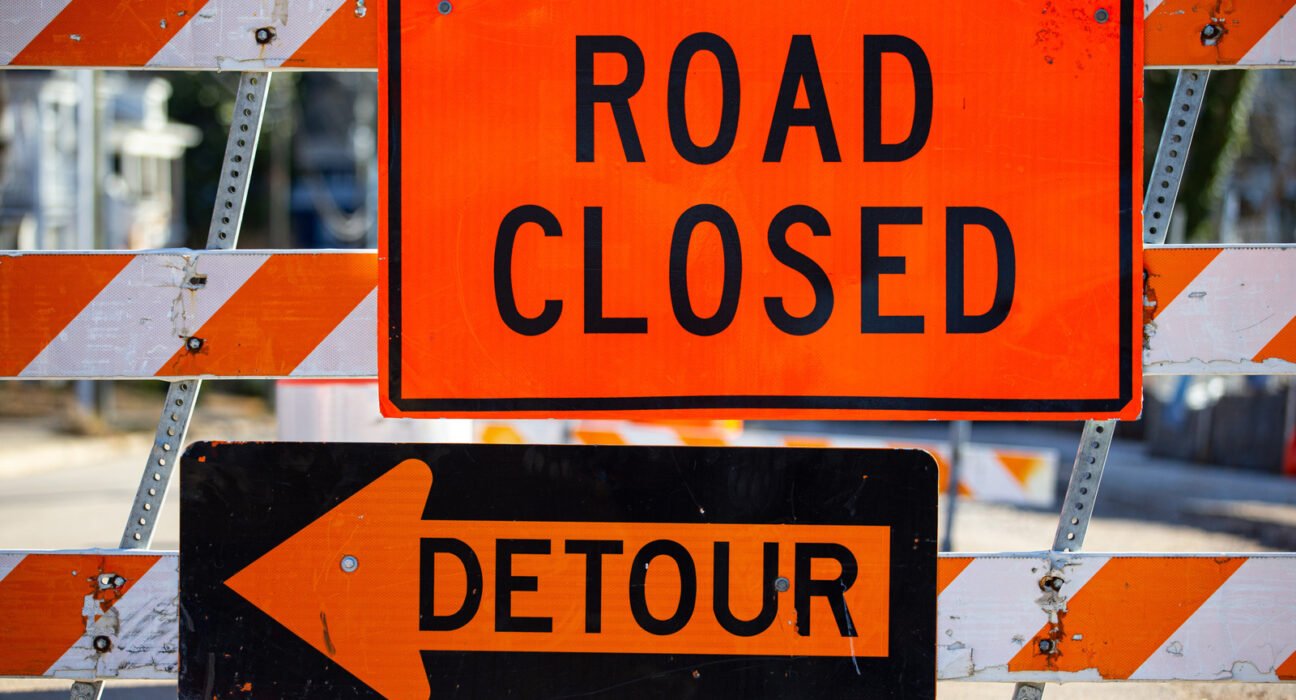
Drivers today may be faced with a veritable rainbow of traffic signs, and each color has its own special meaning. In fact, we’ve already examined why some stop signs are blue, why school zone signs are fluorescent yellow-green, and even the significance of the rarely seen pink road sign. Well, today our color wheel has become orange. That specific color is reserved for temporary traffic control (TTC) warning signs. As the name implies, orange is meant to indicate that warnings are only for relatively short-term, temporary situations, while yellow is for more general, permanent warnings, such as sharp corners.
The color of traffic zone signs in this country is governed by Chapter 6F Manual on Uniform Traffic Control Devices (MUTCD)Which is currently in its 11th edition. And under Section 6H.01 Warning Signal Function, Design and Application, it says that – with very few exceptions – “TTC warning signals shall be diamond-shaped, with a black legend and border on an orange background.” As examples of those exceptions, grade crossing advance warning signs must be black on yellow, and school zones with fluorescent yellow-green signage may also use the same color for their construction-zone warning signs. That said, the MUTCD reserves a total of 13 color standards for traffic control signs, which we’ll cover below.
What does orange mean at work?


But first, there is some color theory behind this choice. Orange is a vibrant color that is easily able to grab attention, and this makes it ideal for immediately warning both drivers and workers about the potential dangers of a construction zone. Consider: On average, it can take drivers more than a second to recognize and respond to expected changes in driving conditions. This may not seem like much, even with a half-second reaction time at 60 mph, your car will have traveled 44 feet before you react.
Therefore, it is not surprising to know that one of the first colors assigned to traffic scenarios was orange, starting with the fifth edition of the MUTCD published in 1971 (the first edition was published in 1935). You may also notice that work zone signs aren’t the only thing that are orange. Look around, and you’ll see the color found on safety jackets, traffic cones, traffic barrels, and other barricades. This is intentional, and the idea is to create a single work-zone ecosystem in which drivers know to be extra mindful of their surroundings.
Which colors are reserved for traffic signs?
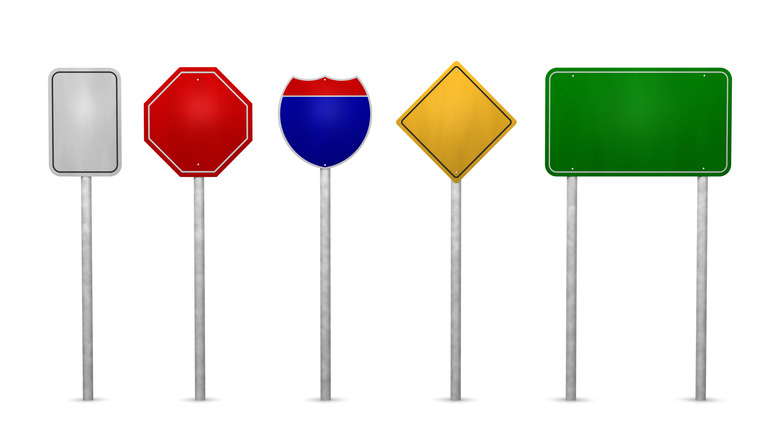
Keep in mind that, even though 13 colors are mentioned in the guide, only 11 are currently given specific meaning. If someone comes up with new traffic scenarios that need them, coral and light blue colors are on the list. Other colors and their uses are listed in Section 1D.05, and note that the MUTCD has officially approved fluorescent alternatives to red, yellow, green, and orange:
- Black – Regulation (signs referring to traffic laws/regulations)
- Blue – road-user service guidance, tourist information and evacuation routes
- Brown – Recreational and cultural-interest area guidance
- Fluorescent Pink – Event Management
- Fluorescent yellow-green – pedestrian warning, bicycle warning, playground warning, school bus
- warning, and school warning
- Green – indicated activities or actions permitted and direction guidance
- Orange – Temporary Traffic Control
- Purple – restricted to use only by vehicles with registered electronic toll collection (ETC) accounts
- Red – stop or prohibit
- white – regulation
- yellow – warning