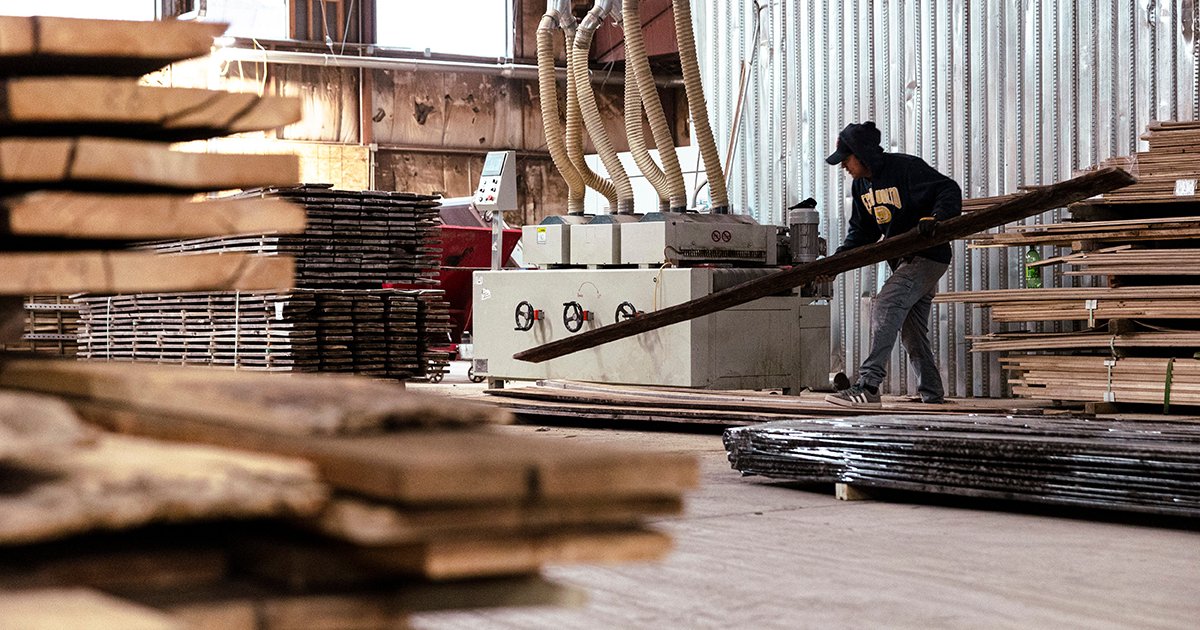
A worker uses a brushing machine to refinish reclaimed wood siding at a sawmill in Pine Plains, NY (Angus Mordant/Bloomberg).
key takeaways:
- The S&P Global Flash Composite PMI rose to 52.2 as strong manufacturing output pushed US business activity to a five-month high in June.
- S&P Global data showed the PMI rose to 55.7 on strong orders as manufacturing rose, while services expanded modestly amid higher prices and weak consumer confidence.
- Companies increased inventories and cut employment as supply delays and cost pressures persisted, although businesses expressed cautious optimism about further easing of geopolitical tensions.
US business activity grew at the fastest pace in five months due to increased demand for manufactured goods.
According to data released on June 23, the S&P Global Flash Composite Purchasing Managers’ Index rose to 52.2 in June. Figures above 50 indicate expansion.
The group’s manufacturing gauge rose to 55.7, the highest since May 2022, as factories boosted output to meet the strongest new orders growth in more than four years.
Activity by service providers also improved, partly due to the World Cup. Nevertheless, high prices and low consumer confidence continued to weigh on demand.
“Good news from the Middle East helped restore some confidence among U.S. businesses in June,” Chris Williamson, chief business economist at S&P Global Market Intelligence, said in a statement.
However, the services sector “is growing particularly slowly,” he said. “Although there are better news from the manufacturing sector, we remain concerned as factory growth is being temporarily boosted by inventory build-up amid supply fears.”
Flash US PMI data shows a sharp rise in private sector output in June, as the index reached a five-month high of 52.2 (May: 51.5). However, the rate of growth remained weaker than at the beginning of the year.
Read more: https://t.co/Hr48LCQi7q pic.twitter.com/bloKZxsToS
– S&P Global PMI™ (@SPGlobalPMI) 23 June 2026
Overall input prices continued to rise but at a slightly slower pace, and supplier delivery times became longer. With supply chain delays becoming more widespread — and additional price increases likely coming down the pipeline — manufacturers built up their stockpiles of materials.
Input purchasing by factories increased in June, with input inventories rising to the second-fastest rate on record.
With material prices still high, companies looked for other ways to cut costs. The number of employees in both factories and service providers decreased in June. The group’s manufacturing employment index fell to its lowest level since May 2020. Meanwhile, service providers sharply raised prices.
Both manufacturers and service providers were more optimistic about the future, possibly reflecting expectations of a reduction in war-induced cost pressures in the coming months.
Survey data was collected June 11–22. During that period, the US and Iran signed a memorandum of understanding, which helped pave the way for a permanent peace agreement.