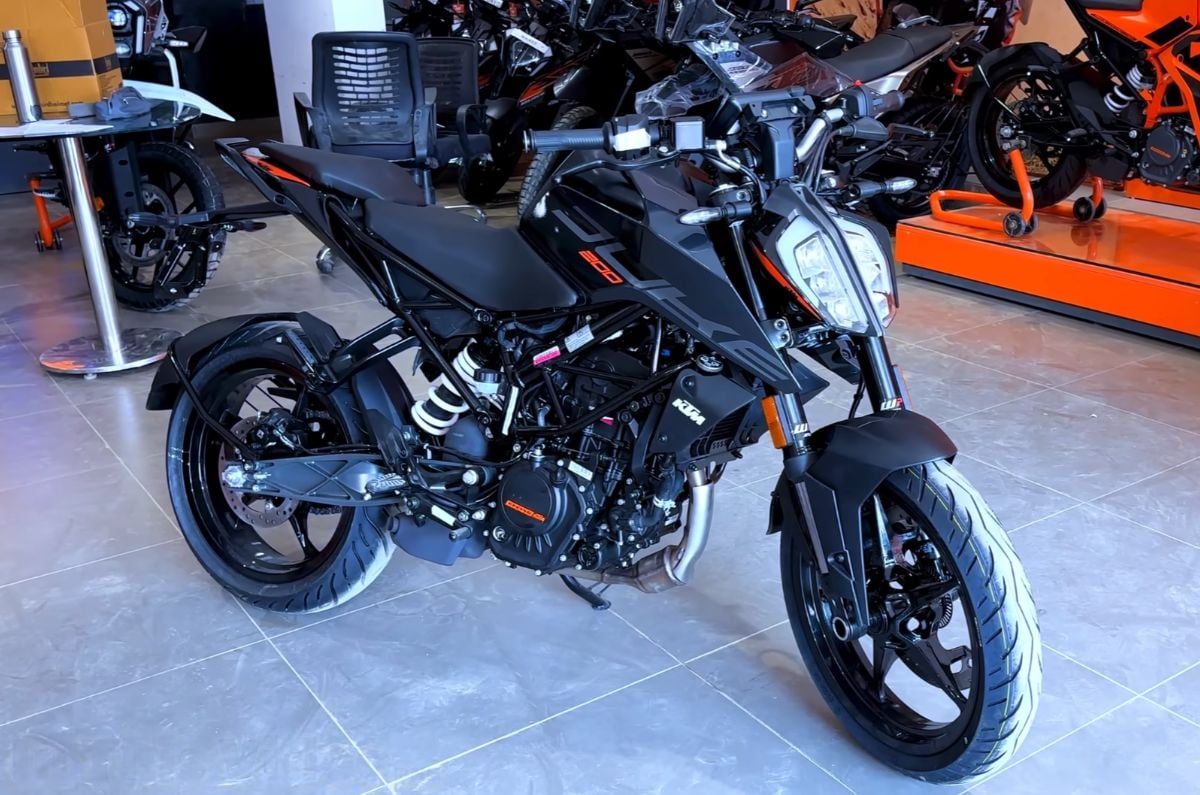
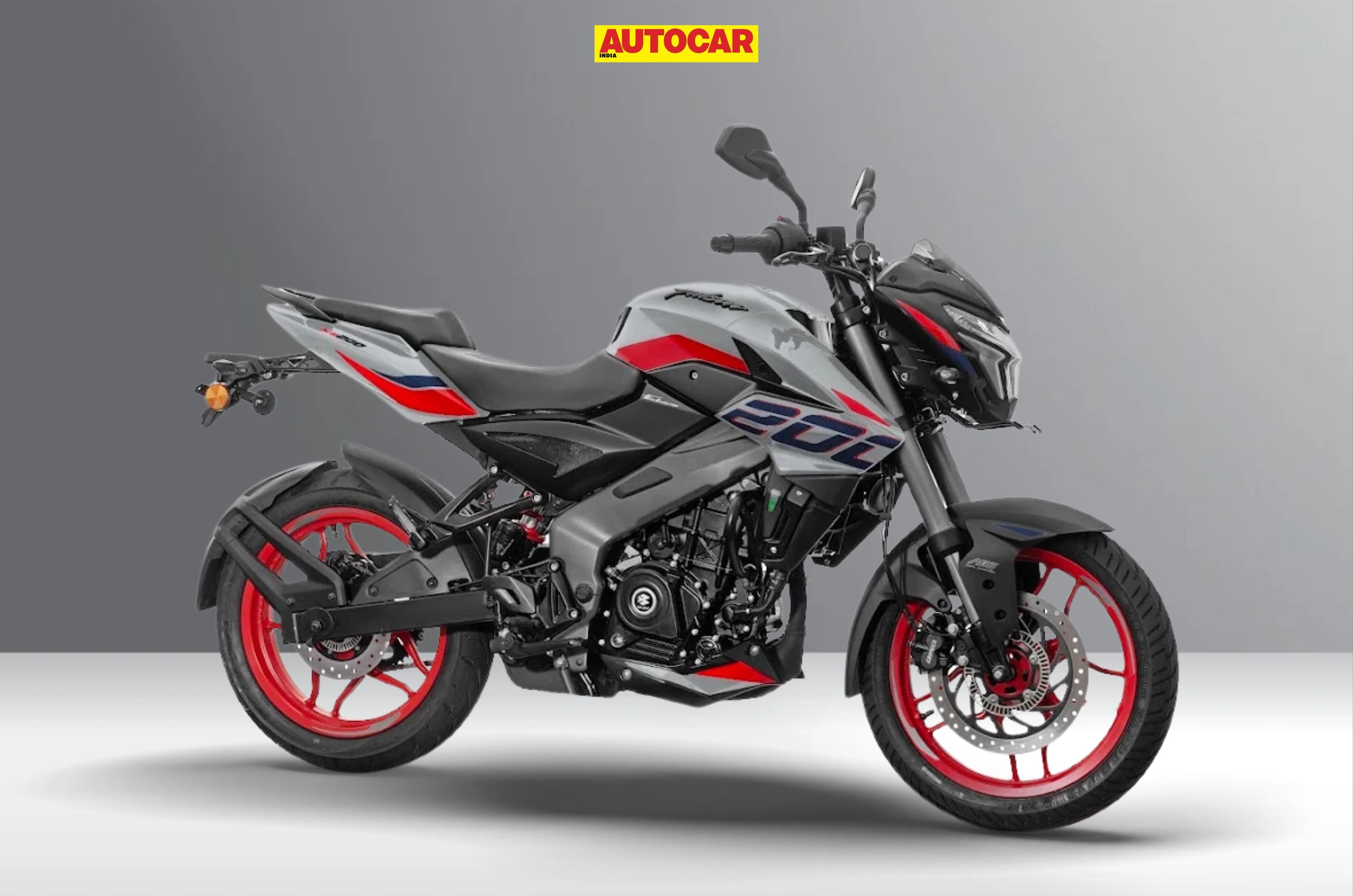
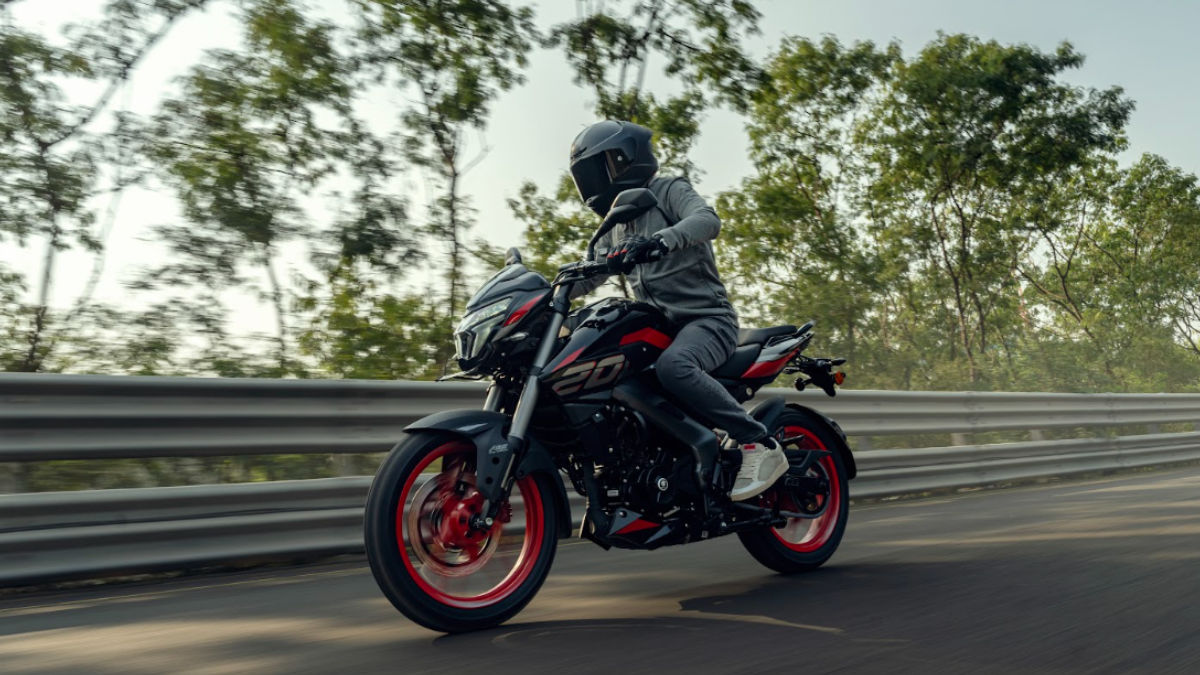
Bajaj has given a new update to the Pulsar NS200, which adds 1hp extra power and additional features like a quick(sport)shifter, ride modes and the now-famous 5-inch TFT display. While it isn’t as major a redesign as the classic Pulsar duo received in August, it certainly likely to bring a renewed interest to what is arguably one of the sportiest and iconic Pulsars. So how does the new and improved NS200 compare to its immediate rivals, the KTM 200 Duke and the TVS Apache RTR 200 4V? Let’s see.
Bajaj Pulsar NS200 vs rivals: Engine and output
The NS200 is now the most powerful 200
Before receiving this update, the Pulsar NS200 had 24.5hp which has been increased by 1hp now, beating the 200 Duke’s peak power by 0.5hp, however, the Duke still stays ahead in terms of peak torque. Compared to these two, the Apache RTR 200 4V’s simpler air- and oil- cooled engine doesn’t have the upper hand in either number.
Bajaj Pulsar NS200 vs rivals: Dimensions and weight
The RTR 200 4V is the most accessible
The Apache RTR’s seat height ensures that it’s accessible to most riders, while offering the most ground clearance of the trio. The NS200 follows the Apache in both fronts, offering the second best numbers. Even in kerb weight figures, the story remains similar but the 200 Duke gives you an additional litre and a half of fuel tank capacity for a 1.5kg heavier kerb weight. As for the wheelbase, the NS200’s is the largest, which could translate to a minute advantage in highway stability for the Pulsar.
Bajaj Pulsar NS200 vs rivals: Tyres, brakes and suspension
The RTR 200 has an advantage in suspension
With the update, Bajaj has made the NS200’s rear tyre a radial ply one although the sizes themselves remain unchanged. That means the 200 Duke continues to have the largest tyres and the only one to offer radial tyres are both ends as well. The story is similar with the front brakes and suspensions too. However, the Apache is the only motorcycle to offer adjustable preload for its USD fork even if it’s limited to the top variant. It also gets a 10mm larger rear disc brake, but has the smallest front disc of the lot. As for the rear suspension, all three bikes have a monoshock, and all offer adjustable preload as standard.
Bajaj Pulsar NS200 vs rivals: Features
All are much better equipped than before
Now this is where the most significant changes have happened recently, for all three motorcycles. Starting with the NS200, it gained the new 5-inch TFT display now increasingly becoming ubiquitous across Bajaj’s line-up. In addition to that it now also gets ride-by-wire, five ride modes, Google Maps mirroring, Bajaj’s sport shifter (a more affordable form of a bi-directional quickshifter), crawl tech (to enable low speed riding easier) and traction control.
The 200 Duke also received an update with which it got two ride modes, ride-by-wire, a proper bi-directional quickshifter, crawl assist and traction control. Even though KTM had given it a 5-inch TFT display in 2024, it can’t match the NS200’s Google maps mirroring functionality and only offers turn-by-turn navigation.
As for the Apache RTR 200 4V, TVS has always stayed ahead of the curve on the features front and that remains the case. In mid-September it received an update which enabled Google maps mirroring on its 5-inch TFT display and traction control as well but TVS’ flagship street-naked Apache still sticks to a traditional cable throttle and it has had ride modes since 2020 and glide through technology (GTT, TVS’ version of crawl tech) since 2019.
Bajaj Pulsar NS200 vs rivals: Price
NS200 received the largest price increase
With the updates came the price increase and even though the KTM is the most expensive of the trio, it’s the Bajaj that saw the largest price increase. It was priced at Rs 1.48 lakh before receiving the updates, which means it’s become more expensive by roughly Rs 12,000. On the other hand, KTM increased the 200 Duke’s prices by approximately Rs 1,500. This leaves TVS as the most affordable 200 you can buy at the moment, but as we now know, that comes with sacrifices in performance. If you are confused by these three, the good news is that one test ride on each should tell you which would be right for you.
If you’re not satisfied with any of them and you’re willing to spend more for higher performance, you can always look at the new Yamaha R2 which is both the most powerful and the most expensive 200cc class motorcycle you can buy at the moment, ranging between Rs 2.30 lakh and Rs 2.53 lakh. Find out here how the YZF-R2 compares to its direct rival, the KTM RC 200.
All prices are ex-showroom, Delhi.