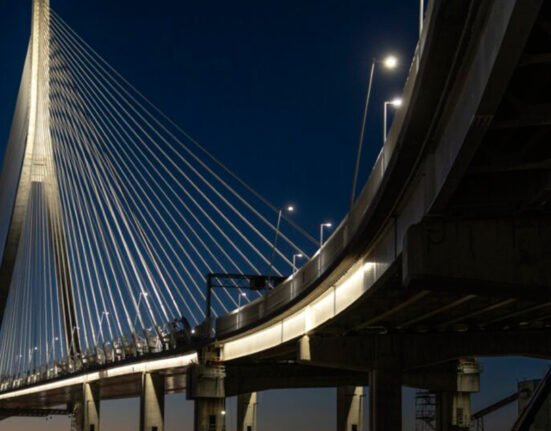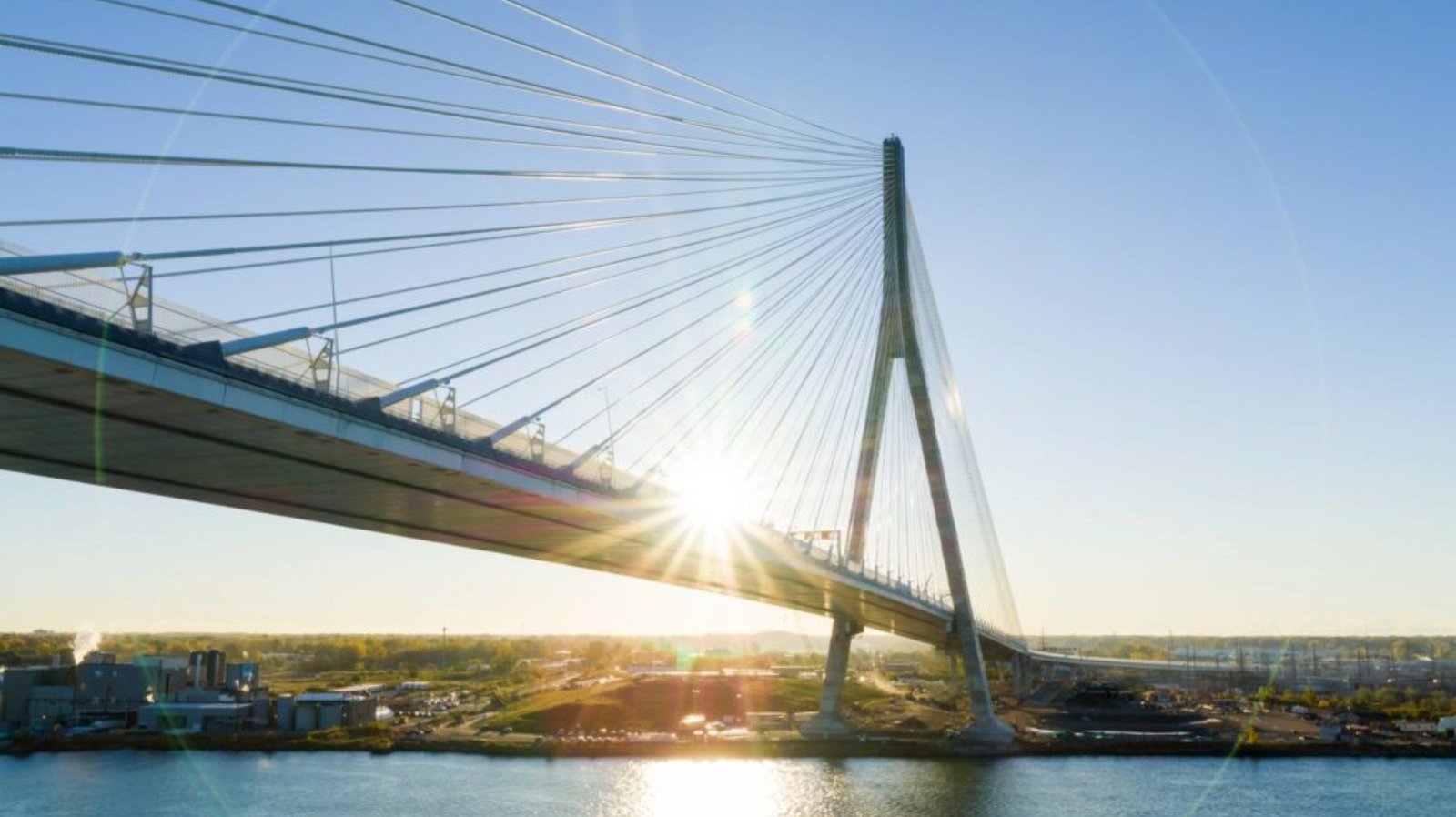
It’s been almost a month since President Trump decided to hold off on opening another vital crossing for trade between the US and its second-largest trading partner, Canada. In this latest chapter of the ongoing Gordie Howe Bridge saga, it appears that the man whose job it is to sort out the details hindering the bridge’s opening believes it is a big old myth that Canadians paid for the bridge, as reported detroit free press.
Pete Hoekstra, a former representative from Michigan who is now the U.S. Ambassador to Canada, recently appeared on the Canadian-based Food Professor podcast. The main objective of the talks was to focus on food and its trade between Canada and the US, which he said accounts for 25 per cent of trade traffic between the two countries. Host Michael LeBlanc asked some follow-up questions, around 22:30 If you want to watch and follow. The first concerned what was happening with the Gordie Howe Bridge, which led to considerable questioning and clarification from Hoekstra about its delay.
Hoekstra asked both hosts if they knew who paid for the Gordie Howe Bridge. Dr. Sylvain Charlebois, the podcast’s other host, told the ambassador he understood the bill was paid by Canada. Hoekstra looked almost in disbelief when he asked Dr. Charlebois if he “wanted to make news today.” He explained that “Canadians are paying for it” as opposed to what he called “the big myth that’s out there.” He then went on to compare Canadian debt to a mortgage on a home. But if it’s like a mortgage, aren’t homeowners actually paying for their home because they took out the loan?
Caught saying the quiet part out loud
What’s arguably more ridiculous is that when Hoekstra explained the loan and how it would be paid off, he actually got most of it right. Canada backed approximately $4.7 billion (US) of debt to build the bridge, and that debt must be repaid from revenues from traffic crossing the bridge on the Canadian side (there are no tolls if you are coming to Canada from the US.) Hoekstra’s “myth” is that Canada is not the one that “owns” the debt. He insists that Canada instead acted as the bank, and that the Windsor-Detroit Bridge Authority (which is 100% owned by, get this, the Canadian government) is the lender. This does not change the fact that America never funded its construction. Canada paid for it. In fact, the US was adamant that it would not pay for the bridge for years. There is no myth.
When asked about the Gordie Howe Bridge, Hoekstra pointed out that there is already a bridge there that cars must cross, referring to the Ambassador Bridge. “So the Gordie Howe Bridge is not generating new traffic, it’s just increasing revenue. So you’re actually going to pay for the bridge by transferring revenue from the tunnel or the Ambassador Bridge to the Gordie Howe Bridge,” he said. “It gets a little complicated, but the bottom line is you’re diverting it from a tunnel that’s owned between Windsor and the city of Detroit, and you’re diverting revenue from the American company that owns the Ambassador Bridge.”
Like withdrawing money from a billionaire’s bank account
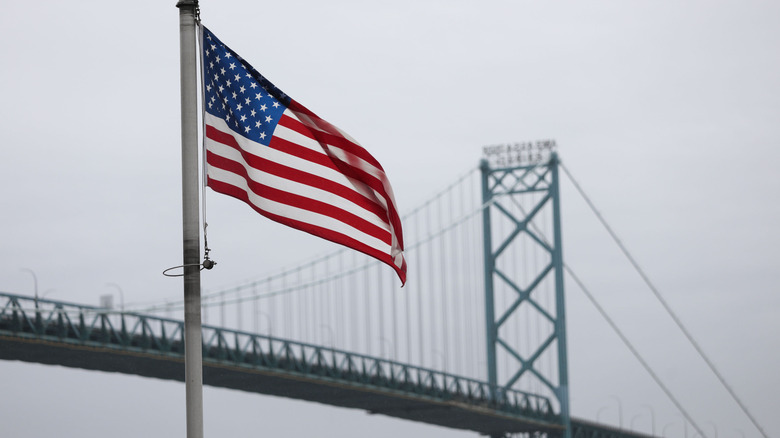
We reported in our June article talking about bridge delays that one of the “issues” delaying the bridge’s opening could be dealing with the billionaire family that has given a lot of money to Republicans like Trump, as well as Hoekstra. In another Hoekstra interview released this week youtube with global newsThe host there pointedly asked Hoekstra if the delay had anything to do with the Moroun family, which has owned the Ambassador Bridge since the 1970s. Moroun earns approximately $60 million in tolls each year as 27% of international trade between the US and Canada passes through this bridge. Hoekstra denied the allegation and took a very defensive stance regarding it. He then satirized the host by explaining how American campaign financing works. It certainly seemed like how it should work, but that’s not how it actually works in the current Trump administration.
There is no doubt that if the Gordie Howe Bridge opened, traffic would naturally shift to it, and it would certainly mean taking money out of the Moroun family’s pockets. As a native of Detroit, if I had to choose between getting to Canada via the leaky tunnel, the dilapidated and poorly maintained Ambassador Bridge and the brand new Gordie Howe Bridge, I would put my money on the bridge named after the hockey great, not only for the novelty but for the peace of mind.
The cost of not opening the bridge is reaching lakhs
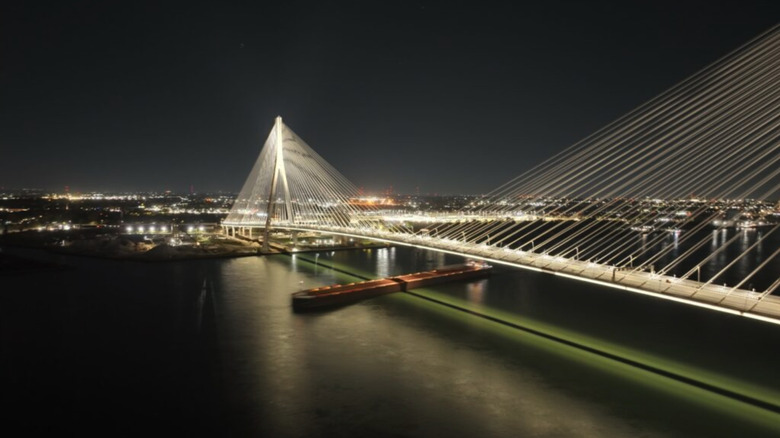
It’s worth adding that companies already divert their truck traffic from the Ambassador Bridge due to its cost, sending freight to the Blue Water Bridge in Port Huron, Michigan. Something a Michigan native like Hoekstra should know. So will the opening of the bridge actually divert traffic from the Ambassador Bridge? Possibly, but it would also bring more traffic to Detroit, which is a boon for both parties, or at least, it should happen at some point. The crossing is vital to the industry we all love: cars. The big three brands that have production plants in Ontario can ship a car back and forth across the boarder seven times before it is completed.
At first, tolls will be collected only on the Canadian side and, once the country’s initial investment is paid off, the two countries will begin dividing the toll equally. But no, it would be better if all that money went straight into the already full pockets of the Moroun family. They’re also not thinking about eliminating traffic on the Ambassador Bridge, which is frequently used by large trucks trying to cross it along the I-96 freeway in Detroit. Moroons will earn slightly less money than they do now. Canada also urged the Moroons to perform necessary maintenance and updates to the bridge, which the family ignored for decades.
Hoekstra ended the “Bridge” segment on The Food Professor podcast with the assurance that he thought both sides wanted to open the bridge and that it would happen soon. Still, if anyone should know what that deadline will be, it should be someone like Hoekstra, one of the people negotiating these issues between the two countries.
it should be fine. What harm will be caused by a delay of a few days or months? We didn’t write about the fact that a recent economic survey said that if the bridge did not open on time – if there was a delay – Americans would lose about a million dollars a day. And if we calculated that cost based on business days since the original June 12 opening, it would be around $20 million this weekend. This is nothing compared to the alleged $29 billion we spent on the Iran war, as was reported in May. So, what’s the point of losing another few million dollars at this point?