Updated July 13, 2026 07:41 pm
President Donald Trump shrank the boundaries of Bears Ears and Grand Staircase-Escalante national monuments in an executive order signed at a ceremony Monday afternoon in the presence of Utah legislators, cutting the protected areas by a combined 3 million acres.
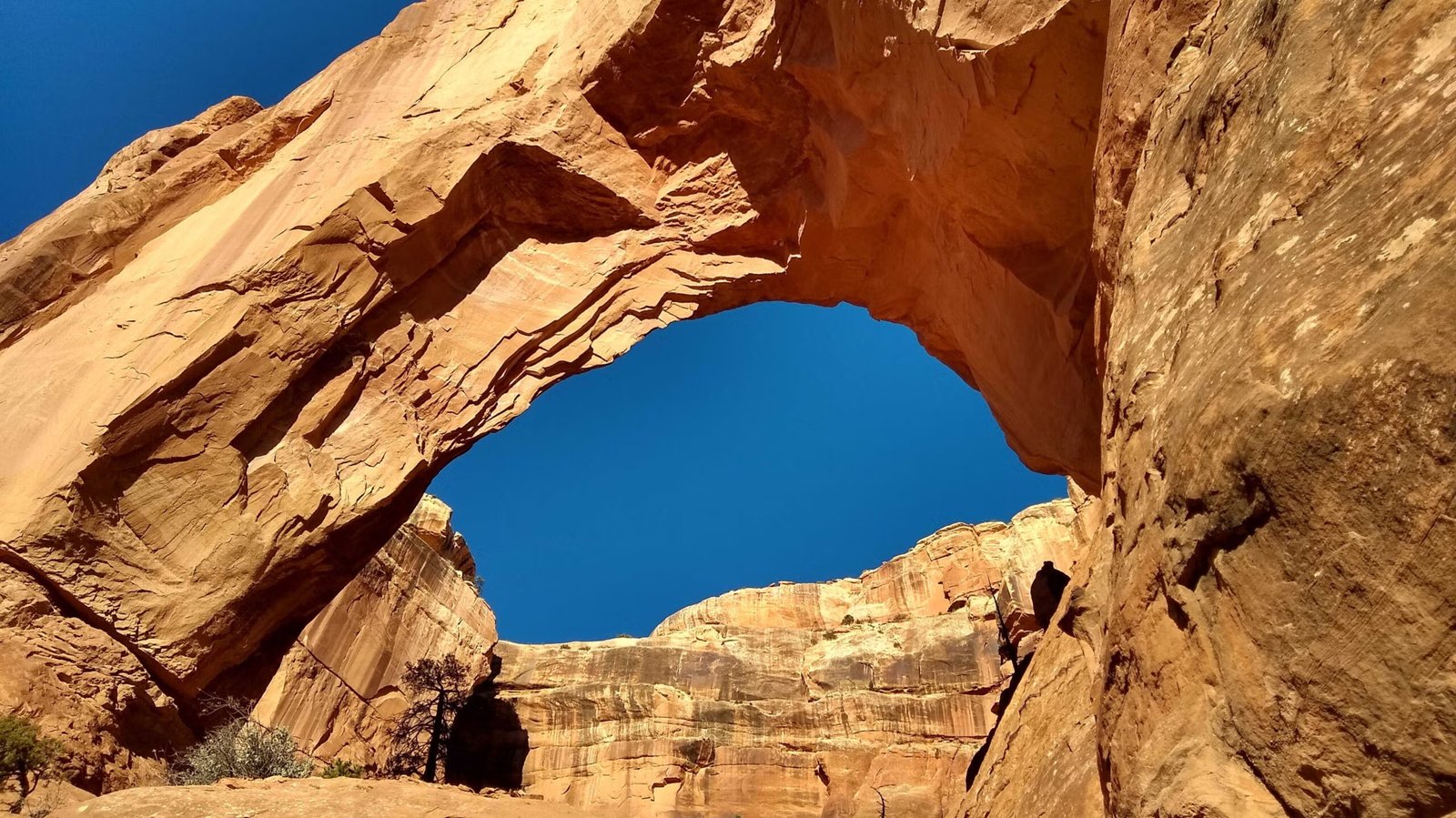
The order reduced the size of Bears Ears to a total of 121,096 acres, divided into two units, and the size of Grand Staircase-Escalante to 181,541 acres, also divided into two units. These reductions exceed those announced by the White House in 2017, which reduced the size of Bears Ears by 91 percent and Grand Staircase-Escalante by 90 percent. In a news release announcing the changes, the White House said that, “While beautiful, these general features are not ‘landmarks,’ ‘structures,’ or ‘objects of historical or scientific interest’ eligible for preservation under the Antiquities Act,” referring to the sandstone canyons and desert mesas for which Bears Ears and Grand Staircase-Escalante are famous.
“They took land away from people, which is really quite ridiculous,” Trump said of the monuments when announcing the changes.
The order also drastically changes the composition of the committee that helps drive policy on Bears Ears. Obama’s original order established the Bears Ears Commission, an independent body that included a representative from each of the five tribes that lobbied for the monument’s creation. Trump’s new order makes that block a minority on the fifteen-member commission, which also includes four representatives from local towns and surrounding counties, and six members selected by Utah’s governor from interest groups including livestock graziers, private landowners and “outdoor recreation participants, including commercial recreation providers or off-highway vehicle users.”
The executive action drew praise from monument opponents such as Utah Governor Spencer Cox, who said at the time of signing, “We believe that under the Antiquities Act, these monument designations are supposed to be the smallest areas possible to protect antiquities. And these million-acre monuments that are larger than the state of Delaware do not fit that designation.”
In a statement, Aaron Weiss, Executive Director of the Center for Western Prioritiescondemned the cut and said that the lack of prior notice or publicity surrounding it proved that the administration knew it was “on the wrong side of history”.
“When Trump tried to shrink Bears Ears and Grand Staircase in 2017, he flew to Salt Lake City and announced it from the state Capitol in front of Utah politicians,” Weiss said. “This time, the President wants as few cameras in the room as possible. A press release will let the five tribes of the Bears Ears Inter-Tribal Coalition and the American people know what happened to their lands.”
in an email to backpacker, Katie Payette, communications director for New Mexico Senator Martin Heinrich, the ranking Democrat on the Energy and Natural Resources Committee, confirmed that the senator received no advance notice of the cuts. In an email statement, Heinrich called the cuts “another chapter in this administration’s war on the West.”
“These monuments protect irreplaceable archaeological sites, important wildlife habitat and landscapes that hold deep cultural and spiritual significance for tribal communities,” Heinrich said. “They also support local economies built around outdoor recreation.”
on a phone call with backpacker On Friday, ahead of the official announcement, Steve Bloch, legal director of Southern Utah Wilderness Alliance (SUWA)described Trump’s executive order as a deeply unpopular attack on America’s public lands system.
“Grand Staircase-Escalante, the first national monument assigned to the Bureau of Land Management, is truly the backbone of the National Conservation Land Landscape System, and both Grand Staircase and Bears Ears are the crown jewels of the nation’s federal public lands system,” Bloch said. “This is the heart of Red Rock Country, a place that all Americans know and cherish. Americans overwhelmingly do not want to see these places protected and exploited.”
The cuts are the latest attack in a long-running political fight over the fate of the monuments, which protect a total of 3.25 million acres of Utah’s Canyon Country, hundreds of miles of backpacking trails and ancient architecture, rock art and sacred sites that are important to at least five Native tribes in the area. Since their respective inceptions in 1996 and 2016, Grand Staircase and Bears Ears have been the target of Utah politicians, who have portrayed the designations as federal overreach and argued that they are locking up vital mineral and gas reserves. In 2017, President Trump shrank the monuments by executive order, reducing the area of Bears Ears by 85 percent and Grand Staircase by nearly half. (one 2018 new York Times Investigation found that in a message to the Interior Department, a staffer for then-Senator Orrin Hatch of Utah had suggested cuts at Bears Ears that exactly matched the cuts ultimately announced, writing at the time that the cuts would “resolve all known mineral conflicts.”)
Both environmental groups and the tribal coalition that had pushed for Bears Ears’ establishment sued over the cuts, arguing that the Antiquities Act gave presidents the ability to establish and expand monuments, but not shrink them. However, before the courts could rule, President Joe Biden restored and slightly expanded the monuments, making the lawsuit controversial.
Many of those plaintiffs now say they intend to renew their lawsuits against the administration. In an email, Perry Wheeler, spokesperson for earth justicetold backpacker that the organization will file its lawsuit in the coming weeks; Baloch said SUWA also plans to take legal action.
Opponents have filed their own legislative and legal challenges. An effort by Utah Representatives Celeste Malloy and Mike Lee to repeal the Biden-era management plan for the Grand Staircase using the Congressional Review Act Failed when an important deadline was missed. A Utah lawsuit arguing that Biden drew overly broad boundaries for monuments has fared somewhat better with an appeals court ruling in June that the president’s decision could be subject to legal review.
The White House’s latest executive order fulfills warnings from some observers that national monuments and the areas they protect could grow and shrink at the whims of successive presidential administrations. in an interview with backpacker After the Trump administration first shrank the monuments in 2017, University of Utah law professor Robert Keeter said that if courts ultimately ruled that presidents have the authority to shrink the boundaries of monuments, it could result in a “yo-yo effect” that “could go on ad infinitum.”
The announcement comes as crews continue to fight the Babylon Fire, which started in Bears Ears and has since spread to cover a large portion of the monument, forcing closures there and nearby Canyonlands National Park. At 106,610 acres and 50 percent containment as of the time of publication, the Babylon Fire is the largest wildfire currently burning in the United States. The long-term damage to the monument is not yet clear.