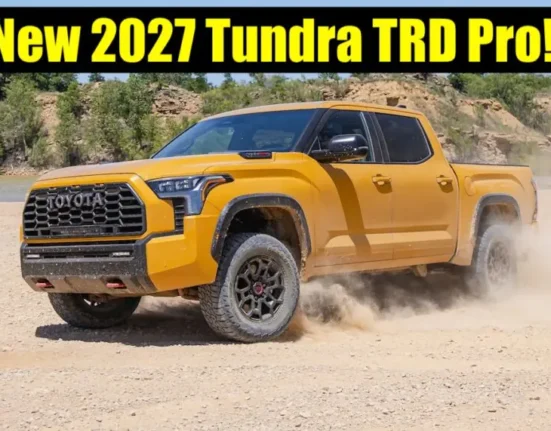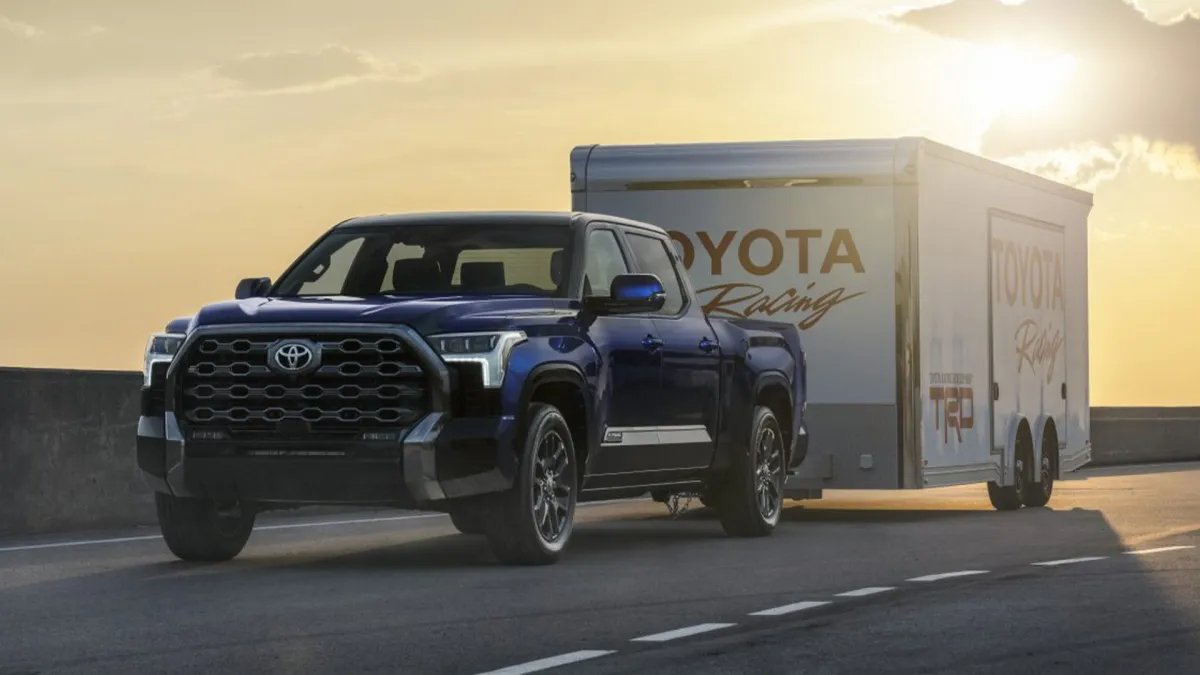
Toyota has a big twin-turbo V6 restoration project on its hands. More than 270,000 vehicles with V35A-FTS engines have been recalled so far, with the only remedy so far being total engine replacement. This remains the case for some Toyota Tundra pickups as well as Lexus LX SUVs, but now, manufacturers will be required to undergo dealer evaluation with the new inspection software to determine if their engines are indeed defective.
The new protocol is detailed in a National Highway Traffic Safety Administration document updated June 15. It is as follows:
“All known owners of the subject vehicles will be notified to return their vehicles to the Toyota and Lexus dealer. Using an inspection software, the dealers will evaluate the #1 main bearing and collect available vehicle drive data to confirm the condition of that bearing. If the inspection software cannot confirm that the bearings will be free of abnormal wear causing this problem, the dealer will replace the engine. The remedy will be provided free of charge.”
To bring you up to speed, some Toyota V6 truck engines have failed due to the above main bearing problems. Manufacturing debris, called swarf, can stick to the main bearings and cause engine stalling, rough idle, or complete shutdown. It has been the subject of three detailed recalls at this point, the first issued in May 2024, the second in November 2025, and the latest in May 2026.
I had questions for Toyota regarding which vehicles this new protocol applies to. When contacted for comment, a Toyota spokesperson explained that earlier trucks — those included in the recall through May 2024 — will still receive engine replacements if they haven’t already. (So far, Toyota has replaced more than 70,000 twin-turbo V6s.) And when I asked if Toyota and Lexus owners who have already replaced their V35A-FTS would need to undergo inspection, the spokesperson replied, “No. A design change was implemented in the #1 main bearing through July 2024, which has been used in vehicles that have received the recall remedy.”
I also asked how this inspection software works, keeping in mind that the information is gathered from drive data rather than engine disassembly. A Toyota spokesperson explained, “Basically, this inspection uses the resonant frequency at the front of the crankshaft to assess the condition of the #1 main bearing. Toyota’s development of this inspection included testing multiple engines to identify resonant frequency differences between #1 main bearings with and without abnormal wear.
“In addition, available vehicle drive data is collected to determine if sufficient load has been applied to the engine to have confidence in the assessment of the condition of the #1 main bearings. If there is insufficient vehicle drive data, the engine will be replaced.”
Still, this isn’t enough to satisfy some owners, as they believe the problems run even deeper. Tundra enthusiast and owner attorney Ryan Gregg is one of the vocal drivers speaking out.
“The Tundra owner community is disappointed to learn of the latest V35A engine recall measures,” Gregg said. “I’m reminded of a great quote from Martin Luther King Jr., ‘The time is always right to do what’s right.’ We urge Toyota to reconsider their latest decision and urge them to keep the customer at the forefront, not the bottom line, in all future decision making.”
Greg said, “From my perspective, this is their way of slowing the financial bleeding and not even acknowledging that there is an underlying design flaw/issue. It’s a way for them to buy time.”
in other 2022+ Toyota Tundra Owners Group on Facebook Likewise disappointed. Members there have watched this saga unfold over the past two years, and whether they blame it on an alleged design flaw or poor quality control, the result is the same: They’re unhappy with the back-and-forth. (Meanwhile, owners who never had a problem with their Tundra are tired of hearing about it.)
Toyota is still building new Tundras with the V35A-FTS every day. The automaker has made several changes to the main bearings in the past, and claims that manufacturing debris may still be present in new engines, but it is less likely to cause damage to them. If these modified engines fail, Toyota’s problems could worsen. The whole situation makes the Tundra a threat to Toyota’s reputation built on reliability.
Have a suggestion or question for the author? Contact him directly: caleb@thedrive.com