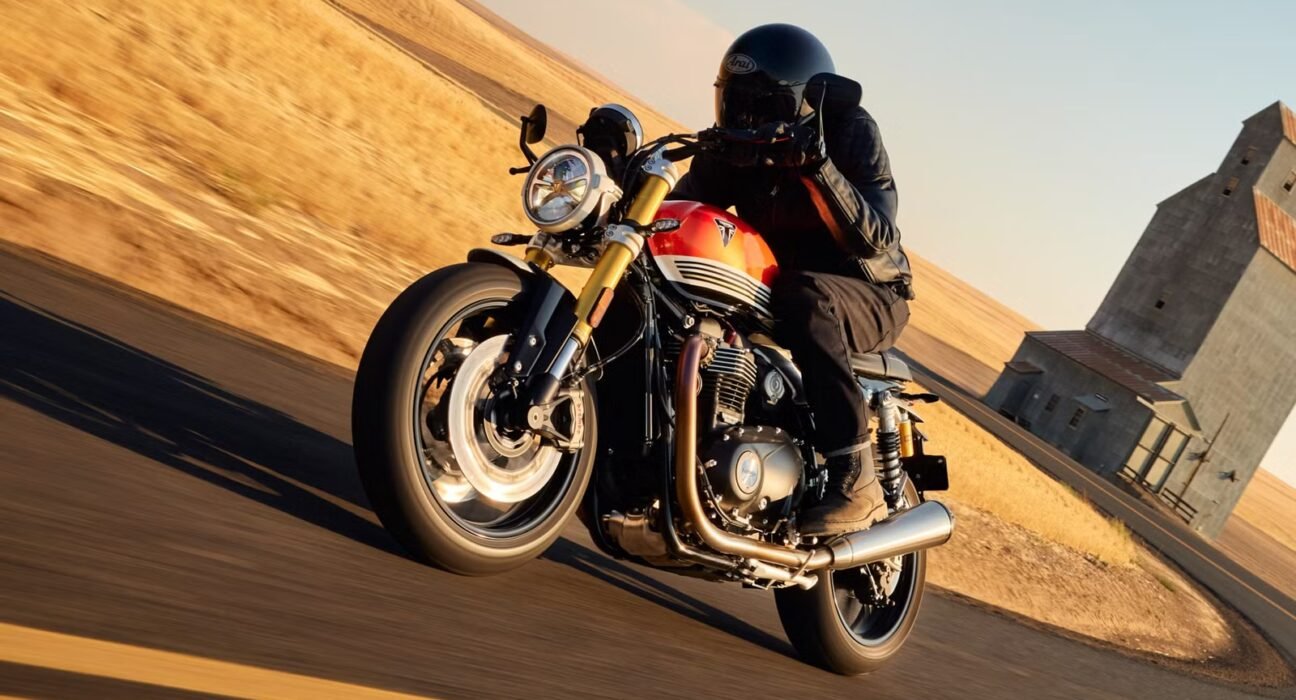
The allure of the 70s and 90s, where designs were simple and motorcycles were pure, is a desire that resonates more than a quarter of a century later. And plenty of motorcycles are wearing their old shape well. Round headlights, teardrop tank, twin rear shocks, brushed-metal muffler, the looks have been refined and successfully so. But the chassis and mechanicals underneath it should ideally be a departure rather than being too far from last years’ counterparts.
After all, modernity has a purpose, and that’s convenience and reliability that the 80s couldn’t provide. The neo-retro bikes that will still be worth pursuing decades from now are the ones where the things you can’t see keep pace with the things you can. Triumph has been selling the retro aesthetic longer than almost anyone else, which is why it had more than enough to prove when it decided to create the fastest version of its long-running parallel-twin roadster.
What should modern classic really mean?
The aesthetics of a modern classic really are the whole game, and they definitely matter. A neo-retro bike needs to fix the old silhouette before it can claim the label of a modern classic. Perhaps this is why millennial riders are now gravitating towards the classic looking daily rider. But in 2026, no bike is going to be sold just because of looks. There’s a reason monoshocks replaced twin rear shocks and twin-spar frames eliminated the old double-cradle setup, and it wasn’t just because they were no longer fashionable. Those changes brought sharper handling and better damping control that earlier bikes could not easily offer.

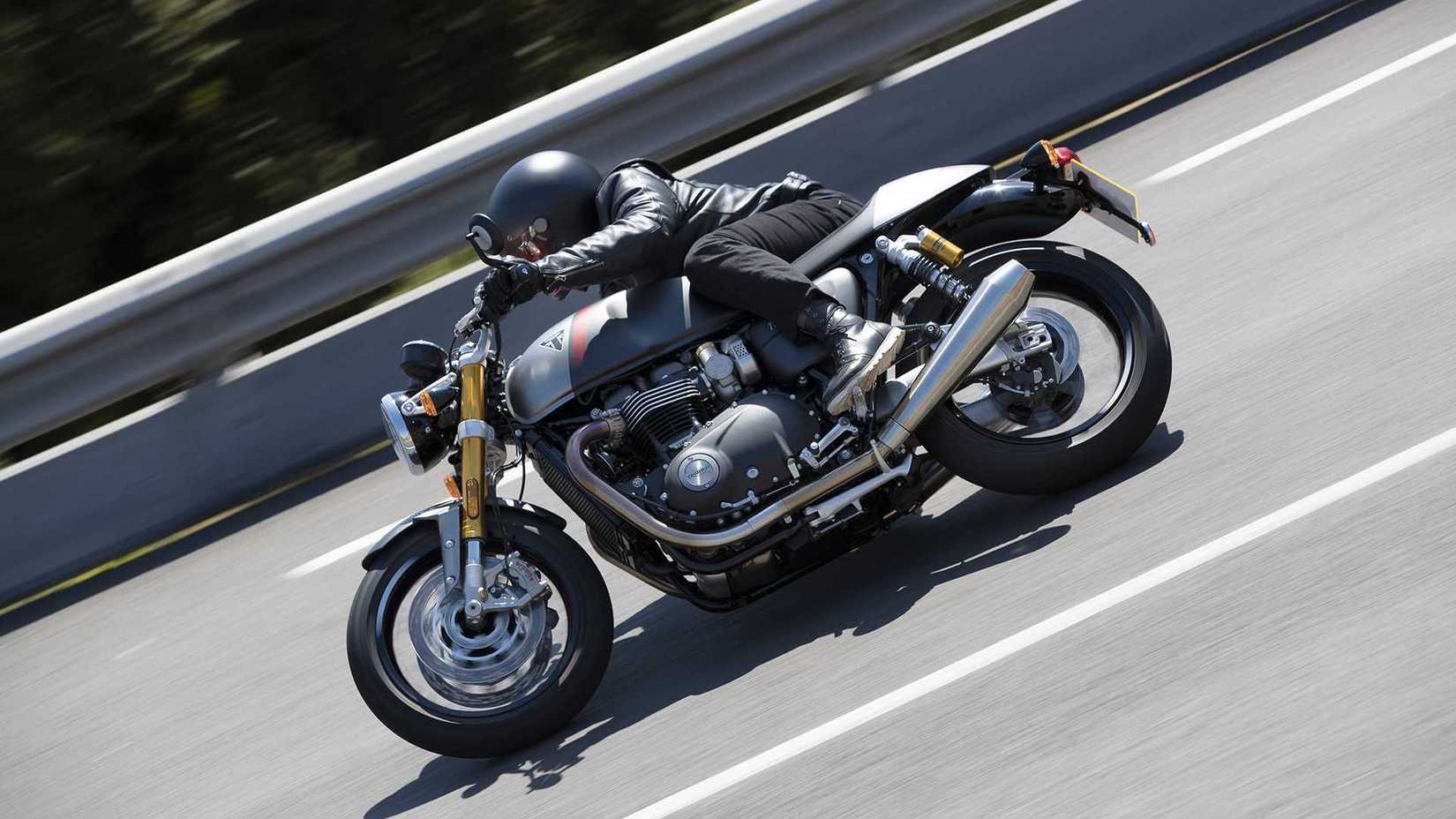
The same logic holds for mechanics. Fuel injection means the bike lights up at the first thumb of the starter on a cold morning with no carburetor to deal with. In true sense today, retro is an aesthetic, not obsolete machinery that forces you to rearrange your day because it refuses to start. The ride-by-wire throttle body opens the door to selectable ride modes that soften or sharpen power delivery to suit the weather and your mood of the day. Cornering ABS and traction control gauges measure how far the bike can corner before a wet patch or gravel spatter spoils a sunny riding day. That blend of classy vintage looks and modern dependability is the whole point of a modern classic.
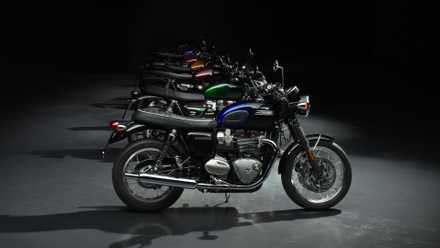

Every Triumph Modern Classic Bike, Ranked by Power
Triumph’s range of modern classics continues to grow in size, as well as its popularity.
The Speed Twin 1200 RS is the fastest modern classic produced by Triumph

Triumph invented the Speed Twin name in the early 1900s, and the latest 1200 RS is its most concentrated expression yet. At $17,195, it’s not a cheap deal, but the quality components and performance are there to support that figure. The 1,200cc liquid-cooled parallel twin sports a 270-degree firing order that gives the bike uneven, V-twin-style beats, and in this latest tune, it makes 103.5 horsepower at 7,750 rpm and 83 pound-feet of torque at 4,250 rpm. However, don’t let the modest figures fool you, and yes, it’s not a speed triple by any means, but the beauty of a big-twin is that you get the best of both worlds.
Tuned 1,200cc parallel-twin

Digging deeper, you would be mistaken to think that Triumph would have rebadged the standard Speed Twin and used the same engine tune. For the RS, it went into the motor and revised the tune, bumping up peak output, to a healthy 12.1:1 compression ratio. The practical effect is a bike you can ride lazily through town in a tall gear and still get a clean, strong pull when you break the throttle. But the real party trick is the gearbox.
The RS is the first Bonneville Twin Triumph equipped with Shift Assist, its two-way quickshifter. So you can blast up and down through six speeds without touching the clutch. On a classic-style roadster, performance bits, even if minimal, are rare indeed, but it pulls the riding experience firmly into the present.
Suspension and brakes borrowed from sports bikes

Borrowing superbike-level components is where the RS differentiates itself from the standard Speed Twin and every soft-riding retro next to it. 43mm Marzocchi forks up front and fully adjustable Öhlins piggyback shocks out back let you dial in preload and damping to match your weight and speed, so the chassis stays composed where cheaper retros might veer around corners, and the raised rear ride height gives the 476-pound bike a real eagerness to turn with the lower, thus faster front-end. Twin 320mm discs and Brembo Stylema monobloc calipers complete things.
Modern electronics are also abundant

Beneath the period looks sits a six-axis IMU that feeds lean-angle data to the cornering ABS and traction control systems. The RS adds a Sport mode on the standard bike, sharpening throttle response and loosening the traction-control strap to keep things playful and safe, as well as Road and Rain modes that you switch on the go. A single-pod LCD-TFT hybrid screen frames the instrument that centers settings and adjustability for the electronics while keeping readouts clear.
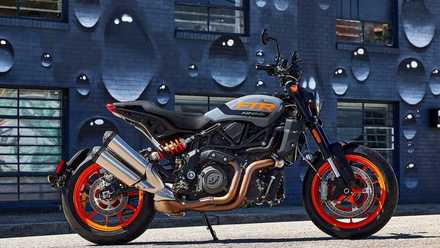
10 Best Modern Classic Motorcycles Over 1000 CC
Style and speed are the irresistible charm of this selection of models
Styling that still looks the modern classic part

For all the sporting hardware and modern electronics, the RS never lets you forget what it is, a retro-looking roadster, and the devil is in the details. Triumph tapered the fuel tank to fit your knees closer, narrowed the seat, and shortened the exhaust in the 2025 redesign, then added machined cooling fins above the cylinder heads and feathered header clamps that nod to air-cooled twins of the past.
The throttle body, cables and wiring have been removed to preserve the open space around the engine that defined Triumph twins decades ago. Meanwhile, cast aluminum wheels and a brushed stainless two-into-two exhaust keep the look contemporary. It’s the kind of bike you look back at once you’ve parked it, and the kind that strangers turn to admire in a café, which has exactly the emotional pull that a modern classic has.
Speed Twin 1200 RS holds its own against rivals
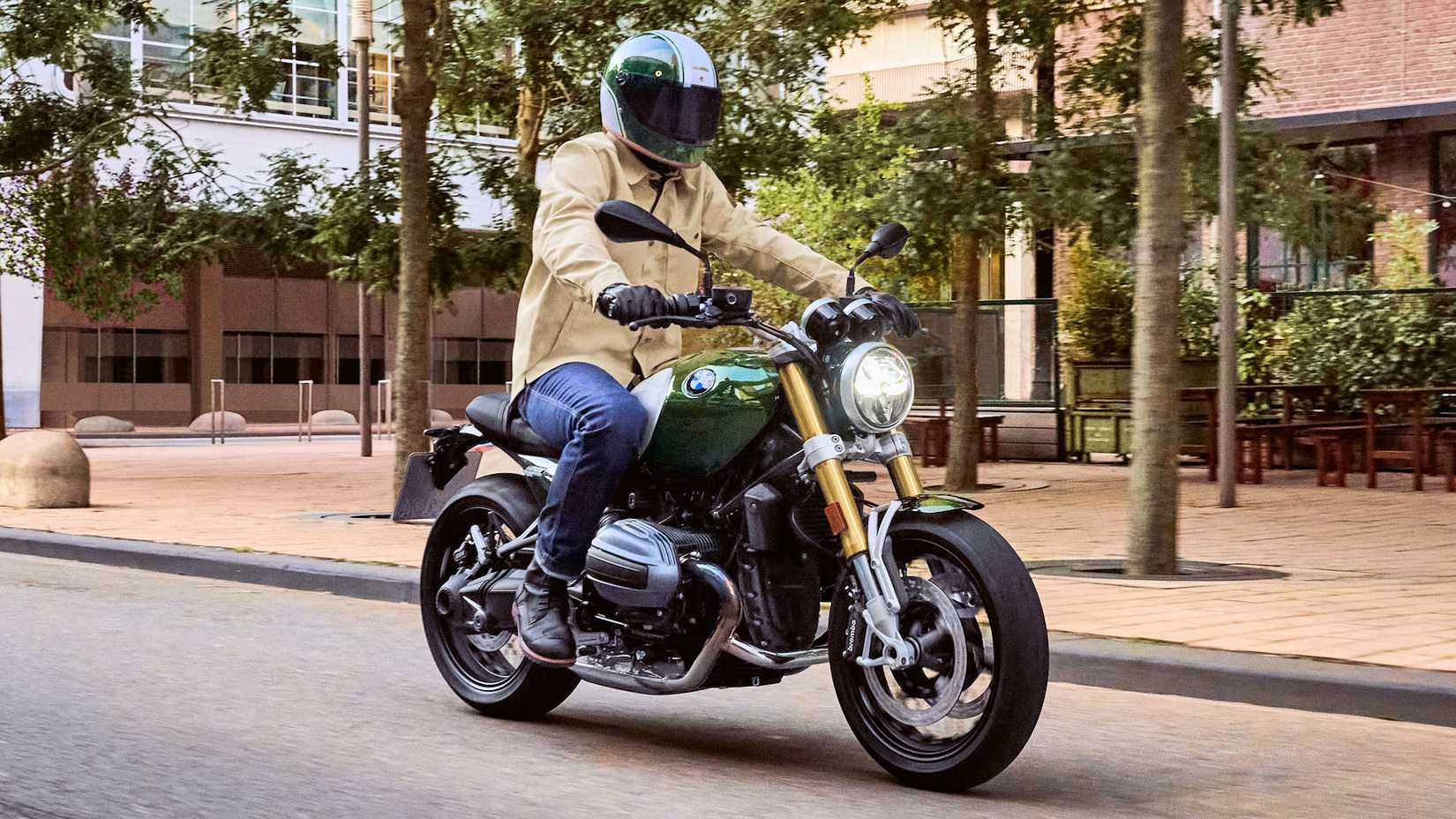
The Speed Twin RS lands in a narrow field where Triumph’s own Thruxton RS and Speed Triple 1200 RR are locked in, leaving the Speed Twin 1200 RS to carry the performance-retro flag for the brand almost on its own. The natural cross-shop is BMW’s R12 Ninety which is priced at $17,245, a touch more than the $17,195 Triumph. BMW brings a 1,170cc air/oil-cooled Boxer that makes 109 horsepower and 85 pound-feet, a fully adjustable 45mm fork, and its own shift assistant, so it matches the RS on specs and beats it on paper for grunt, plus the unmistakable side-to-side Boxer sway as its signature.

The second benchmark is Kawasaki’s Z900RS SE, which, priced at $14,599, has a 948cc inline-four good for about 111 horsepower, an Ohlins shock, Brembo M4.32 calipers, IMU-assisted cornering aids, and a dual-direction quickshifter. Both rivals outclass the Triumph on the spec sheet, yet neither of them match what the RS puts together.
The 270-degree twin gives it a low-end shove and a thumping soundtrack that only the character of a big-parallel-twin can do, something that even the BMW boxer-twin can’t match. The Triumph also has elements to thrill with a more focused chassis and handling. For a rider who wants the fastest-handling, best-stopping modern classic with real twin character, the Speed Twin 1200 RS becomes an irresistible neo-retro that is well on its way to becoming a modern classic.
Source: Triumph Motorcycles