Long road trips require some careful planning, no matter what type of vehicle you’re driving. Have you booked hotels on the way? What will the weather be like on your route? Do you have enough emergency supplies in your trunk? All that said, traveling in an electric vehicle (EV) takes that planning step to a whole new level, mainly because you have to decide ahead of time where you’ll stop to charge and how far you can go on a single charge. In fact, charging is probably the biggest headache during a road trip in an EV.
Charging stations don’t fill every interstate exit the way gas stations do. Also, just any charger won’t work on a road trip, especially if you’re on a busy schedule. A DC fast charger is the only practical option except when you’re charging overnight. Additionally, no EV is compatible with every charger, so you’ll need to know what type of charger your car works with before planning where to stop.
It’s also important to check the weather and know the terrain. Extreme cold and extreme heat can significantly impact both the range and time it takes to charge an EV. Driving in high winds and on steep mountain roads can also reduce your range. You also have to check your speed. Perhaps one day, EV charging stations will be as prosperous as gas stations are today, and this won’t be a problem. In the meantime, you will need to plan your trip carefully.
Don’t plan to drive over the EPA stated range between charging stops
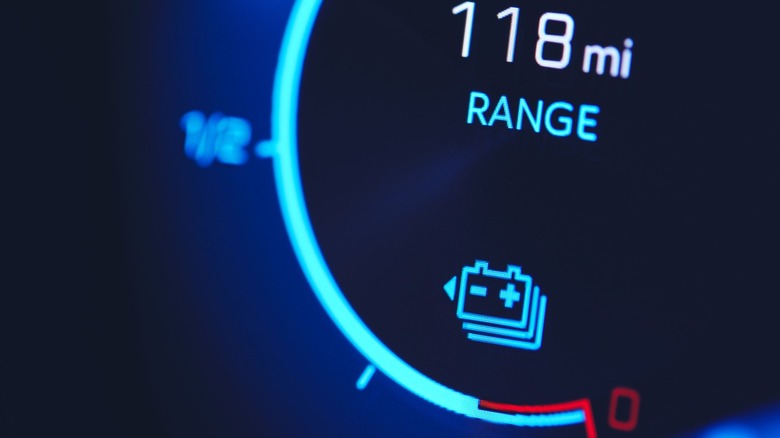
If the Environmental Protection Agency (EPA) says your EV can go up to 300 miles on a full battery charge, that means you can drive about 300 miles before you need to charge again, right? Sadly, no. according to consumer Reports In testing, the laboratory numbers reported by the EPA are, in many cases, 10-20% higher than what you’ll find in the real world, and that’s in pretty good terms. In fact, EPA numbers often don’t match reality for gas cars.
Why the difference? The EPA limits the speed during its tests to 60 mph. How fast do you drive on an open interstate? Posted speed limits are typically 65 to 70 mph, with speeds up to 80 mph in some locations. We’ll talk about speed later, but basically, the faster you go, the less charge your battery will last. Then there are many other things that will affect your range as well. For example, will you be traveling on steep mountain roads? Make sure you have enough charge to at least get you up the mountain – although you can still enjoy the benefits of regenerative braking on the way down the other side. Will there be strong headwinds? Will you tow something or use the climate control? EPA range estimates don’t account for any of these things, yet they all impact how far you can charge your battery.
Plan your charging stops and choose a backup location
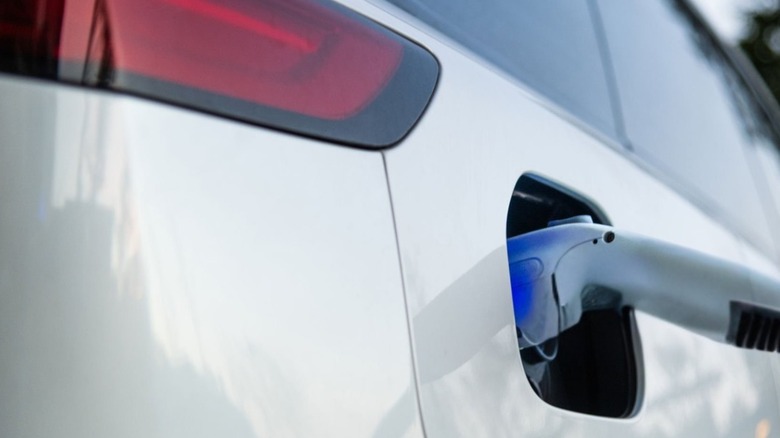
You don’t really need to plan your fuel stops in most of the US when you’re driving a gas-powered car. Gas stations seem to be everywhere, so as the needle gets closer to the “E” it’s usually a matter of looking for the next exit. As we’re sure you know, it’s more complicated in an EV. The US EV charging infrastructure has had some problems over the years. You’ll need to plan your route ahead of time and determine where there are compatible chargers. It’s also a good idea to book a hotel with an EV charger so you can charge overnight.
Luckily – like everything else – there’s an app for that. For example, onboard tesla trip planner The app will identify charging locations along your route, even keeping track of driving habits, altitude, and how many charging spots are free at given locations. Other trip planning apps that are specifically designed for finding EV charging locations include PlugShare, ChargePoint, and Electrify America. But what if you get to the charging station and all the chargers are dead? So you should also choose a backup charging location. Make sure each backup location is within driving distance of your first choice at a lower fee for that leg of the trip. Do this if you plan your trip ahead of time.
drive at a reasonable speed
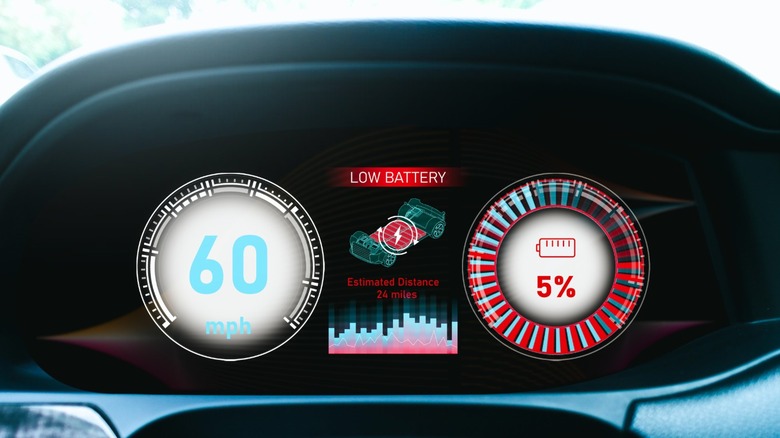
Electric vehicles don’t have that rumble that many of us love to hear during acceleration. But that doesn’t mean it’s not tempting to put the pedal to the floor just to see what your EV can do. An EV’s instant torque allows it to reach highway speeds in no time, and it can be tempting to maintain speed by driving faster. However, driving at high speed can put a large portion beyond your limits. In fact, driving at 80 mph instead of 60 mph can reduce your range by up to 25%. That’s 75 miles of range of 300 miles.
In some ways, efficiency does the opposite in electric vehicles as it does in gas-powered vehicles. Stop-and-go city traffic, which is bad for gas mileage, is good for EVs because of regenerative braking, while steady, constant highway speeds are better for gas mileage than city driving because they keep the engine at its efficiency. On the other hand, that kind of speed works against the efficiency of an EV due to increased aerodynamic drag. We know: If everyone is flying down the interstate at 80 mph, you don’t want to be the grandpa driving 60 mph in the slow lane. And we’re not saying you should go that slowly – especially if the speed limit and traffic flow are faster than that – but just be aware of how going faster will affect your range, and plan accordingly.
check weather forecast
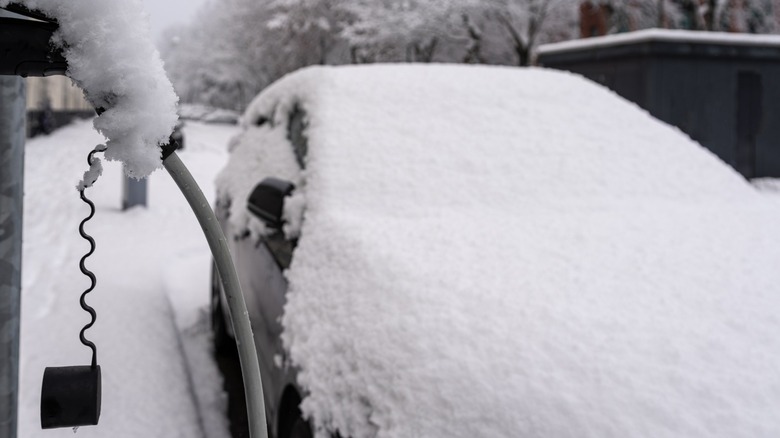
Let’s face it, the elements aren’t kind to any type of car, but very cold and hot temperatures can really take a toll on an EV. Battery range reduces dramatically when the weather gets cold. aaa conducted a study on the effect of temperature on battery range for EVs and hybrids and found that with heat on at 20 degrees Fahrenheit, range decreased by 39% from the EPA estimate. consumer Reports Did our own study, where it found that battery range was 25% less at 16 degrees compared to driving at 70 mph in the mid-60s. The organization also noted that making short trips where the car has to be warmed up frequently is even worse, with a 50% drop in range.
It’s not just cold air that affects the battery’s ability to hold a charge, it also has to do with climate control. Heaters take a lot of electricity – especially in EVs, because there is no hot air to use from the hot engine. One trick some drivers use is to rely more on seat warmers and steering wheel warmers than HVAC. Consumer Reports says turning off the climate system makes a difference of about 8%, so the inconvenience may not be worth it. Charging may take 20-50% longer even in temperatures below 32°F if the battery has not been preheated due to driving, so be sure to pre-condition your battery before charging. We should note that extremely hot temperatures have a similar effect on EV range.
Know what type of charging port you have and carry an adapter
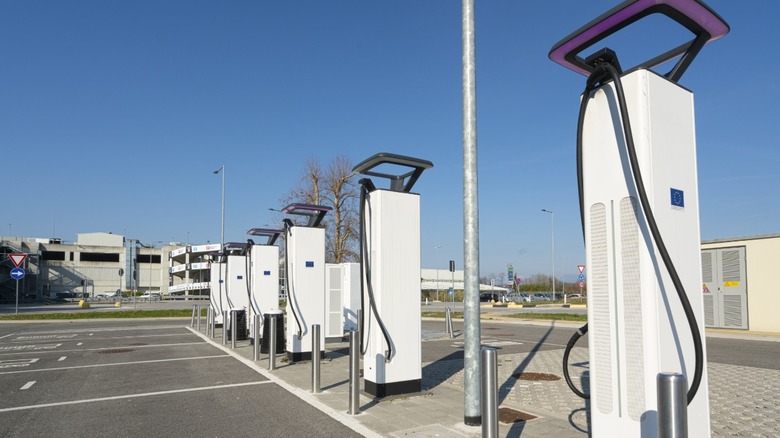
Planning a long road trip in an EV isn’t just a matter of knowing where the chargers are. You also need to know if those chargers will be compatible with your car. Almost every EV is compatible with J1772 charger. But the J1772 is a Level 2 charger, which often takes 4-8 hours to charge an EV battery to 80%. This is fine for a home charger or if you plan to park your car for several hours, but it’s not practical for a road trip. For this, you will need to focus on DC fast-charging stations, where compatibility issues lie.
All Tesla models use the NACS standard for charging stations, which means they can use Tesla Superchargers. But what if you drive another type of EV, like the Rivian? This largely depends on the model year. Most EVs manufactured from 2025 onwards have adopted the NACS standard. Most non-Teslas before this were built with CCS1-compliant charging ports. However, there are some holdouts that are stubbornly hanging on to the CCS1, such as the Chevrolet Bolt EV, Volkswagen ID.4, Audi Q4 e-tron and the Honda Prologue. The Nissan Leaf inexplicably uses its own standard, CHAdeMO. In fact, it’s the only car in the US that uses it, so you’ll be hard-pressed to find stations with CHAdeMO chargers. It doesn’t matter which of these ports you have, pick up an adapter so you can use both CCS1 and NACS chargers on your road trip.