Get your daily dose of health and medicine every weekday with STAT’s free newsletter Morning Rounds. Sign up here.
Buongiorno! As you put the final touches on your Halloween costumes, here is a spooky story for you: Imagine going to urgent care for something as triu already paid at the clinic! Keep reading to learn more
When urgent care becomes emergency care
Intuitive Health, a private equity-backed company that runs about 50 hybrid ER-urgent care clinics, was launched on the idea that it could offer an alternative to costly hospital visits, providing under the same roof a clinic for uncomplicated issues and an ER in case of necessity.
But for many patients, the opposite has happened: They came in with simple, urgent care-appropriate conditions but were billed for ER services — think close to $2,000 for an UTI or $7,000 ($2,100 after insurance) for congestion and cough. Company officials say every patient should be asked to sign a form before the “upgrade,” but Tara Bannow found in her investigation this was far from standard practice.
A halt to Medicaid work requirements for medically frail people
A federal judge in Massachusetts has rejected the federal government’s definition of “medical frailty,” ruling that states didn’t have enough time to assess eligibility status. The decision overturns an interim CMS rule that substantially limited the pool of people eligible for exemptions to the work requirements, in particular by requiring that medically frail people demonstrate that their condition prevents them from working. The rule also didn’t list conditions that would automatically be exempt from work requirements.
The lawsuit was brought on by states claiming that CMS didn’t have the authority to narrow the definition of medically frail, and that the rule would create red tape for beneficiaries having to demonstrate their status, as well as an additional burden for state workers. Thursday’s ruling complicates the already tangled web of work requirements, and might lead to a delay in their rollout past the beginning of 2027, when they were slated to go into effect. More here.
At a rally for Zach Lahn, the farmer-turned-unlikely Republican candidate for Iowa governor, health secretary Robert F. Kennedy Jr. called Lahn’s opposition to Big Agriculture, a key tenet of his platform, a “spiritual battle.”
“We have to figure out a way to grow food without poisoning our kids, without giving ourselves cancer, without destroying the soils that enrich us and enrich our microbiome that connect our brain and all of our organs. And make us healthy, robust and vibrant people,” Kennedy told the crowd.
Chelsea Cirruzzo, who reported on the rally, also takes a broader look at RFK Jr.’s big talking points, with the midterms around the corner: fighting fraud, doubling down on “medical freedom” in the form of vaccine choice, and pushing MAHA, even as the political future of the movement looks shaky. (Also don’t forget to check out our 2026 midterms roundup for the most important political news.)
Why is colorectal cancer more aggressive in young people? A new database offers clues
People who are diagnosed with colorectal cancer earlier in life, especially younger than 35, often have a grimmer prognosis than people who develop the disease older. Researchers have been trying to understand why. A new “atlas” of 189 colorectal cancer tumors from patients in their 20s to their 90s could help explain the differences in the disease, while controlling for variables that may have confounded previous studies.
“It is devastating to care for young patients diagnosed with often advanced stages of colorectal cancer. These are people in the prime of their life,” Kimmie Ng, the colorectal cancer researcher who authored the database study, told Angus Chen. “That’s what motivates us to do the work, find out what might be causing this, and what unique features we could target so that we can better treat these patients. It’s something that keeps me up at night, and one of the biggest questions facing our scientific community today.”
Ng, who serves as the director of the Dana-Farber Cancer Institute Young-Onset Colorectal Cancer Center, discussed in a Q&Awhat kinds of insights the database might offer, and what her team is learning about the increasing rate of colorectal cancer in young patients.
Men’s health as gender health
A new series in The Lancet argues for the need to investigate a paradox of men’s health: why men experience worse health outcomes than women, even though they hold undeniable privilege. In their approach, the series authors move away from looking at men’s health as an issue of sex, broadening the frame to focus on gender. “Men’s health is defined and shaped by the culturally defined roles, responsibilities, attributes, and entitlements associated with being (or being seen as) a man, as well as power relations between and among women and men,” they write in the introduction.
A first paper proposes a framework that analyzes men’s health through an intersectional lens, focusing on structural determinants of health. A second looks at the available data about men’s life expectancy and burden of disability, trying — with limitations due to the lack of an intersectional perspective in many of the studies so far — to tease out risk factors and causes. The third paper proposes a political strategy that advances men’s health as a contributing factor to the shared public good.
Discussion of men’s health is wont to raise the question of whether it is detracting from women’s. The authors defend their choice. “A gendered approach to health is not a zero-sum game; it can serve to enhance wellbeing for all,” they write.
Helen Branswell, in her own words
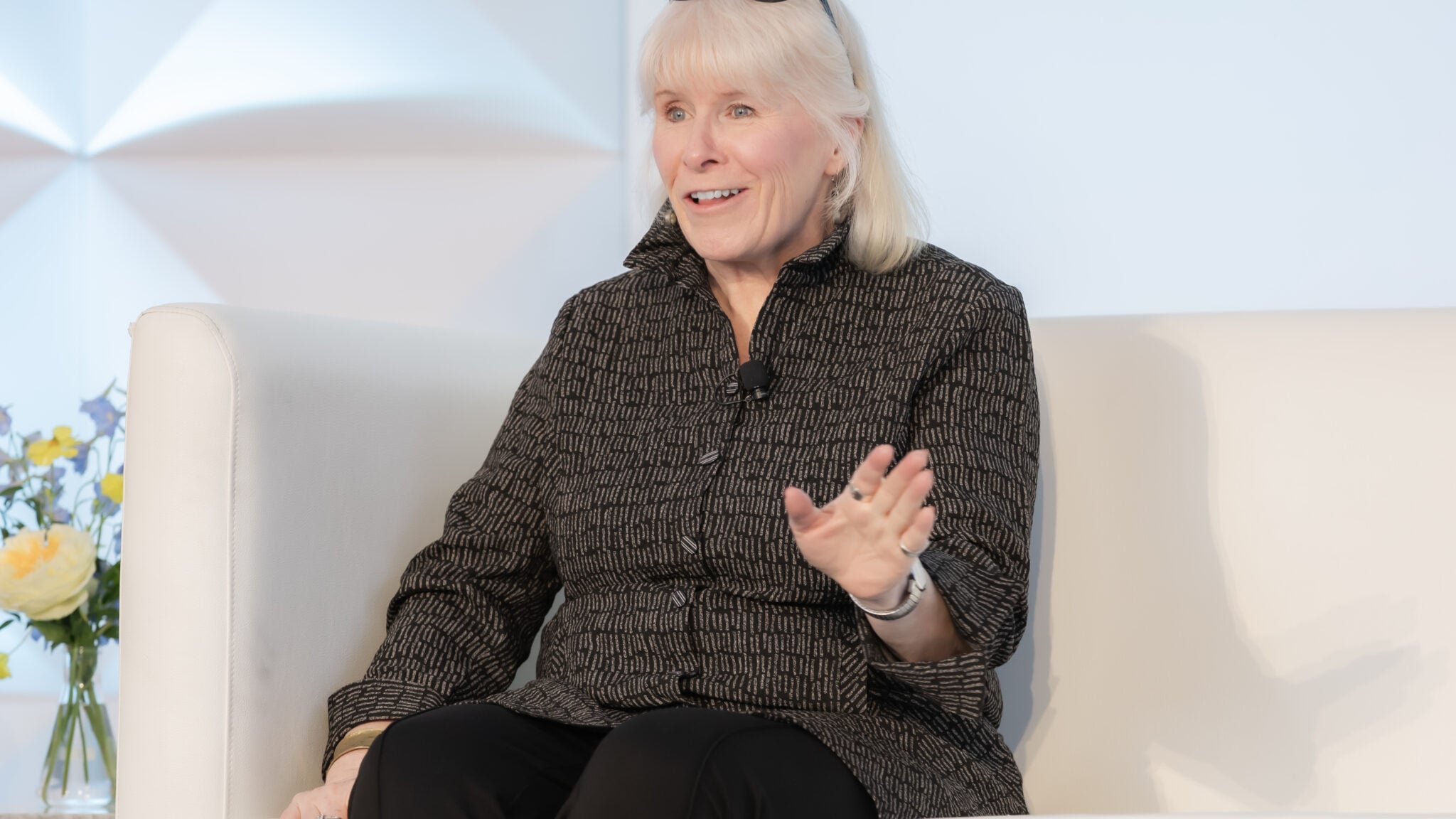
This week, STAT Executive Editor Rick Berke travelled to Washington, D.C., to accept in memory of Helen Branswell the Kovler Prize for Trust in Life Science Journalism at the Foundation for the National Institutes of Health dinner. It was an elegant event at Union Station, with 350 luminaries from science and health, including current and former NIH directors.
The highlight of the evening was a video that Helen recorded in late summer to accept the award. She talked about her work and a career she so deeply loved. As readers of this newsletter know, Helen has been a frequent contributor to Morning Rounds over the last 11 years, tirelessly sharing her insights on infectious disease news. (In fact, Helen’s first writings on Covid-19 appeared here.)
Heartbroken as we all are by her loss, I hope you’ll watch and come away inspired but one of the truly greats.
What we’re reading
- The abortion pill could prevent breast cancer—but bans are slowing research, AutonomyNews
- She needed an EpiPen. But first, an urgent care asked her to pay, KFF Health News
- These patients struggle with runaway bones. Finally there’s hope. New York Times
- Few repercussions for oil firm’s continued leaks after couple’s death from toxic gas, The Examination