One of the most common questions when choosing a sport motorcycle is whether a V4 engine is really better than an inline-four. The answer depends entirely on how and where the bike will be ridden, as each engine layout offers different advantages in power delivery, handling, acceleration and overall character.
For decades, inline-fours dominated the sportbike world. Machines like the Honda CBR1000RR Fireblade, Yamaha YZF-R1, Suzuki GSX-R1000 and the Kawasaki Ninja ZX-10R made this configuration famous due to its smooth handling, impressive top-end performance and high-revving nature.
However, more recently, V4-powered motorcycles such as the Ducati Panigale V4, Ducati Streetfighter V4, Aprilia RSV4 and Honda RC213V-S have brought MotoGP-inspired engineering much closer to production motorcycles.
How does inline-four work?
An inline-four places all four cylinders next to each other in the same row, sharing a common crankshaft.
This layout offers several benefits:
- exceptionally smooth operation
- impressive peak horsepower
- simple mechanical design
- low manufacturing costs
The downside is its greater overall width, which slightly limits chassis packaging and mass centralization.
How does V4 work?
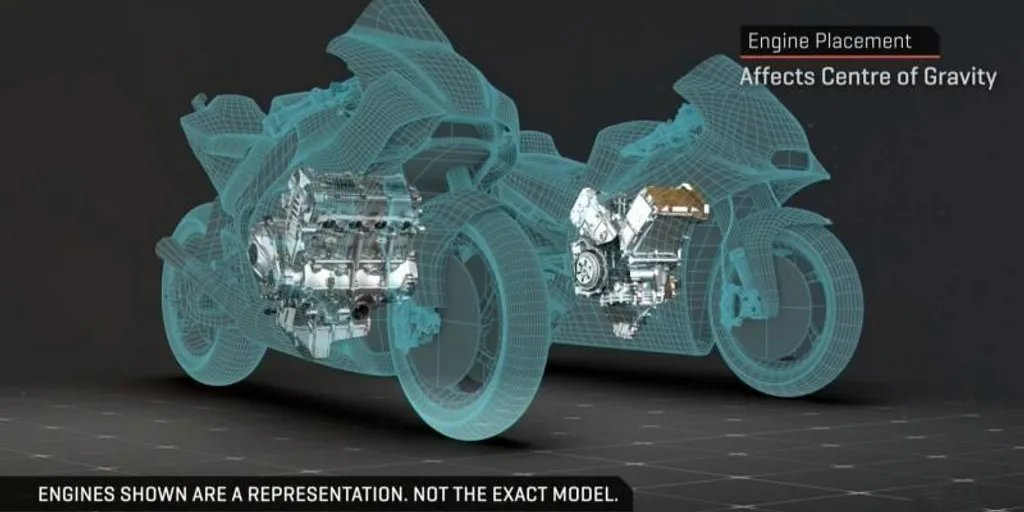
A V4 splits four cylinders into two banks arranged in a V configuration.
This makes the engine significantly more compact and allows engineers to place more weight closer to the center of the motorcycle.
The result is usually:
- improving people’s centralization
- strong acceleration stability
- Better rear-wheel traction
- Greater compatibility with advanced electronic systems
However, V4 engines are significantly more complex, making them more expensive to manufacture and maintain.
How does power distribution change?
This is where riders notice the biggest difference.
Inline-four engines typically make their performance at higher rpm, becoming more powerful as the revs increase.
The V4 generally produces strong mid-range torque, providing rapid acceleration without requiring maximum engine speed.
For everyday road trips, many riders find the V4 more flexible and easier to use.
What changes in the corners?
The V4’s compact dimensions help centralize the bike’s mass more effectively.
This often translates into greater stability under heavy braking and excellent drive out of corners.
However, inline-four motorcycles remain highly predictable and reward riders who enjoy carrying high engine speeds into a corner.
They even sound completely different
Engine sound is another defining characteristic.
The inline-four usually gives a smooth, high-pitched scream as the revs increase.
The V4 produces a deeper, more distinctive exhaust note, especially when combined with the MotoGP-inspired firing order.
For many enthusiasts, that unique soundtrack is part of the appeal.
Which one costs more?
In almost every respect, V4 motorcycles are more expensive.
Their more sophisticated construction increases production costs and servicing complexity.
This is one reason why V4 engines are largely reserved for premium high-performance motorcycles.
The inline-four continues to provide an excellent balance between performance, reliability and affordability.
One is not better than the other: they are “just” different
No engine layout is objectively better. Riders looking for maximum peak power, drivability, and low running costs will generally be better served by an inline-four.
Those who want stronger mid-range torque, faster acceleration out of corners, better mass centralization and a ride experience closer to racing technology will often prefer the V4.
Ultimately, the best choice depends on riding style, intended use, and budget.
Don’t miss a second with the new app where you can watch live timing of MotoGP, Formula 1, NASCAR, IndyCar and much more: just press – Here (Free for all users)