Adventure bikes are supposed to exist to take riders beyond cities, dealerships and reliable phone signals. Yet many of the most desirable machines in this class now come with elaborate electronics, premium suspension components, multiple software-controlled riding modes, and servicing requirements that can become costly after the warranty expires. More capacity is hardly a bad thing, but traveling by motorcycle has somehow become more complicated before the journey even began.
Updated: 2026/07/21
This article has been updated with more information on the bike’s reliability.
ADVs have become better in almost every aspect except being economical
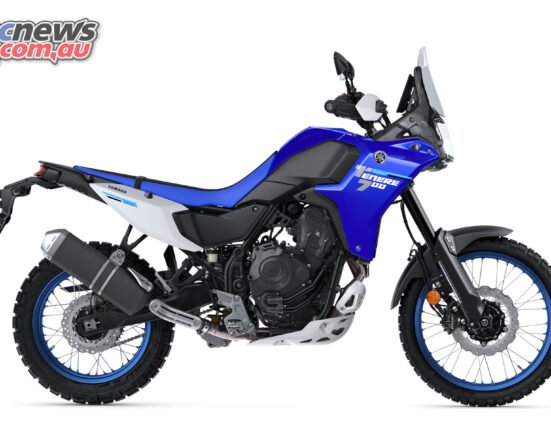
The middleweight adventure class has moved steadily upward in power, suspension performance, electronics and price. Yamaha’s Ténéré 700 starts at $10,999, while the more exclusive KTM 890 Adventure R is priced at $16,299. Both are significantly more capable off-road than the motorcycle at the center of this story, especially when the terrain becomes steep, technical or extremely unpleasant.
Of course, that capability isn’t free. Riders still need to add up for luggage, safety, navigation equipment, tools, riding gear and enough money to actually leave home. A $10,999 motorcycle can quickly turn into a $15,000 tour, while a KTM can go for more than $18,000 without much imagination. For riders who mostly cover pavement, fire roads, gravel highways and moderate routes, this raises an odd question: How much of a motorcycle do they really need before the machine starts consuming the travel budget?
The best adventure bike is not always the best motorcycle on paper

Bike comporos naturally reward horsepower, low weight, sophisticated suspension, strong brakes and aggressive off-road performance. Those qualities are easy to measure and become immediately apparent during a test ride. Long-term Land ownership rewards the less glamorous things, including fuel efficiency, comfort, predictable maintenance, affordable replacement parts and the ability to diagnose a problem away from the dealership with a polished showroom and branded espresso machine.
More electronics could mean more capability, but also more dependency

Modern traction control, selectable riding modes, cornering ABS, quickshifters, TFT displays, semi-active suspension and smartphone integration can make meaningful improvements in safety, comfort and performance. To pretend otherwise would be lazy nostalgia. For example, KTM’s configurable electronics and off-road ABS give skilled riders far more control when traversing loose terrain than a basic system.
The tradeoff is dependency. More systems can increase the purchase price, complicate troubleshooting, and lead to repairs that require diagnostic equipment or trained technicians. This doesn’t automatically make an electronically enhanced motorcycle unreliable, but it does change how the owner interacts with it. Travelers traveling from a distance may prefer a machine with fewer menus, sensors, motors, and software decisions that stand between a mechanical problem and a practical roadside solution.
The Kawasaki KLR650 beats its premium rivals by costing thousands less

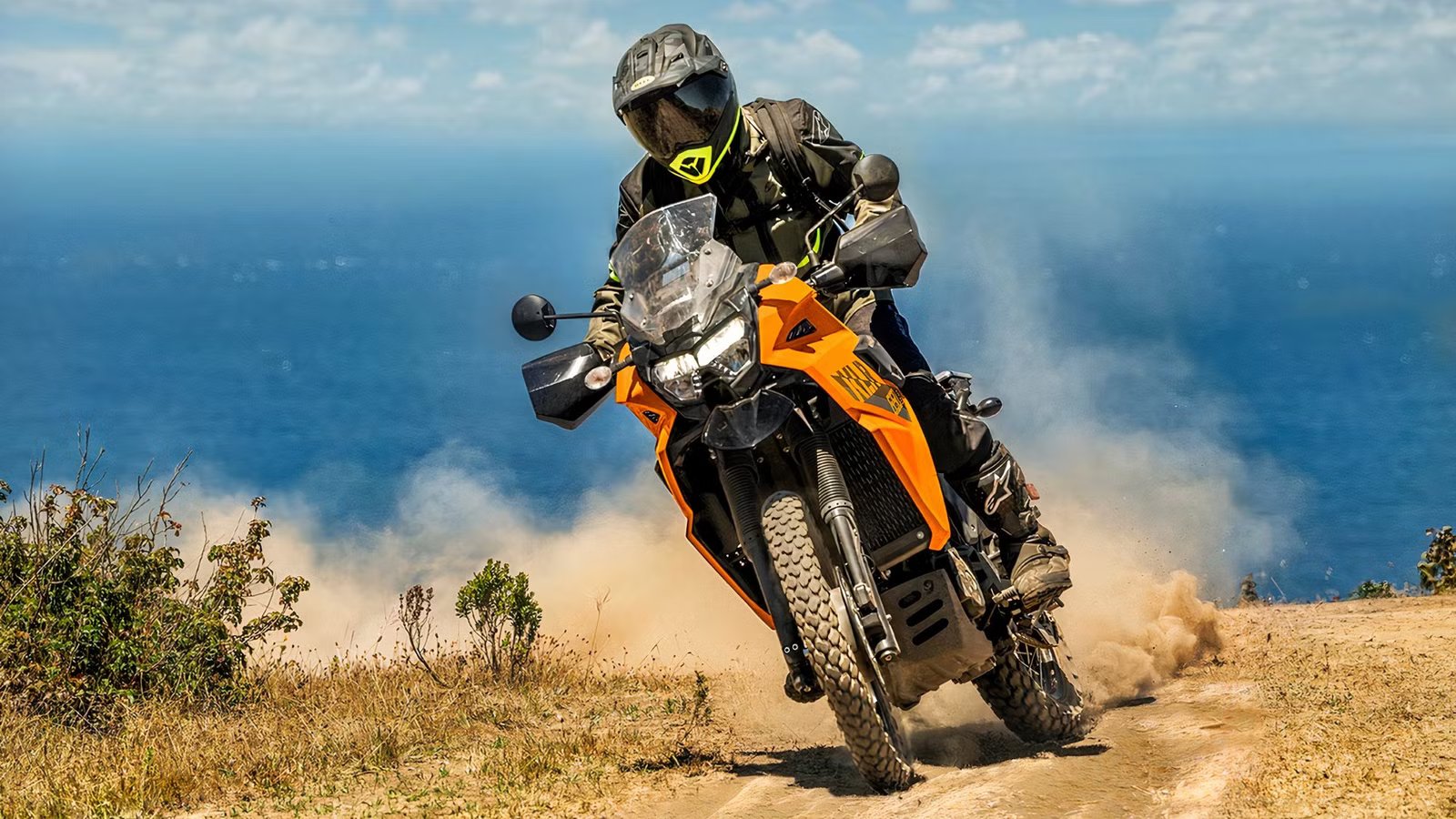
Of course, that bike is the Kawasaki KLR650. It appears as if someone watched the adventure-bike electronics arms race from a plastic lawn chair. Its liquid-cooled, fuel-injected 652cc DOHC single-cylinder engine drives the rear wheels through a five-speed transmission and sealed chain. Kawasaki does not publish an official horsepower or torque figure, which is appropriate for a motorcycle, the performance conversation of which usually begins and ends with whether or not it reaches the destination.
The current KLR650 starts at $6,999, and offers you a tubular semi-double-cradle steel frame, a 41mm telescopic fork with 7.9 inches of travel, and a preload- and rebound-adjustable Uni-Track rear shock measuring 7.3 inches. The 21-inch front wheel and 17-inch rear use tube-type tyres, while braking comes from a single 300 mm front disc and 240 mm rear disc.

The standard bike can be ordered with or without ABS. Its dashboard is a basic digital unit rather than full-colour TFT, and there’s no traction control, cruise control, quickshifter, smartphone pairing or a collection of riding modes. However, there is a large adjustable windscreen, hand guards, an aluminum rear carrier, a generator rated to support accessories, and a comfortable upright riding position designed for long rather than short bursts of off-road theatrics.
The KLR650 is slow, heavy, and completely unapologetic

It’s important to acknowledge that the KLR650’s shortcomings are not misunderstood strengths. The non-ABS base model ready to ride weighs in at 456.2 pounds, while adding ABS bumps that figure to 460.6 pounds. After gaining the factory side case, LED auxiliary light, engine guard, DC and USB power outlets, and its additional trim equipment, the Adventure ABS reaches 487.1 pounds. This is considerable mass for a single-cylinder motorcycle, especially when tipped over an uneven path.
Its five-speed gearbox also leaves riders wanting one more ratio during sustained high-speed highway work. The non-switchable ABS is less flexible on loose terrain than the configurable systems used by more expensive competitors. Deep sand, mud, steep climbs and tight singletrack quickly expose the KLR’s weight and modest performance. Buyers aren’t buying secret superiority. They are accepting obvious limitations as motorcycles cost dramatically less and less is demanded of them over longer ownership periods.
Synonymous with reliability and stress-free ownership

The Kawasaki KLR650 has been around since 1987, and through its three generations the bike has stuck to its old-school formula of simplicity. The lean single-cylinder engine, lack of complex electronics, and a simple design backed by Kawasaki’s reliability and sophisticated refinements have made the KLR650 a bike that can outlast most bikes for a long time. This is why this bike has earned a reputation for having the life expectancy of a diesel truck. It just keeps going on.
Lots of high mileage examples

We don’t believe? Check out owner forums like Reddit, ADVRider, and KLR.net, and you’ll see many owners telling stories about their high-mileage KLR650s. For these owners, turning the odometer over 60k to 70k miles is no big deal, as many owners have done so. We also found a KLR650 with over 172 thousand miles, which shows how reliable the KLR650 is in the long run.

It’s hard to argue that the KLR650 is as reliable as it is very versatile. It can do everything from commuting to camping and touring to off-roading. That’s why Dr. Gregory W., a prolific author and motorcyclist. Frazier used a KLR650 for his world circumnavigation rides in 2001 and 2002. In 2017, 4 Army vets attempted to cross the Darien Gap on a KLR650, making this bike one of the few to attempt such a thing.
anyone can work on this

Another advantage of the bike’s simplicity is that anyone can work on it. Even a truck or tuk-tuk mechanic can find its way around the bike, giving you peace of mind when traveling far and wide. And if you have a set of basic tools and a service manual, you can fix most things around the bike. In a way, the KLR650 invites you to work on the bike, which ultimately builds confidence. This is the biggest advantage of the KLR650: you rely on it for your long-distance adventures.
A big fuel capacity changes where the KLR650 can take you
The centerpiece of the KLR650’s touring capability is its 6.1-gallon fuel tank. Depending on speed, load, terrain and weather, this gives the economical single-cylinder engine the ability to travel about 300 miles between stops. Even when conditions pull the actual figure below that mark, the available range still remains useful in rural areas where gas stations are rare, closed, or represented by a hand-painted sign next to one’s house.
Its 60.6-inch wheelbase, 30-degree rake, 4.8 inches of trail and ample curb weight create stability on highways and wide gravel roads. The standard model has 8.3 inches of ground clearance and a 34.3-inch seat, while the wide saddle, windscreen, fairing and comfortable riding position help reduce fatigue. It won’t dance over rough terrain like a light dual-sport, but it settles into a loaded ride with the flair of a farm tractor that’s somehow acquired a license plate.
There is a problem of weight loss after loading luggage on the motorcycle.

An empty-bike comparison does not fully represent an adventure-touring trip. Camping equipment, tools, spare tubes, water, clothing, food and luggage can add dozens of pounds to any motorcycle. Once each machine is loaded, the KLR’s weight reduction becomes less dramatic, while its longer chassis, larger tank, wider seat, rear rack and predictable power delivery become more valuable. The same mass that causes problems on single track can help the bike stay stable through crosswinds, broken pavement and fast gravel.

Shorter riders can opt for the KLR650 S, which lowers the seat to 32.1 inches and reduces ground clearance by 7.3 inches through a revised suspension. Its wheelbase is also slightly shorter, to 59.6 inches, while curb weight remains at 456.2 pounds without ABS or 460.6 pounds with it. A heavier motorcycle that allows the rider to place both feet safely on the ground may be easier to manage than a lighter machine with a more high seat.
KLR650 leaves money for adventure
The real benefit of the KLR650 is the amount left in the owner’s bank account. The difference can range from $700 to $4,000 in accessories, tyres, upgraded footpegs, suspension work, security, fuel, accommodation and several weeks on the road. Compared to the 890 Adventure R, a $9,300 difference could pay for a full Touring build and still leave enough money to cross a meaningful portion of a continent.
The platform also benefits from decades of owner experience, aftermarket developments and widely shared mechanical knowledge. Its weak points are fully documented, and common upgrades can be handled in a home garage rather than unlocking them through software or dealership labor. Kawasaki’s extensive dealer network and KLR’s long production history also improve the chances of finding parts or someone familiar with the machine while traveling.
Source: Kawasaki