The TenPoint Vision HD Crossbow Scope represents the transcendence of cutting-edge technology in archery hunting. This scope determines range to target, automatically adjusts ballistics to extreme distances, records video of your shots, and can amplify light better than any traditional scope. Even though this is a crossbow scope, you will start to see many similar optics for rifles. It won’t be long until digital scopes become the norm and glass is considered a relic.
I tested this scope’s features, battery life, and low light capabilities. It was impressive on all fronts. So much so that I have mixed feelings about what this means for the future of hunting – especially archery season. But first, let’s look at how the scope works.
Get it from Amazon
Get it from Skiles
key features
-
price:
$900
-
weight:
18.4 ounces
-
Magnification:
3 to 12x
-
Rangefinder:
5 to 1,100 yards
-
FI Pre-Loaded TenPoint Arrow Ballistic Profile
-
One-shot zeroing
-
frame rate:
60Hz
-
Resolution:
1920×1080
-
Includes two 21700 flat top batteries
-
battery life:
5 hours per battery
Review
one-shot zero
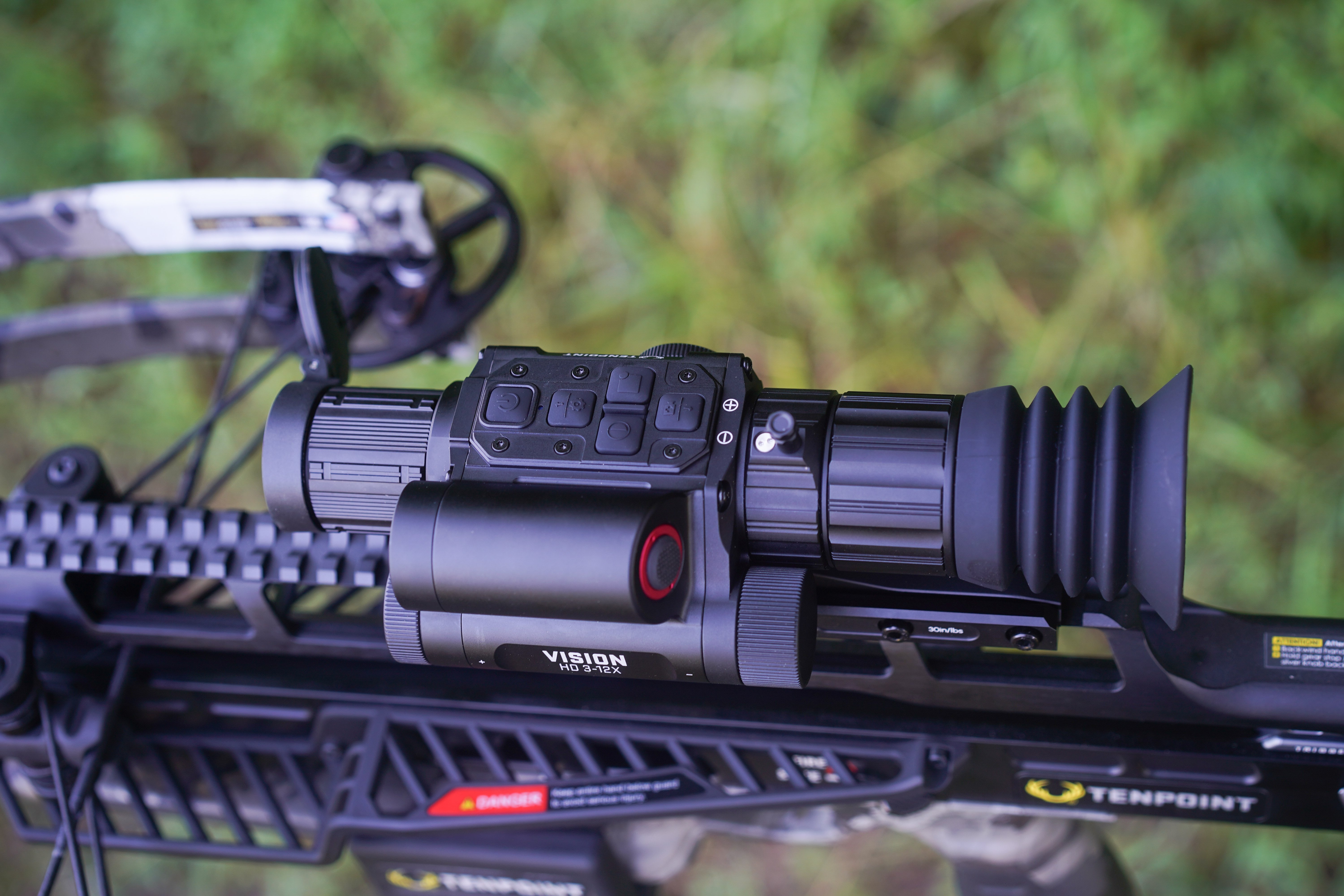
Zeroing a standard scope involves clicking on the turret until your arrows line up just ahead of the reticle’s center point. The Vision HD scope uses a very different process.
- shoot an arrow at a point
- Go to zeroing settings
- aim the reticle at the point
- Press “Freeze Frame”
- Now you can move the reticle to where your arrow is aimed
After following those steps, you’ll be pretty close to zero. I shot a few more times to get it right and confirm the zero.
Sight-in to 125 yards

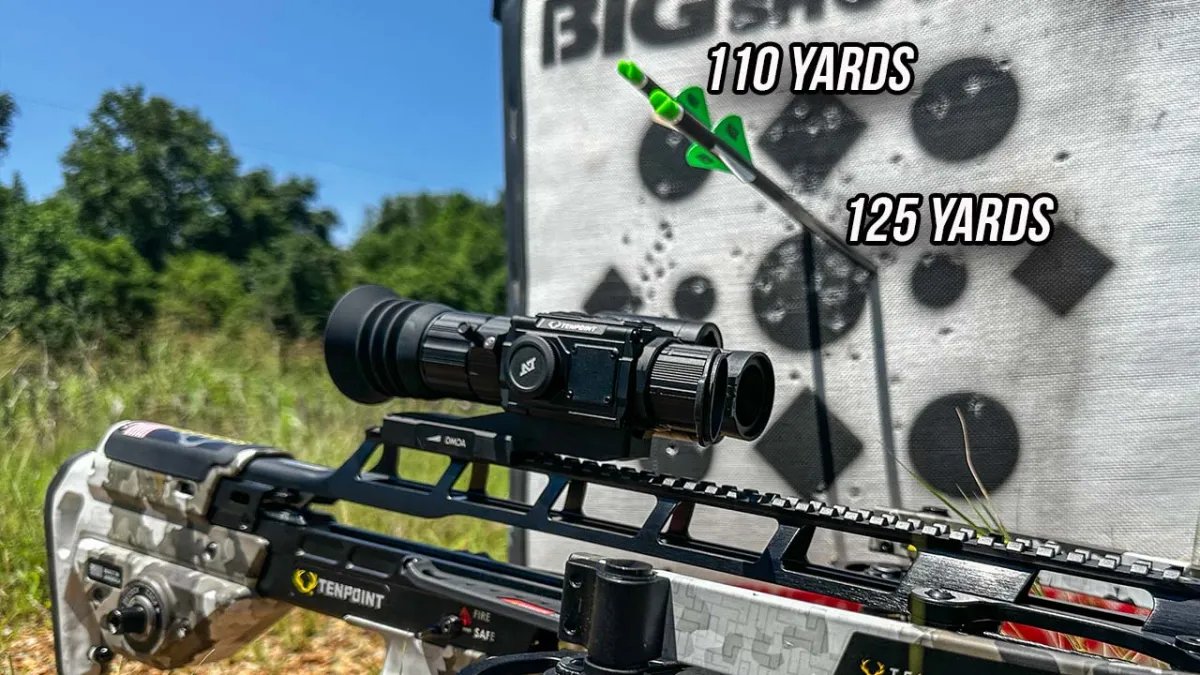
TenPoint Vision HD Scope at 110 and 125 yards
https://www.youtube.com/watch?v=CX-ntNijD0
After sighting, I recorded the crossbow’s arrow speed in the ballistic setting. There are other inputs you can adjust in that menu, but I left them at the defaults. Then I went straight 110 yards.
I pressed the range button and the scope automatically moved the reticle. All I had to do was place the reticle on point and squeeze the trigger. I’ve shot a lot of BDC crossbow scopes, and most aren’t that accurate out to 100 yards, so I was in disbelief when the arrow hit exactly where I was aiming. Obviously, 110 yards was not enough of a challenge. I retreated to the maximum adjustment distance, 125 yards. A difference of 15 yards isn’t a big deal if you’re shooting a shotgun, but it’s a huge difference with an arrow (even if it’s leaving the bow at 435 fps). We’re talking about a 3-foot drop in that 15-yard jump. When I pressed the shot, the reticle was on the right edge of the dot. The few seconds of flight time were stressful, but they gave me enough time to get back on target. Then the arrow fell directly on the point on the right bank. Seeing him I was very happy, surprised and also a little worried. It was a strange mixture of emotions. In a lifetime of shooting arrows, this was the furthest I had ever shot an arrow, and it was one of the easiest arrows I have ever shot.
I fired four arrows to zero the scope, and a few minutes later, I was hitting the target accurately at 125 yards. This is something that is not done with any other type of archery equipment.
battery life
The Vision HD comes with two batteries. This scope is very similar to thermal scopes I’ve tested and hunted in the past, and those devices chew through batteries. The Vision HD has a standby mode, which saves battery, but a dead battery means the scope is completely useless. It is important that they last for the entire hunt.
I inserted the fully charged battery into the scope, turned it on, and put it in the freezer set at 0 degrees overnight. After nine hours, the scope automatically entered standby mode with 20 percent battery remaining. That’s great performance, but if you’re hunting in sub-zero temperatures, it’s a smart idea to bring a backup battery or two.
optical clarity
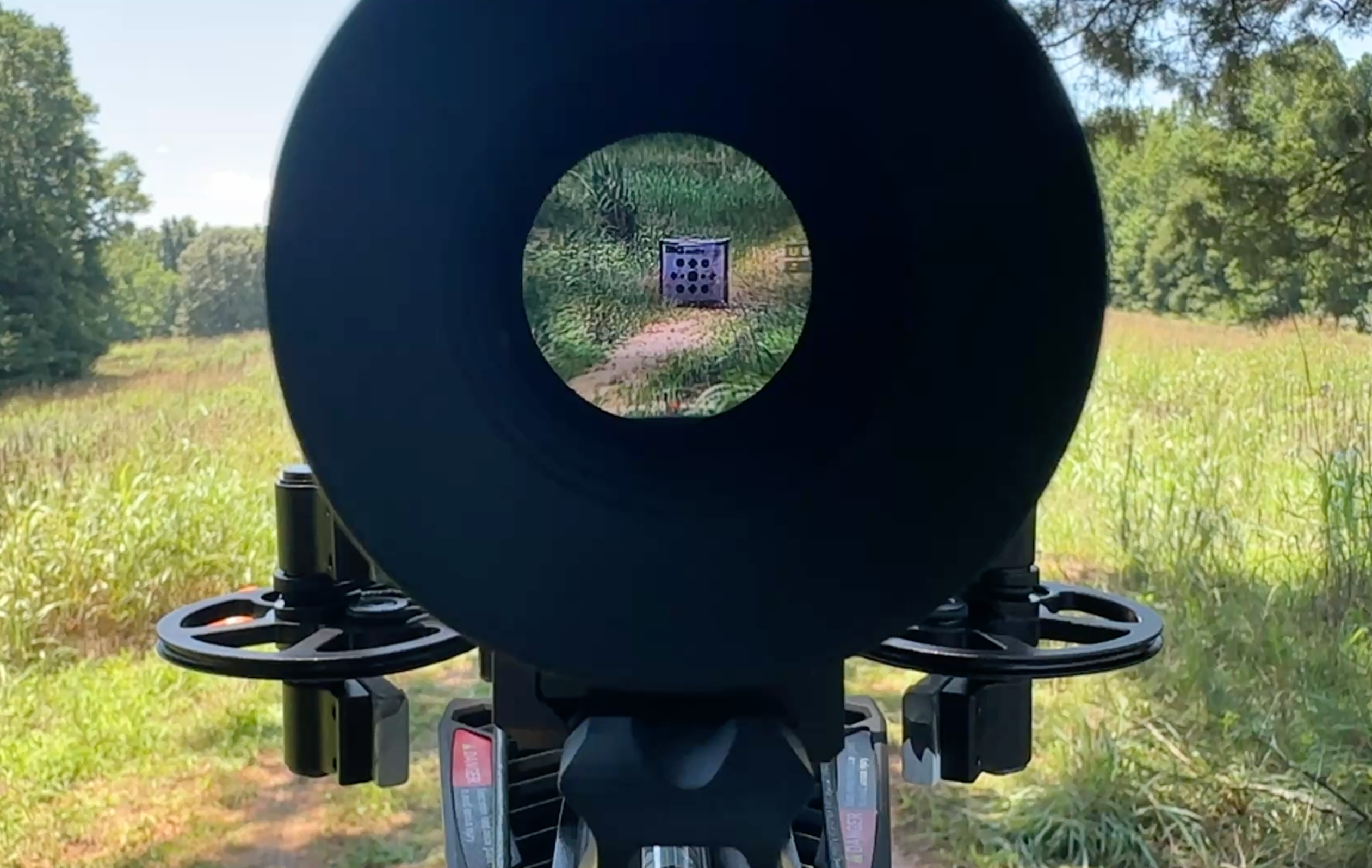
Unlike traditional scopes, you’re not looking through glass with the Vision HD. You are looking at a screen that displays the image. It’s like looking through the view finder of a camera. This way the normal daytime image is not as pleasant to the eyes and you will feel more eye fatigue than with quality glasses. But that’s enough detail for a scope, especially at archery distances.
low light testing

TenPoint Vision HD Low Light Test
I started my low-light testing 30 minutes before sunset. The image was bright in daylight, and I had no problem seeing detail on a 3D target up to 35 yards away. I checked the image again right at sunset, and the image was practically unchanged.
At 30 minutes after sunset – the end of legal shooting light in my state – the image was darker, but still significantly brighter than my naked eye, and I could easily see all the necessary details on the target. Jumping ahead 5 minutes, I could see the outline of the deer target, but couldn’t see much detail with my naked eye. Depending on the scope, this could be up to an hour earlier.
In pitch darkness, when I could not see the target with my naked eye, I could still see it through the scope. I could easily place an accurate arrow into a vital part of the 3D target at 35 yards. This is all with the Vision HD’s daylight setting. It has a night setting that you can get to with the press of a button, which only improves performance in the dark. What’s more, the IR signature of the laser rangefinder is visible in night settings, and it is like the beam of a flashlight on the target.
legality
If you’re interested in using a Vision HD scope, you’re probably wondering if it’s legal to use in your state. I could not find a published list of states that allow similar optics like the Vision HD scope or the Garmin Zero. The main things to look for in your local regulations are electronic scopes and scopes that project a laser on the target.
Scope Technology vs. Hunting Policy
The technology in the TenPoint Vision HD is fascinating. You have a scope that eliminates any problems that may arise on the legal end of the spectrum. It’s easy to use, and has a ballistics program that takes out all the guesswork from shooting arrows. It also has a small form factor and is relatively light weight. This is undoubtedly the best crossbow scope I have used and is possibly the future of scopes. In five years, I’ll bet you’ll see a version of this scope equipped with a variety of crossbows. They will be prolific and will make hunters everywhere more effective.
That’s what you want from a piece of hunting gear, isn’t it? So what is the problem?
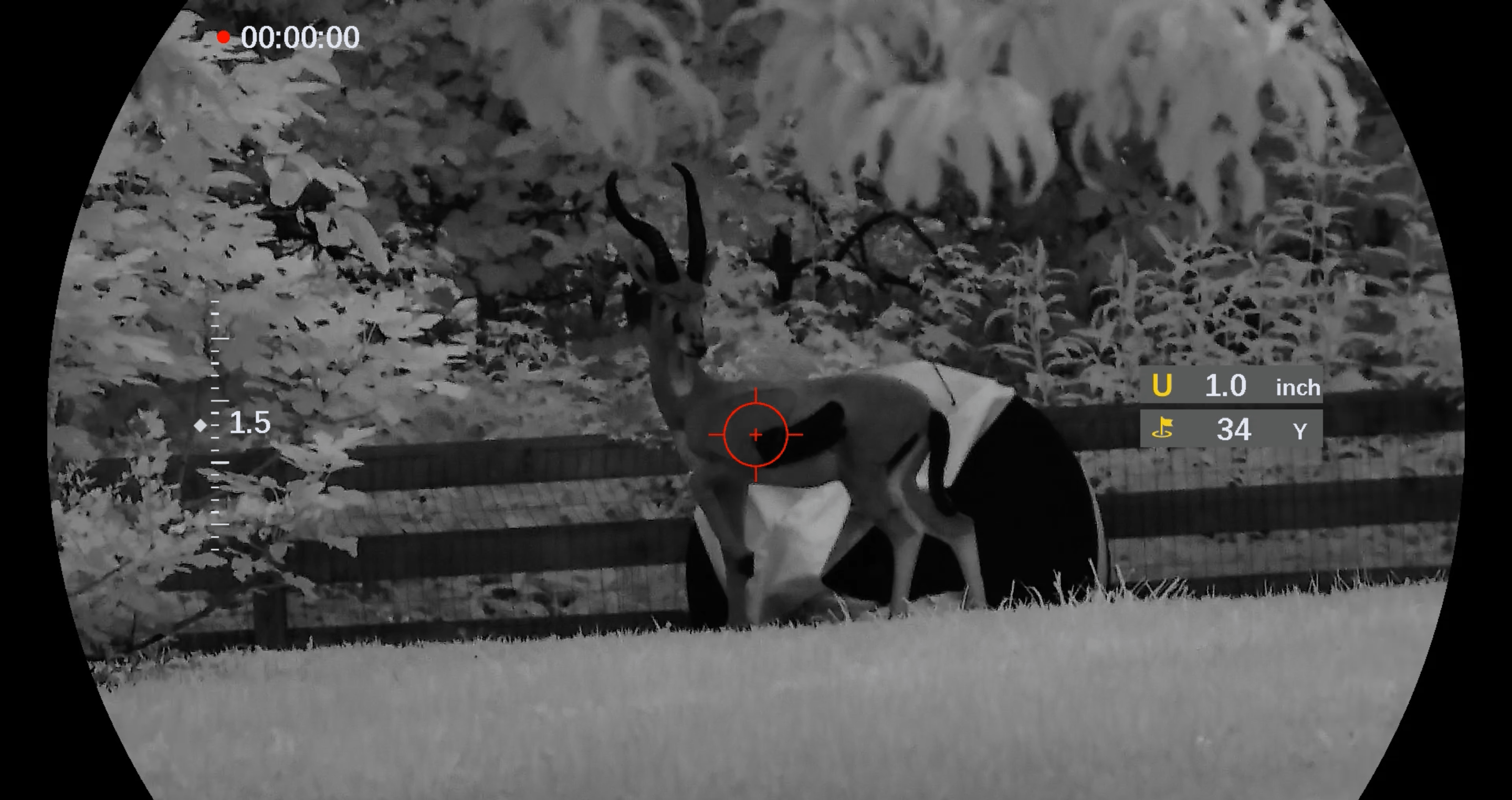
Even a true ethical hunter can be tested by a one-shot opportunity a minute after legal light. This is the time when you can still clearly identify the animal and aim accurately.
But, for ethical hunters with regular optics, those lures are completely gone ten minutes after legal lighting, and certainly 30 minutes later. However, with Vision HD, there is no doubt that you can take precise aim at an animal in the dark.
My fear is that this kind of scope, combined with the relative quietness of the crossbow, makes it too easy to kill deer at night. It’s great to be able to shoot accurately and make clean kills in low-light scenarios, but the capabilities of this scope go far beyond that. To put it bluntly, I’m not sure deer hunters should hit the field with a scope that has a ‘night mode’ feature during the regular archery season.
Archery hunting is considered difficult
At its core modern bowhunting is about intentionally challenging yourself. Because of the gear we choose to use, we have to get closer to the game and spend more time practicing to aim accurately. And when we finally release that perfect arrow at the nearest animal, the feeling of joy and accomplishment is unlike any other in hunting.
Even with modern crossbows, I consider typical bow hunting distances to be a shot inside 40 yards (or maybe 50 yards). At distances beyond this, and especially at ranges beyond 50 yards, even fast-moving arrows lose several inches per yard. To shoot long ranges with regular gear, you must know exactly how far away the animal is and where to hold your reticle. It takes a lot of practice to learn this, but it is possible for the serious hunter.
The Vision HD makes shooting beyond 50 yards as easy as shooting at 20 yards – at least from a ballistics standpoint. So once again, the hunter will find himself with the devil on his shoulder. If that deer is standing wide open at 100 yards and you don’t have to worry about your catch, you may be tempted to send it sending. I’m not saying there’s anything wrong with shooting a deer from 100 yards if you can do it cleanly, but I am saying that we are messing with bow season becoming indistinguishable from muzzleloader and straight-wall season.
final thoughts
Follow the law and have fun, that’s my general approach to hunting equipment. So I am not advocating outlawing this scope or any other scope like it. But may I ask you to consider why you enjoy archery hunting in the first place. Will technology like this ultimately make your hunts more fun – or more successful?