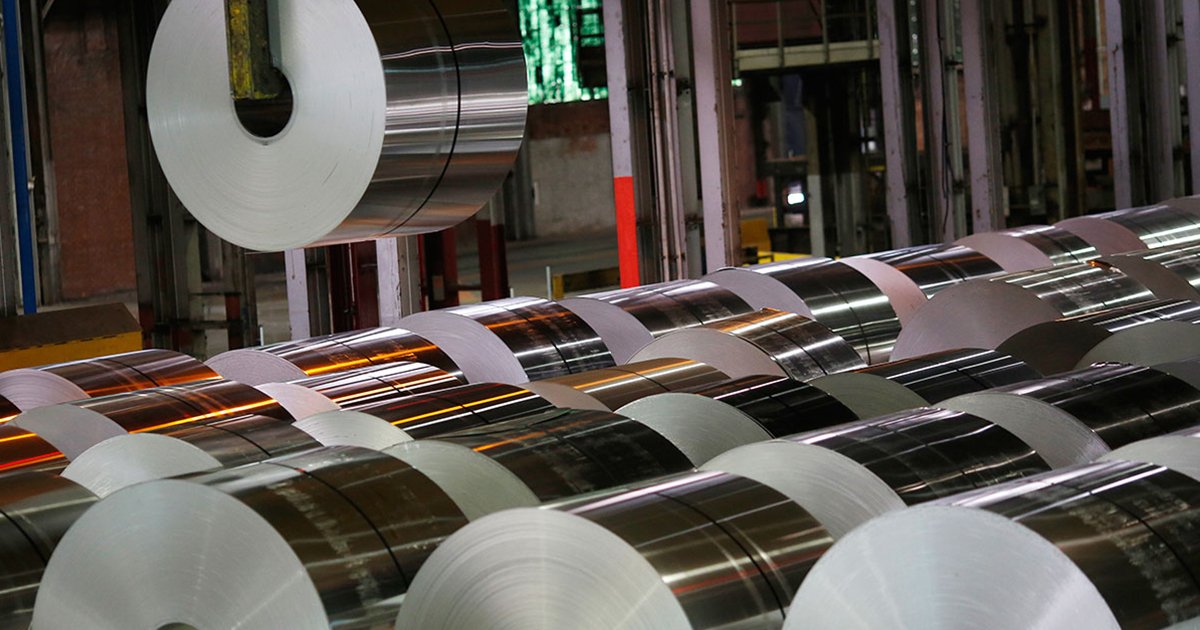
A crane moves an aluminum coil onto the floor of an aluminum manufacturing facility. (Luke Sherratt/Bloomberg)
key takeaways:
- The Trump administration program would reduce aluminum import tariffs from 50% to about 25% for approved companies investing in U.S. plants.
- The move addresses a shortage of U.S. aluminum as demand for domestic production remains low and manufacturers face increased costs from tariffs and market disruptions.
- Century Aluminum said its proposed Oklahoma smelter could more than double U.S. primary output, although analysts cited ongoing power-cost challenges.
The Trump administration announced an incentive program under which companies that build, expand or renovate aluminum plants in the US will receive tariff exemptions for metal imported from abroad.
The plan announced on July 20 would reduce tariffs on imported aluminum from 50% to about 25% for companies that have met the new requirements and are approved by the US.
President Donald Trump had imposed the 50% tariff as part of efforts to boost domestic capacity for the lightweight metal, used in everything from automobiles to washing machines. But the effort has had only sporadic success and trading partners have lobbied for cuts.
More importantly, the US does not have enough primary aluminum capacity to meet demand. Instead it relies heavily on imports, particularly from Canada and the Middle East.
“This will likely be the case for several years, as there is only one new smelter under consideration, as well as construction timelines,” Alexander Hacking, an analyst at Citigroup, said in a note, referring to the primary aluminum plant proposed by Emirates Global Aluminum and Century Aluminum Co. in Enola, Okla.
The planned smelter, if built, would have the capacity to more than double current U.S. primary aluminum production, according to a statement from Century late July 20. Its shares rose 7.4% on Tuesday.
#TrumpTariff | US has taken more strong action to accommodate imports #aluminium in the united states
Establishing an incentive program for companies that will invest in building, expanding, or renovating aluminum smelters in the United States
The program will request… pic.twitter.com/F2vH3RsRsk
– CNBC-TV18 (@CNBCTV18Live) 21 July 2026
“We are grateful for the President’s steadfast support, which reinforces our commitment to supplying critical metals to vital American industries like defense and aerospace,” Century CEO Jesse Gary said in the statement.
There are currently four operating aluminum plants in the US, a number that has declined from 23 smelters in 2000. About half of all aluminum consumed in the US is produced in Canada, where energy-intensive facilities use cheaper forms of electricity such as hydroelectric power. Power economics outweigh domestic expansion, with the last new smelter being built in the US more than four decades ago.
The punitive 50% tariff has driven the so-called US Midwest premium – the amount added to the global price benchmark for delivering metal to that region – sharply higher since it was implemented in June last year. Another supply shock resulting from the Iran war helped push regional aluminum premiums up nearly 100%.


Alex Fraser from Cox Fleet discusses how fleets should respond when a roadside breakdown occurs, testing their safety, compliance and customer service systems simultaneously. Tune in by going above or RoadSigns.ttnews.com.
The US Midwest premium is a proxy for the amount of money paid by American manufacturers to make products such as appliances, beverage cans, and automobiles. They are essentially paying the highest raw material prices in the world and have adopted a just-in-time purchasing pattern, purchasing enough to meet immediate production needs. Aluminum prices on the global benchmark London Metal Exchange have also risen sharply this year as the twin shocks have put pressure on the market.
The White House proclamation “represents an effort to encourage more capacity without raising prices even further for consumers,” Hacking said, adding that he sees no near-term impact on Alcoa Corp., one of the world’s largest aluminum producers.
“Alcoa’s management has been cautious in its statements about its ability to add capacity in the US, mindful of the challenge in securing affordable power. It remains to be seen whether this changes this calculation, but it seems unlikely,” Hacking wrote.
LME aluminum prices rose 0.6% to $3,159 a metric ton by 10:33 a.m. in New York, while Alcoa shares were up 1.2%.