key takeaways:
- The U.S. asked Mexico to adopt Section 232-style tariffs on steel and aluminum imports from outside North America during the USMCA review talks, people familiar said.
- The proposal aims to align North American trade barriers against China while preserving preferential treatment for US, Mexican and Canadian steel producers.
- U.S. and Mexican officials are planning further talks in Washington in September as they discuss steel, aluminum, autos and broader USMCA changes.
The United States has asked Mexico to mirror Washington’s tariff wall against Chinese steel and aluminum by imposing Section 232-style tariffs on imports from outside North America, according to four people with direct knowledge of the matter.
The goal is to preserve preferential treatment for steel produced in the US, Mexico and Canada, while imposing a common external barrier for China. While it represents a major request from U.S. trade officials, Mexico is prepared to pursue it amid negotiations for a broader deal as the USMCA trade agreement remains under review, said the people, who asked not to be identified because the talks are private.
Read more: China says US has promised to limit replacement tariffs to 20%
The exact rates and products covered by the potential tariffs are still under discussion, he said. The US aims to complete a framework agreement with Mexico by the end of the year, one of the people said.
The US and Mexico are holding bilateral talks as part of a process to review the North American trade agreement, known as USMCA. The risk has increased since the US declined to renew the agreement in its current form on July 1, instead pushing forward with negotiations as it seeks to tighten regional rules of origin and limit China’s role in North America.
As part of those conversations, U.S. Trade Representative Jameson Greer and Economy Minister Marcelo Ebrard held a third round of bilateral talks in Mexico City last week. The talks included topics of steel and aluminum, autos, economic security, labor and agriculture. The governments plan to meet again in Washington in September and stressed the need to prevent “free-riding” by countries outside the agreement.
Ambassador Greer and Secretary @m_ebrard A joint statement was issued after today’s talks in Mexico City.https://t.co/vmYNYuT6rZ
— United States Trade Representative (@USTradeRep) 24 July 2026
In its effort to make headway in negotiations, Mexico offered to sharply reduce purchases of Chinese steel earlier this year, one of the people said.
USTR and Mexico’s Economy Ministry did not respond to requests for comment.
tariff discussion
As things stand, the US steel regime is broader and more punitive than Mexico’s.
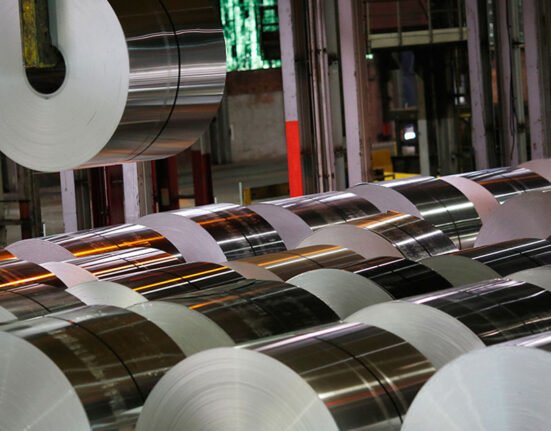
The US has imposed Section 232 tariffs of 50% on core steel and aluminum from China and most other economies, and 25% on derivative products and lower tariffs on selected machinery.
Mexico taxes metals on a product-by-product basis. Tariffs of up to 25% are imposed on steel imports from countries with which Mexico does not have trade agreements, as well as some anti-dumping duties.


Brad Gulick of Eaton Mobile Power Group discusses the hydraulic systems that power trucks. He addresses dump pump sizing and more. Tune in by going above or RoadSigns.ttnews.com.
Earlier this year, Mexico imposed new tariffs on about 1,500 products from countries with which it does not have trade agreements – a move that mostly affects imports from China. The decision, approved by Mexico’s Congress last year, was seen as an effort by the administration of President Claudia Sheinbaum to more closely align its tariff framework with that of the US.
US steel producers have asked the Trump administration to require Mexico and Canada to adopt measures equivalent to US restrictive Section 232 duties, by matching their tariff levels as well as product and country coverage. He also requested a “melt and cast” rule, under which steel receiving special treatment would need to be made at the furnace level in North America – not just rolled or drawn there.
A broader industry wish list calls for increasing the share of North American steel that automakers must buy from 70% to 85%, expanding labor-price rules to more steel-intensive goods and restricting investment from non-market economies such as China.
Written by Gonzalo Soto, Alicia Diaz and Joe Dukes