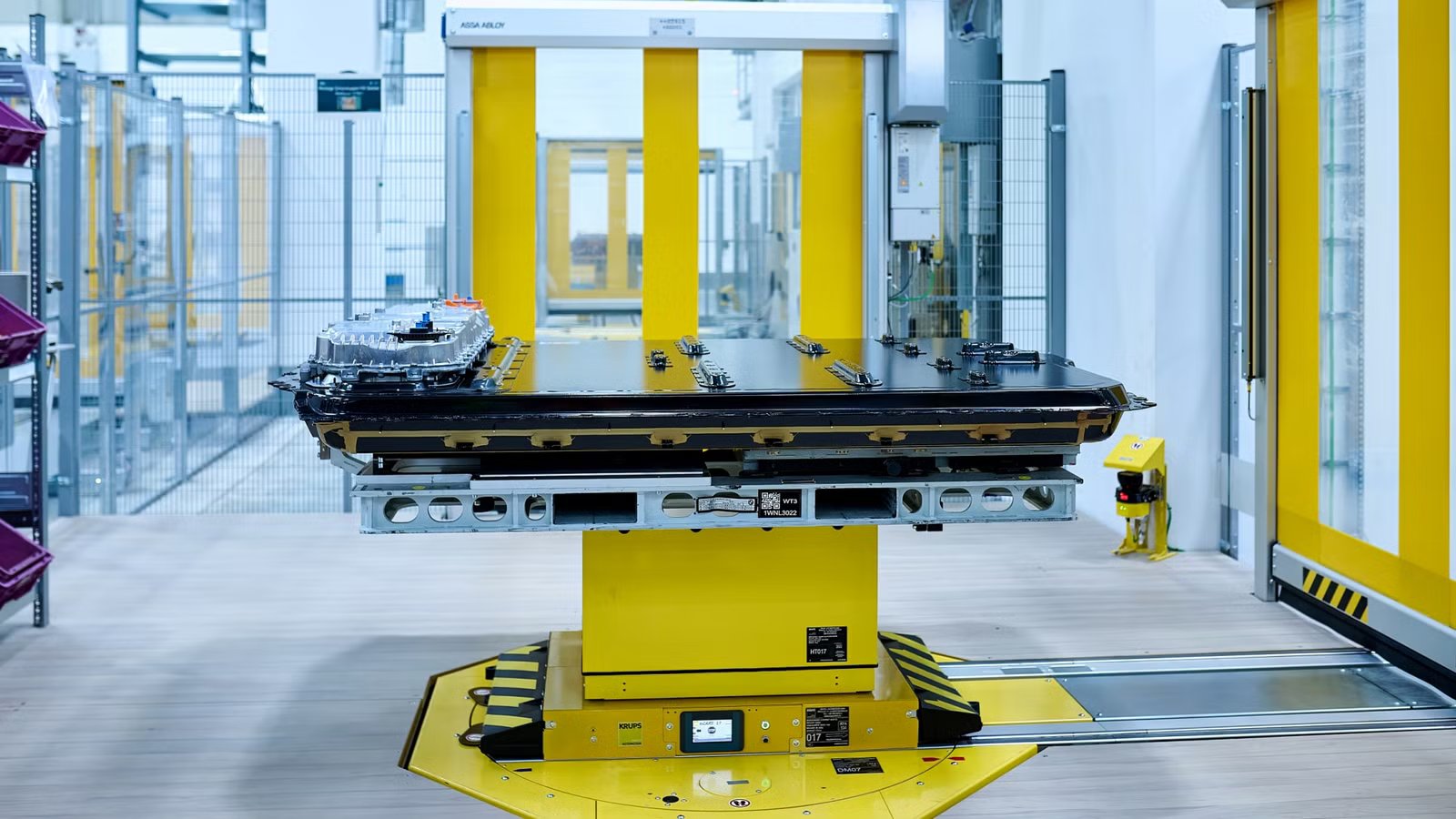
The global electric car landscape is reshaping in response to unexpected shifts in consumer demand. Automotive brands around the world have confirmed the decline in demand for battery electric vehicles. This decline in demand forces these brands to sharply reduce their aggressive timelines for a full transition to electromobility. Many manufacturers realize that early estimates of consumer adoption overestimate short-term infrastructure preparation and consumer interest.
Automotive giants including General MotorsFord and Mercedes-Benz have already adjusted their near-term factory allocations to preserve capital. Despite these temporary strategic retreats, the long-term corporate roadmap for most automotive companies still aims for a complete transition to electric propulsion. Global regulatory frameworks and fleet emissions mandates leave no alternative path for survival in the future. Manufacturers now set realistic goals that blend internal combustion output with hybrid offerings while they wait for technological breakthroughs.
Biggest players in the EV battery race
While demand has waned, the interest invested in electromobility has resulted in rapid advances in battery technology. Over the past 10 years, we have seen energy density metrics double, while manufacturing costs per kilowatt-hour have declined by more than eighty percent during this time frame. Lithium-ion chemistry remains the baseline for current electrified consumer transportation, but some brands are still using nickel-containing cathodes. Major global manufacturing corporations set the pace for the sector.
Contemporary Amperex Technology Co., Ltd., known to the industry as CATL, has the largest global market share. BYD Company Limited Closely followed as both a giant automaker and an independent battery supplier. LG Energy Solution and Panasonic Energy also capture significant shares of the global automotive supply chain. These companies focus on removing expensive and volatile materials such as cobalt from the cathode.
Lithium iron phosphate chemistry is being widely adopted because it offers better thermal stability and lower cost than nickel manganese cobalt alternatives. The next decade of development points directly toward solid-state designs that promise to eliminate flammable liquid components altogether.
Sodium emerges as a new solution for the development of sustainable EV batteries

A breakthrough by Chinese researchers has introduced a revolutionary sodium metal battery design that changes current expectations of charging infrastructure. This specific configuration employs basic chemical principles that substitute sodium for lithium resources. The key innovation relies on a single-ion semi-solid electrolyte gel that prevents irregular growth of crystal structures. This engineering approach eliminates the formation of sharp metal deposits known as dendrites, which typically clog internal separators and cause short circuits.
This design serves as a viable solution as it maintains electrical conductivity while imposing structural stability on the molecular layer. You look for a battery architecture that handles high electrical currents without degradation. Full-scale mass production is several years away from consumer vehicle integration, but the engineering team has revealed that the technology currently exists as a fully functional laboratory prototype that undergoes rigorous validation protocols. Scaled manufacturing requires new factory tooling because working with raw sodium metal requires different moisture isolation than standard lithium processing lines.
Why is sodium a game-changer for modern energy storage needs?

This specific sodium metal chemistry provides remarkable benefits Traditional Lithium-Ion Alternatives In every key performance metric. The architectural design yields high theoretical capacity because it uses pure sodium metal instead of carbon intercalation material. This option increases the volumetric energy density and allows the packaging configuration to be significantly reduced.
Heat management benefits from the semi-solid gel electrolyte, which exhibits minimal thermal expansion and resists chemical breakdown at elevated operating temperatures. The battery requires very little passive cooling equipment within the vehicle chassis. The title achievement focuses entirely on charging velocity. Laboratory documents confirm this Design fully charges in just four minutes. This speed matches the time it takes to complete a standard coffee break. The cell retains its baseline energy capacity for years of continuous cycling without showing the typical degradation that prohibits modern smartphones and older electric cars.
China’s leading battery innovation development team

The Chinese Academy of Sciences is leading the development of this fast-charging battery architecture. This massive state scientific institution began its extensive research operations in 1949 and has continued to expand its reach to hundreds of specialized laboratories across the country. The organization now serves as the major academic structure and comprehensive research and development center for the natural sciences in China. Thousands of specialized engineers and materials scientists collaborate within this network to solve fundamental industrial hurdles.
Notable achievements of this research team include pioneering achievements in quantum communication networks and advanced superconducting materials. The institution also contributes to the development of deep-sea exploration vessels and domestic aerospace propulsion systems. His long-term focus on fundamental materials science enables the precise manipulation of polymers required to create single-ion gel electrolytes. This deep historical background in advanced engineering provides the essential foundation for solving complex electrochemistry issues that still challenge commercial entities decades later.
Better heat management significantly improves charging speeds

Adoption of sodium technology in modern electric vehicles poses serious engineering hurdles Despite impressive charging figures. The physical radius and atomic weight of sodium ions are greater than those of lithium ions. This physical law means that basic sodium ion batteries naturally have a lower gravitational energy density than premium lithium variants. You’ll have to accept a heavier battery pack to get the same driving range if you use the standard sodium configuration. Integrating a heavy battery changes the vehicle’s suspension dynamics, braking distance and structural crash safety requirements.
The use of pure sodium metal in this new prototype attempts to solve the density issue but presents serious chemical reactivity risks. Raw sodium reacts violently when it encounters even small amounts of atmospheric moisture. Automotive enclosures must feature hermetically sealed protective vaults to prevent catastrophic chemical fires during a collision. Redesigning vehicle architecture to accommodate these safeguards increases weight and manufacturing complexity.
Why does China remain at the forefront of the electromobility race?

China has maintained Leading position in the global electromobility sector Thanks to its strategic foresight and systematic industrial planning. The national strategy combines state financial subsidies with aggressive infrastructure deployment in every major province. Chinese corporations create an integrated ecosystem that controls the entire value chain from initial mineral extraction to final vehicle assembly. The country dominates raw material processing, refining most of the world’s graphite, lithium and cobalt.
This domestic processing capacity protects local manufacturers from international supply chain shocks and volatile spot market pricing. The domestic consumer market benefits from a dense network of high-power public charging stations, which surpasses Western infrastructure by a significant margin. Local automakers iterate vehicle designs at a faster pace because of their proximity to battery suppliers like CATL and BYD. This full industrial integration makes the country a leader in modern electric vehicle development.
Other innovations making progress in the EV sector

The global automotive group investigates the development of sodium chemistry as well as a wide variety of alternative battery innovations. Each route offers a specific balance of safety, cost, and resource availability for a future product line. Toyota Motor Corporation invests heavily in sulfide-based all-solid-state batteries Achieve over 700 miles of driving range Once charged. QuantumScape Corporation works closely with Volkswagen Group to commercialize solid state lithium metal cells that undergo rigorous automotive testing protocols.
Another viable alternative emerges in the form of lithium sulfur batteries, which researchers at organizations like Litten are pursuing for aviation and commercial transportation. Lithium sulfur designs provide high theoretical energy density while completely eliminating nickel and cobalt dependency. Silicon anode technology is also gaining popularity as companies like Sila Nanotechnologies replace traditional graphite with silicon structures to increase energy efficiency by as much as twenty percent. These creative chemistries serve as viable alternatives because they target specific weaknesses in current commercial products.
Why is transitioning to lithium an important step for energy storage?

Developing diverse battery options is essential for the long-term viability of global transportation networks. Relying exclusively on lithium-ion architecture exposes the automotive industry to serious systemic vulnerabilities. The extraction of lithium requires vast amounts of groundwater, causing ecological stress in arid regions such as South America. Cobalt mining has involved documented humanitarian crises and geopolitical instability in Central Africa.
Lithium-ion packs also suffer from this inherent thermal runaway risk When internal short circuits occur, intense fires occur which emergency services struggle to extinguish with conventional means. These batteries lose significant operating capacity and driving range when the environmental temperature drops below zero. Recycling current lithium cells remains an expensive process that yields low financial returns, creating long-term electronic waste challenges. Adopting alternatives like sodium ensures that your future mobility options are not dependent on scarce materials, unstable geopolitics, or dangerous chemical configurations.
Source: bud