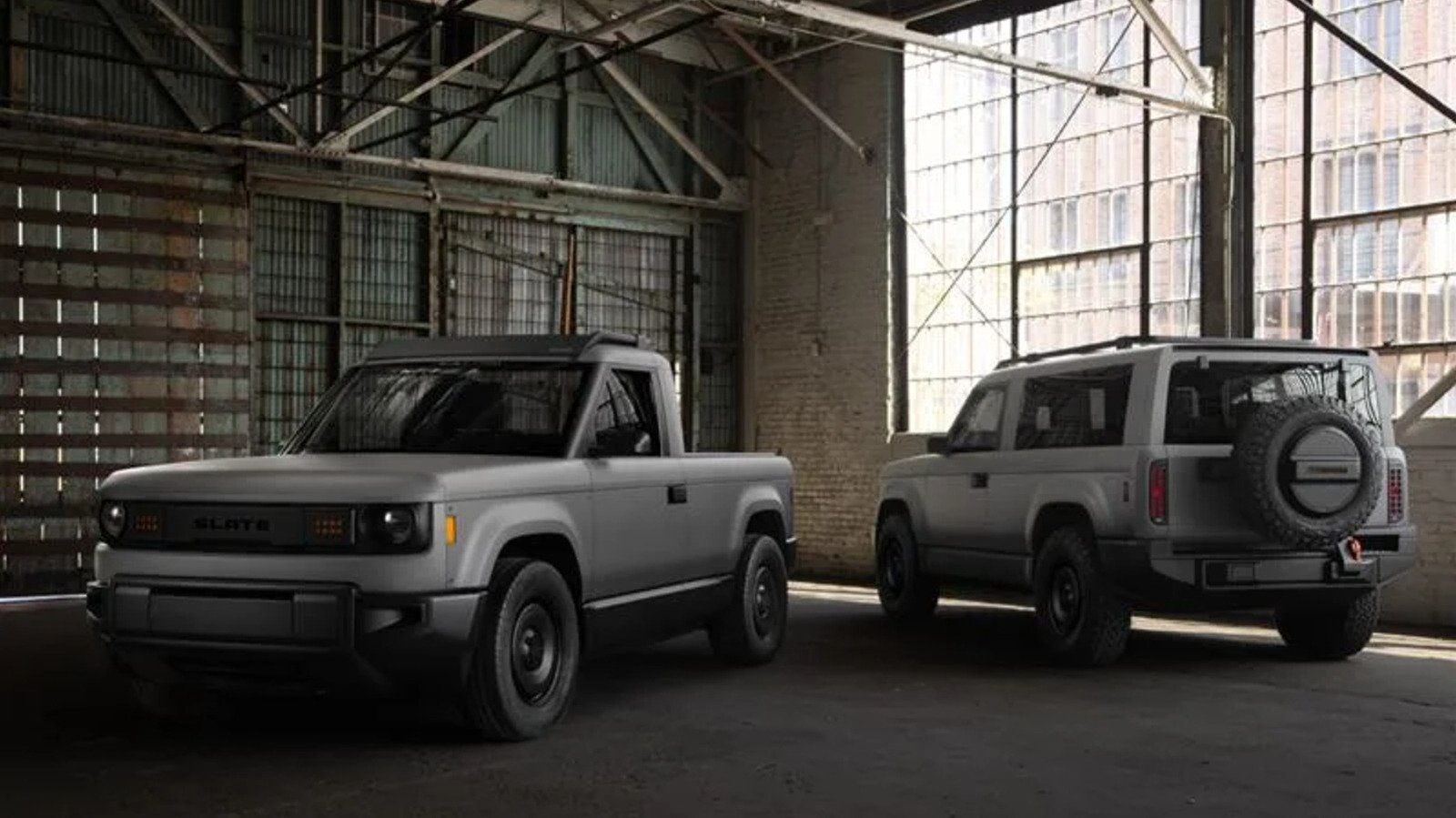
It’s not that strange for an automaker to change a few details when taking a prototype to production, and that’s what happened with the all-electric Slate truck. However, here’s one particular detail that really caught our attention: When Slate showed an early model in April of 2025, the truck was going to offer a pair of battery packs that relied on nickel-manganese-cobalt (NMC) chemistry. The starting point will be a 52.7-kWh setup good for 150 miles of range, with buyers able to choose an optional 84.3-kWh pack capable of delivering 240 miles of range.
Still, when the price of the production slate pickup truck was recently revealed – $24,950 – there was a whole new approach to its batteries. The only battery system now listed for the truck is based on lithium iron phosphate (LFP) chemistry, has a 65-kilowatt capacity, and can provide a total range of 205 miles.
Now, using LFP batteries does have some significant benefits over NMC options, and we’ll touch on those next. But the main reason Slate didn’t initially go the LFP route was that he originally wanted his truck to qualify for the beloved national EV tax credit. This took LFP batteries off the table, as they are typically sourced from Chinese companies and would have disqualified the slate trucks. As a result, the prototype was specified with South Korea’s NMC batteries. The good news is that slate trucks will remain affordable, at least if you don’t go overboard on the options.
What are the benefits of LFP batteries in slate trucks?
The difference in battery chemistry creates some big differences in pricing, too. For example, extracting nickel and iron is economically and ethically more expensive than obtaining the elements used in LFP batteries. This means that the cost of building an NMC setup is also high. With this in mind, switching to LFP chemistry helps keep the slate truck’s MSRP low, which is especially important given the expiration of the national EV tax credit. Additionally, Slate uses a Chinese-owned supplier, Gaotian, but the company has set up a battery-production plant in Illinois—close to Slate’s own factory in Indiana.
LFP batteries are also safer, as they are less likely to undergo thermal runaway, making the EV less likely to catch fire. Their impressive thermal stability naturally helps them better stand up to extreme heat in daily driving conditions, another benefit. It’s a similar story in the case of regular driving, as LFP packs are known for their long operating life even through thousands of charging cycles.
That said, LFP batteries aren’t perfect. One of their biggest drawbacks is energy density: simply put, LFP battery packs typically weigh more and take up more space than NMC arrangements that produce the same amount of power. An inevitable result is that the 65-kilowatt pack takes up all the space that the slate platform allocates for batteries, leaving no room for an alternative, longer-range setup.
Will the resulting 205 miles be enough for the slate to succeed? It’s hard to tell, but our readers definitely think that’s less EV range than most people need.