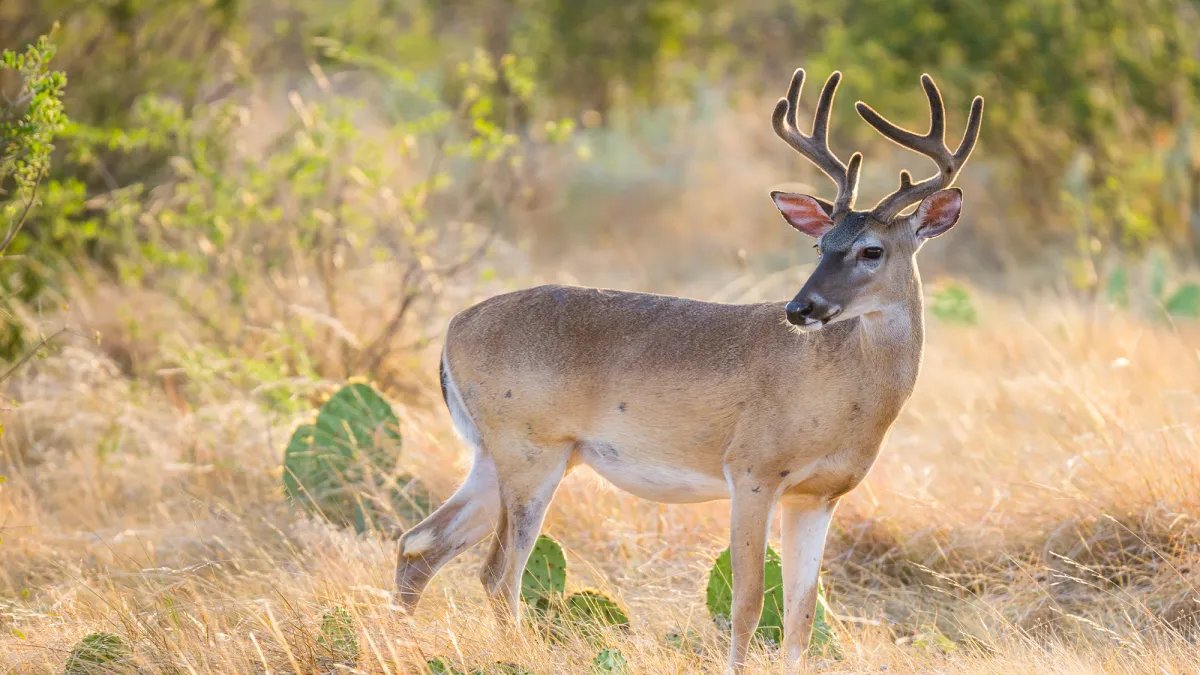
As the outbreak of new world screwworm Animal farmers continue to be harassed 12 cases confirmed As has been the case with domestic animals in the Southwest over the past two weeks, officials at the Texas and federal levels have been shifting some of the concerns onto wildlife. These concerns are especially high in South Texas, where the deadly parasite could wreak havoc on whitetail populations and the state’s multibillion-dollar deer hunting industry.
Allen Cain, head of the Texas Parks and Wildlife Department, addressed these concerns directly on Monday. Texas Public Radio. Cain explained how hunters and other outdoorsmen can play an important role in detecting screwworm cases, and said “people are using game cameras” as an example of this.
“When they’re sitting out in the evening watching deer or other wildlife, those are good opportunities to look and assess if there might be any wounds or injuries that look suspicious,” Cain said. “If they are, we need people to report them to Texas Parks and Wildlife.”
TPWD did not immediately respond to a request for comment, and there is no sign of confirmed screwworm cases in any deer or other wildlife in the state.
according to US Department of AgricultureAs NWS takes the lead in controlling the outbreak, 10 active cases in Texas have been isolated to livestock, while one active case was confirmed in New Mexico. a dog. However, when speaking to reporters on Monday, USDA Secretary Brooke Rollins warned that deer and other wildlife could help spread the parasite, and she said detecting and mitigating any wildlife cases would be paramount to preventing infections.
“I think the important role is to understand how wildlife, particularly in South Texas, will color this effort,” Rollins said. border report. “Wildlife surveillance and monitoring is one of the most important challenges in New World screwworm eradication – detecting infections in wildlife before they spread to livestock populations.”
To help with these control efforts, the USDA announced Tuesday it will commit nearly $105 million in funding 40 “Successful Projects” Presented as proposal through NWS Grand Challenge. One of those projects, led by scientists at Texas A&M AgriLife Research, will rely on AI-assisted trail-camera monitoring to identify high-risk locations where wildlife may interact with livestock. Another project presented by the University of Texas Rio Grande Valley plans to develop drones and other surveillance technology to be deployed specifically in South Texas.
One of the main reasons for the increased concerns in South Texas is the timing of this outbreak, coming right in the middle of fawning season. Like other warm-blooded animals, newborn deer are particularly vulnerable to flesh-eating parasites.
“We’re acclimated to this climate,” said local veterinarian Dr. Gaylon Wilmeth-Burleson. Texas Public Radio. “Deer babies in South Texas are born from mid-June to late July… so we are right on the cusp of baby birth for our deer.”
Burleson said he also remembers his father and others telling him about previous outbreaks of screwworm that had decimated local deer herds. This was before the parasite was eradicated from the US in the 1960s.
Read further: Texas officials kill deer breeder’s entire herd, ending years-long legal battle over CWD management
However, New World screwworms were never completely eliminated from the Americas. The current outbreak that we are seeing in the US is spreading northward from Mexico and Central American countries through 2023. It officially crossed the border on June 3, when TPWD confirms first known case In a three-week-old calf in Zavala County, Texas. Which leads to another serious concern for Texas ranchers and wildlife officials: proximity.
according to Center for Disease ControlMore than 185,000 cases of NWS have been reported in animals in Central America and Mexico since January, with an additional 2,100 cases reported in people.