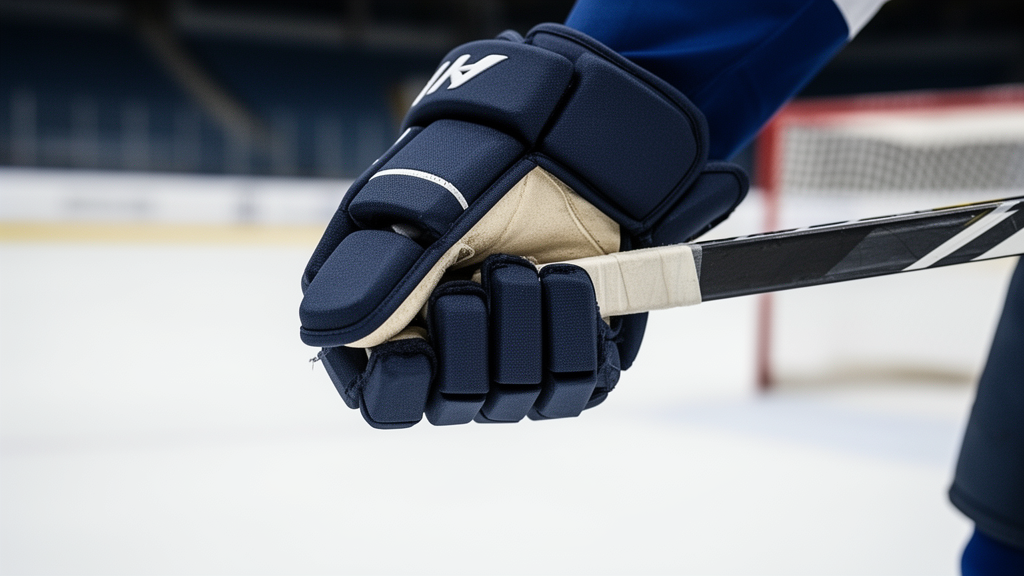
Following a 12-week supervised grip-strength training program, male professional ice hockey players demonstrated significant increases in grip strength alongside improvements in on-ice shooting accuracy, with changes in grip strength positively associated with changes in shooting accuracy. In an exploratory prospective pilot study published in BMC Sports Science, Medicine and Rehabilitation, researchers investigated whether dominant-hand grip strength relates to shooting performance among elite players. At baseline, nineteen male players from a Swedish Hockey League team were evaluated, and their dominant-hand grip strength exhibited a moderate positive correlation with shooting accuracy that did not reach statistical significance (r = 0.452, p = 0.052; R² = 0.204).
Baseline assessments measured players’ dominant-hand grip strength using a Jamar dynamometer and evaluated shooting accuracy through a standardized on-ice shooting test. Participants then completed a 12-week supervised grip-strength training intervention integrated directly into their regular team strength and conditioning schedule. Following the intervention, seventeen players completed follow-up testing. Statistical analyses of the paired assessments and performance associations were conducted using Pearson correlations, linear regression models, and paired-samples t-tests. The trial was prospectively registered at ClinicalTrials.gov under identifier NCT07115160.
Over the course of the 12-week study period, the players’ grip strength increased from 54.4 ± 7.3 kg at baseline to 59.1 ± 6.5 kg at follow-up (p < 0.001), while shooting accuracy improved from 23.9 ± 6.3% to 37.1 ± 7.2% (p < 0.001). Individual improvements in grip strength were positively associated with improvements in shooting accuracy (r = 0.599, p = 0.011; R² = 0.359). Furthermore, in a linear regression analysis evaluating changes across the intervention, changes in grip strength were positively associated with changes in shooting accuracy, yielding an estimated regression coefficient of 1.335 (p = 0.011).
The study authors noted that these findings suggest
The study authors noted that these findings suggest grip strength may represent a modifiable factor related to hockey-specific shooting performance. However, the researchers emphasized key methodological limitations: the absence of an untrained control group and the concurrent continuation of regular team training preclude attributing the observed performance gains specifically to the grip-strength regimen. Consequently, the authors concluded that larger controlled studies are warranted to evaluate whether targeted grip training directly enhances shooting performance.
Subject of Research: Grip strength and shooting accuracy in professional ice hockey players
Article Title: Association between grip strength and shooting accuracy in male professional ice hockey players: an exploratory prospective pilot study
Article References: Muder, D., & Swarén, M. (2026). Association between grip strength and shooting accuracy in male professional ice hockey players: an exploratory prospective pilot study. BMC Sports Science, Medicine and Rehabilitation, 18(1), Article 565. https://doi.org/10.1186/s13102-026-02235-1
DOI:10.1186/s13102-026-02235-1
Keywords: grip strength, shooting accuracy, ice hockey, Swedish Hockey League, sports science, dynamometer, pilot study, athletic performance, Association, between, grip, strength
News. Pilot Study Finds Grip Strength Gains Associated with Improved Hockey Shooting Accuracy. Scienmag