Keith Lusher 07.01.26

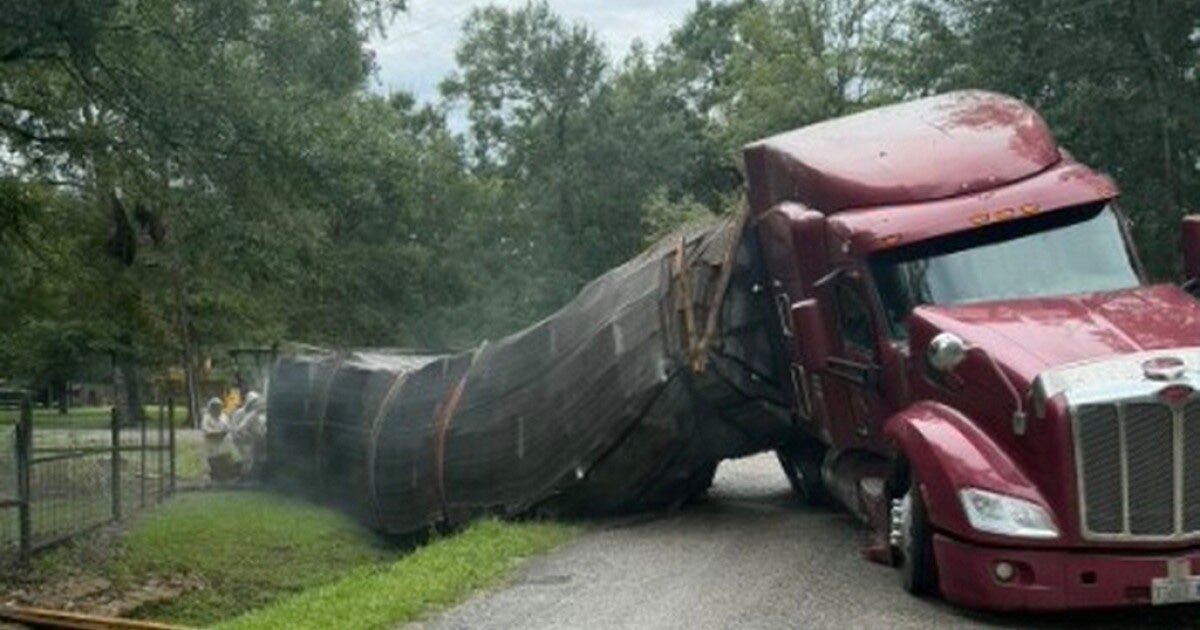
Millions of bees were instantly released into a rural southeast Texas area after a semi-truck carrying more than 400 beehives overturned Sunday morning, prompting emergency officials to close roads and tell nearby residents to stay indoors while crews attempted to recover the colonies.
The crash occurred in Orange County, Texas, near the Louisiana border, when the truck driver reportedly took a wrong turn a few miles from a cross-country trip to North Dakota. According to local beekeeper Chris Moore, the driver entered an area with narrow roads and overturned the trailer while attempting to negotiate a tight corner.
Emergency responders immediately cordoned off the surrounding area as millions of bees were collected from the damaged hives. Despite the dramatic scene, officials reported no serious injuries or widespread bee stings as recovery efforts continued.
Commercial and amateur beekeepers from across the region helped lead those efforts. Christy Ray, Owner queen bee suppliesSaid volunteers from several beekeeping operations immediately came together to save as many colonies as possible.

“They just help each other, that’s what they do,” Ray said. “The beekeeping community is a great community.”
Photos and video shared by Ray showed beekeepers wearing protective suits carefully reassembling damaged hives, while clouds of bees filled the air around the overturned trailer.
Unfortunately, Moore believes that only about a quarter of the 408 hives involved in the accident are likely to survive. This depends greatly on whether the queen bees inside each colony were alive at the time of the accident. Without the queen, the entire hive cannot continue to function normally.
“It’s a huge loss,” Moore said. “Anytime you lose that many at once, it’s a big loss.”
For commercial beekeepers, losing hundreds of colonies is much more than damaged wooden boxes. Each hive generates income through honey production and commercial pollination contracts, making large-scale losses particularly costly.
Transporting bees across the country is a common part of commercial beekeeping. Large operations regularly move colonies between states to pollinate agricultural crops and observe seasonal flowers that allow bees to continue producing honey throughout the year. According to Moore, the bees involved in Sunday’s accident had just begun their journey before the accident occurred.

Recovery efforts continued Monday as local beekeepers set up catch boxes around neighborhoods to attract stray swarms. Ray later shared additional photos showing several large groups of bees gathering near nearby trees and fences. One flock became so heavy that it broke a tree branch with its weight.
Officials warned that it could take several days for all the escaped bees to either return to managed colonies or disperse naturally. Residents were asked to remain patient while crews completed the recovery.
Although unusual, similar incidents have occurred elsewhere in recent years. Earlier this spring, a truck carrying beehives overturned near Knoxville, Tennessee, snarling traffic while beekeepers worked to recover the remaining colonies. Last year, an estimated 14 million bees died after another tractor-trailer accident in Washington scattered more than 70,000 pounds of pollinator hives across the road.
However, for the owner of the overturned Texas shipment, Sunday’s accident is much more than an unusual roadside spectacle. Depending on how many queens ultimately survive, the crash could destroy hundreds of producing colonies and a significant portion of an entire season’s honey production and pollination income.

keith lusher
Keith Lusher is an award-winning outdoor journalist who lives in Covington, Louisiana. He owns and operates NorthShoreFishingReport.com and writes a weekly outdoors column for the Slidell Independent Newspaper. He also writes for the St. Tammany Parish Tourism Commission’s VisitTheNorthshree.com. He is the former host of The Northshore Fishing Report radio show and is on the board of the Louisiana Outdoor Writers Association. Keith contributes to numerous publications both online and in print and is proud to promote the unique fisheries of South Louisiana. To contact Keith email: keithlusherjr@gmail.com