Nowadays, navigation is an essential feature in any car and has been for a long time, especially in EVs, which are almost supercomputers on wheels, often with multiple apps to navigate. Currently, Ford relies on Google Maps for its mapping duties, but that’s about to change: Ford has partnered with Apple Apple is going to introduce its first built-in Apple Maps in its upcoming electric truck based on the new Universal Electric Vehicle (UEV) platform.
The first vehicle to be built on the new platform will be a truck rumored to be called the Ranchero, possibly followed by a van and an SUV. Set to launch in 2027, it is expected to be priced around $30,000 and similar in size to the existing Maverick. This new partnership with Apple is not limited to just becoming a map partner. Using Apple’s new MapKit for automotive technology, the system will bring turn-by-turn directions with natural language, real-time traffic and incident information, and smart EV-focused routing that factors in charging stops and battery preconditioning.
Latitude AI, developed with Ford’s in-house software team, is expected to feature several AI features as well as hands-free driving. It’s connected to BlueCruise, Ford’s hands-free driving technology, which currently only works on select highway segments, Ford says road-level data from Apple Maps will help power a “next generation” version of BlueCruise for a more intuitive experience. This slate is set to compete with the truck, an entry-level electric pickup.
How good are Apple Maps?
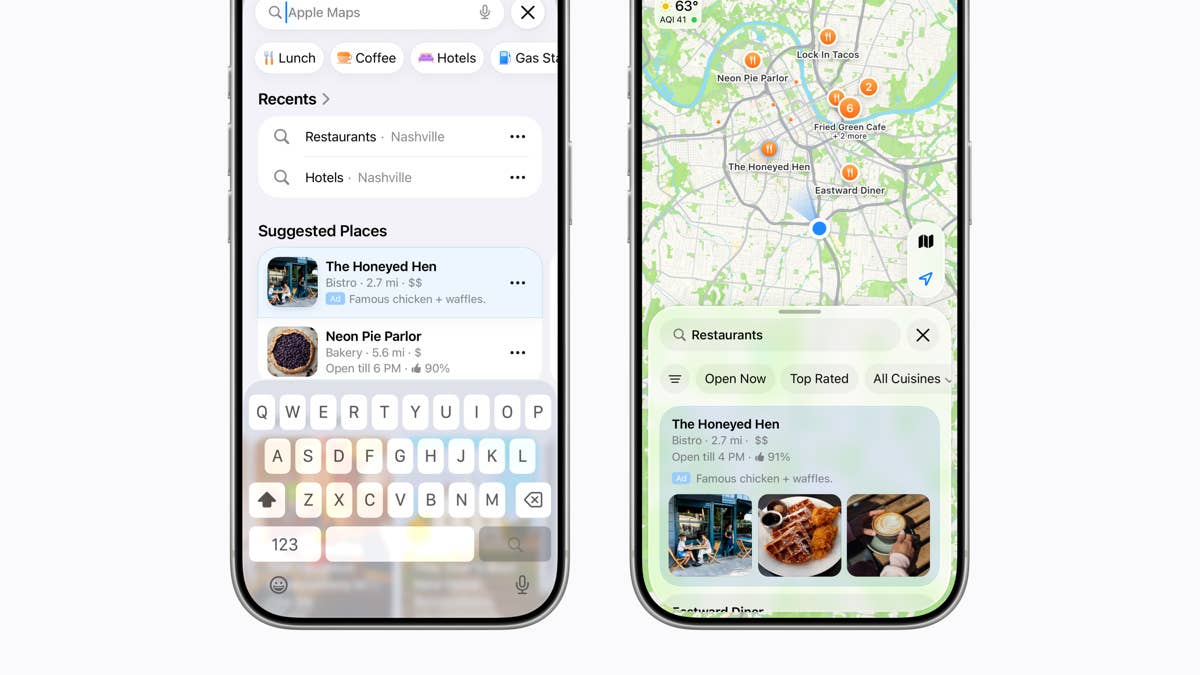
Since its release in 2012 – when it replaced Google Maps as the default on the iPhone – Apple Maps has been considered inferior to Google Maps. Google had both an early advantage and more data to work with, so when we talk about coverage, especially outside the US, Apple’s data has historically been more limited.
That being said, there are some aspects where Apple Maps outshines its competitors these days. Apple has spent years closing the accuracy gap and catching up on features, and it’s now considered solid and reliable for everyday navigation – especially if you’re deep into the Apple ecosystem, or simply like its clean looks and voice guidance. Google Maps still wins on raw data coverage, but the gap has narrowed greatly since those early “mapocalypse” days.