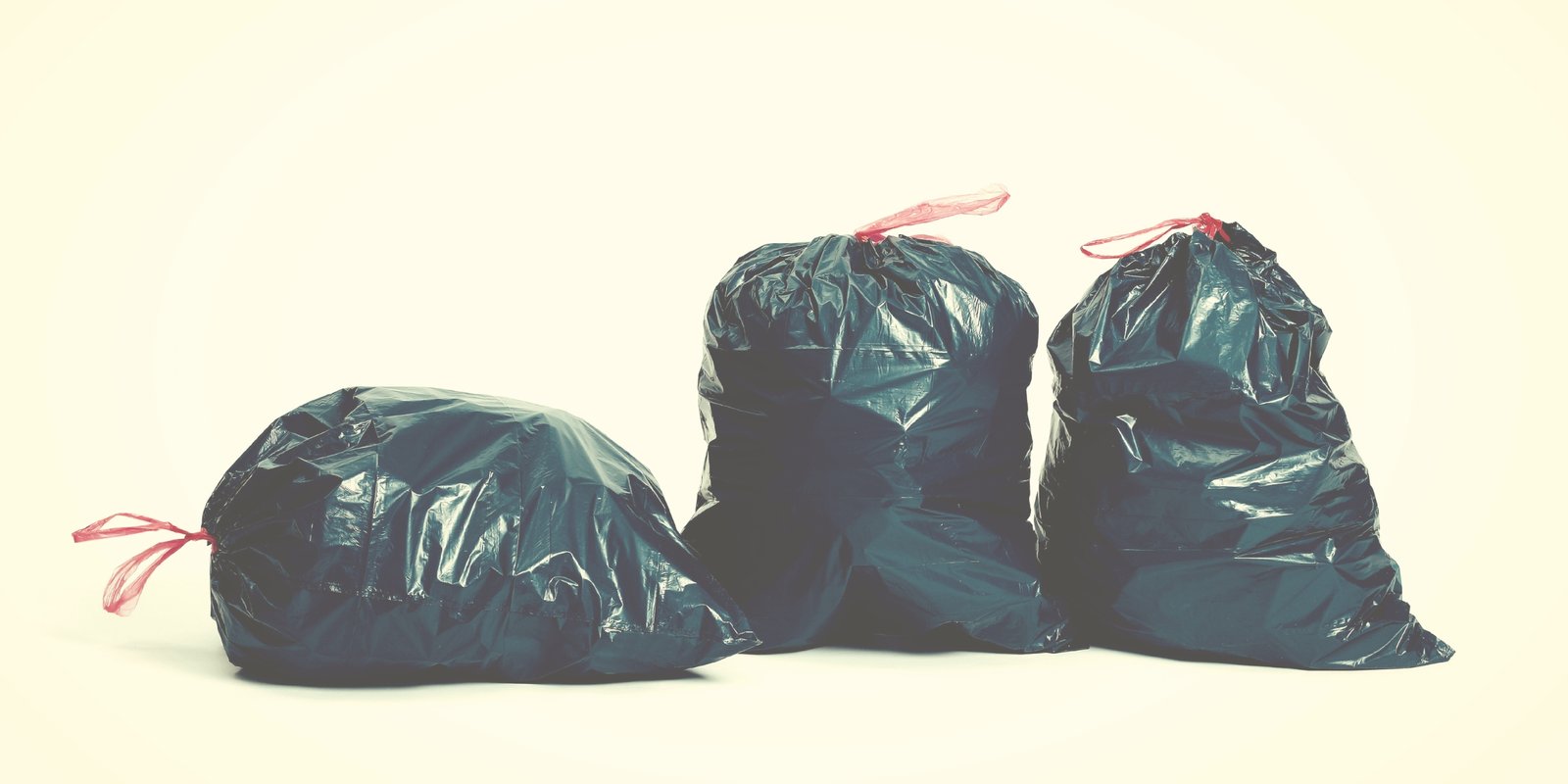
Simon Pare-Poupart on democratic control of waste management
A book on waste management that I have had for years Garbage giants By Canadian journalist Harold Crooks. That book is my Bible. The central question it asks is an important one: is it possible to maintain democratic governance over waste management?
Article continues after ad
Crooks documents how North American cities have been pressured to subcontract trash collection to private entities. Waste management as we know it has evolved largely in opposition to municipal practices. The same pattern persists in Greater Montreal: municipal expertise, which has traditionally been unionized, has been broken up and replaced first by small contractors and later by large multinationals.
Today, the City of Montreal handles less than 5 percent of the garbage collection in its territory. And it is one of the only municipalities in the region with a municipal collection service. This laissez-faire capitalist approach to waste management comes with risks. Crookes discusses Walter Lippmann’s notion of “upperworld” and “underworld”, which arise to protect weaker economic actors from unwanted competitors. Networks of underworld players have historically stepped in when legislators removed markets from the legal economy – think prostitution, gambling, drugs today, or alcohol during Prohibition.
In Italy’s decentralized and fragmented waste management system, the mafia thrives, which implies this.
The same has happened in waste management also. In some of the worst examples, the underworld has fulfilled the “need for social organization” as regulation of waste management has been filled by dominant groups or organized crime and often some combination of the two.
In Italy’s decentralized and fragmented waste management system, the mafia thrives, which implies this. “Waste is gold,” said a member of the Camorra (Neapolitan mafia), referring to the traffic in toxic waste, whose revenue in Italy is estimated at fourteen billion euros.
Undoubtedly, handing over waste management to gangsters and racketeers will have adverse consequences. In Naples, the mafia has buried toxic waste everywhere, causing one crisis after another over the years. Cancer rates have increased in the area known as the “Triangle of Death”, fields have been poisoned, rivers have started to stink. It’s a plague.
Waste management by huge private monopolies is a more respectable enterprise. Or at least, that’s what it looks like if we limit our perspective to North America. But when we expand our perspective to explore the global industry, the picture becomes bleaker. Giant corporations are adept at finding loopholes and slipping between the cracks of laws and regulations, and are experts in the art of exerting pressure to create a legislative environment favorable to their interests.
Perhaps it would not be an exaggeration to say that there is no such thing as genuine democratic control over large-scale capitalist enterprise. Working for these groups gives you a taste of the same control and endless bureaucracy you get when you try to deal with civil servants, without the rights that come with being a resident of a city or a citizen of a country.
Those of us on the front lines have a distinct, first-hand experience of what it feels like when big industry players implement complex and edgy policies and practices. At most, this approach adds a layer of irritation.
When French waste management group Derichebourg began doing business in Quebec, it tried to impose its European corporate culture on North America. The company had a fleet of brand new hybrid trucks – beautiful, state-of-the-art machines that had the drawback of being incredibly slow. This summed it up. This venture did not last even two years. Dericheberg had to sublease many of its routes to smaller brokers. And when that happened, productivity doubled. As a rule, this hybrid system of groups subleasing brokers is what you find in Greater Montreal.
I dream of a world where people in society will manage their own waste management projects.
And I have to admit that this system suits me perfectly. As it happens, I equally hate the idea of the hygiene school and the highly regulated life of civil servants, I hate the violence of the underworld and the organizational culture of international groups no more and no less. It just doesn’t work for me. From where I stand, none of these management systems listen to the waste pickers; None of them trust our experience, consider us part of real waste management processes, or care about our culture. None of them, even those under municipal or government jurisdiction, are democratic in any real way, as I understand the term. But then again, who would consider asking a dustbin for advice on democracy?
I have the soul of a ragpicker, those proudly independent and fiercely independent ragpickers who fiercely protested against the new laws of Eugene Pobley and other architects of modern public sanitation in Paris. I recognize myself in the anger of the Parisian mudslingers who stood against the policy of tout-a-l’agout The system dumped everything into the new sewers, which meant toilet sludge – previously harvested and sold as fertilizer to farmers – was flushed into the sea. Politically, I guess you could call me an anarchist. I dream of a world where people in society will manage their own waste management projects.
As a mercenary, I make my living by slipping through the cracks of the system, working with the brokers who do the bidding of large conglomerates. Some of these brokers feel a bit like the mafia, others are more honest, but all are adept at walking fine lines and bending the rules where needed. Working between several episodes of the series, I dream of the freedom and brotherhood of the garbage collectors of Paris.
__________________________________
derive from Trash! By Simon Pare-Poupart. Copyright © 2024 by Lux Editore. Translation copyright © 2025 by Pablo Strauss. Reprinted with permission of Melville House