Podcast producers spend plenty of time trying to eliminate background noise, but sometimes the sound of a room is exactly what makes a recording come alive. The audio technology company Nomono is introducing a new editing feature that gives creators greater control over how much of their recording environment listeners hear, allowing them to shift between an intimate studio sound and a more immersive, on-location experience.
Nomono Studio Cloud users will now be able to adjust ambient sound independently from the voices in their recordings. The new capability works with the company’s Sound Capsule recording system, which uses a dedicated eight-capsule ambisonic microphone to capture the surrounding environment separately from individual speakers.
Unlike editing tools that rely on artificial intelligence to isolate background noise from a voice recording, Nomono captures the room sound directly. That gives producers a separate ambience track they can raise or lower without having to reconstruct the environment from the original audio.
Other tools try to pull the room out
“Other tools try to pull the room out of your voice track. The Sound Capsule records it,” says Owen Grover, Nomono’s GM of the U.S. market. “Now creators decide how much of that room listeners hear. They can make it intimate, immersive, or anywhere in between. And they don’t need an audio engineer to do it.”
The feature gives podcasters more creative flexibility when recording interviews, conversations and other content outside traditional studios. A producer recording in a busy café, for example, can preserve enough background sound to establish the setting while keeping the conversation clear. For a more intimate interview, the ambience can be reduced to create a closer, studio-style listening experience.
Nomono Studio Cloud will be automatically added to all Nomono Studio plans, including its free plan.
Video Creates New Opportunities
Nomono sees particular value for video podcasters, where
Nomono sees particular value for video podcasters, where the relationship between what audiences see and hear is becoming increasingly important. As more creators record podcasts in living rooms, restaurants, on stages and other locations, audio enhancement technology can sometimes make the finished recording sound sterile or disconnected from the setting.
Nomono’s Audio/Video Sync technology already allows creators to pair enhanced audio with video recordings. The new ambience controls add another layer, letting producers retain the acoustic character of a location while benefiting from voice enhancement.
For example, a video podcast recorded in a crowded public space can maintain some of that atmosphere instead of sounding as though the conversation took place in a soundproof studio.
The approach also allows audio-only podcasters to preserve
The approach also allows audio-only podcasters to preserve the atmosphere of a location without sacrificing vocal clarity.
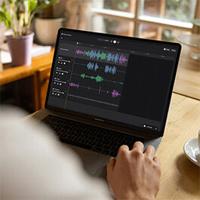
The ambience feature builds on a broader expansion of Nomono Studio Cloud’s editing capabilities. In September, the company introduced per-track editing, allowing creators to see and adjust individual speaker tracks within the cloud platform. Each track is color-coded to match the corresponding Nomono microphone, while the mixing interface highlights whichever speaker is active. Users can adjust volume with sliders, create volume points to change levels during a recording, and mute or isolate individual tracks.
The new ambience control extends those capabilities to the room recording itself, giving producers more flexibility over the final mix without requiring a separate digital audio workstation.
There are some limitations. Tracks remain synchronized, meaning users cannot independently cut, trim or move one track without affecting the others. Nomono says that restriction helps protect audio quality because the Space Recorder also captures some of the speakers’ voices, making synchronization essential.