A common misconception is that long distance traveling has become an expensive hobby. While flagship touring motorcycles are undeniably impressive machines, they cost comfortably over $20,000, putting them beyond the reach of many enthusiasts. However, the good news is that you don’t need a flagship cruiser or the latest bike to cover hundreds of miles in comfort. Comfortable ergonomics and a smooth, reliable engine are essential for a satisfying all-day ride from sunrise to sunset. This is exactly where traditional cruisers continue to emerge today.
The basic principles of the cruiser are as relevant today as they were decades ago. They prefer a smoother riding experience that makes every mile feel less demanding. That’s why they continue to attract riders who value more than just the technology that comes with the journey. In fact, there’s a Japanese cruiser that quietly embodies this philosophy better than almost anything else in its segment. It’s not the fastest or most technologically advanced option, but it focuses on providing exactly what long-distance riders need.
Why comfortable cruisers are more than just highway machines?
Cruisers are often built for straight interstate highways and leisurely Sunday rides. While they certainly excel on open roads, the true beauty of a well-tuned cruiser lies in its ability to adapt. The upright riding position reduces fatigue in city traffic, the low seat height makes frequent stops less intimidating, and the abundant low-end torque means riders have to spend less time constantly changing gears. At the end of the day, these little details matter a lot in providing a comfortable riding experience.
The best touring experiences often come from comfortable performance

There’s a fine line between an engine that sounds boring because it’s too smooth and an engine that tires you out because it has too much vibration. Many riders believe that more horsepower naturally translates into a better touring motorcycle. But, in reality, comfortable performance is what makes the real difference in real-world situations. A motorcycle that instantly delivers torque where it is needed most – in the low to mid RPM range – and remains stable at highway speeds can cover serious distances with ease, providing a great touring experience.
Kawasaki Vulcan 900 Classic LT offers traditional cruiser comfort at an affordable price
MSRP: $10,599

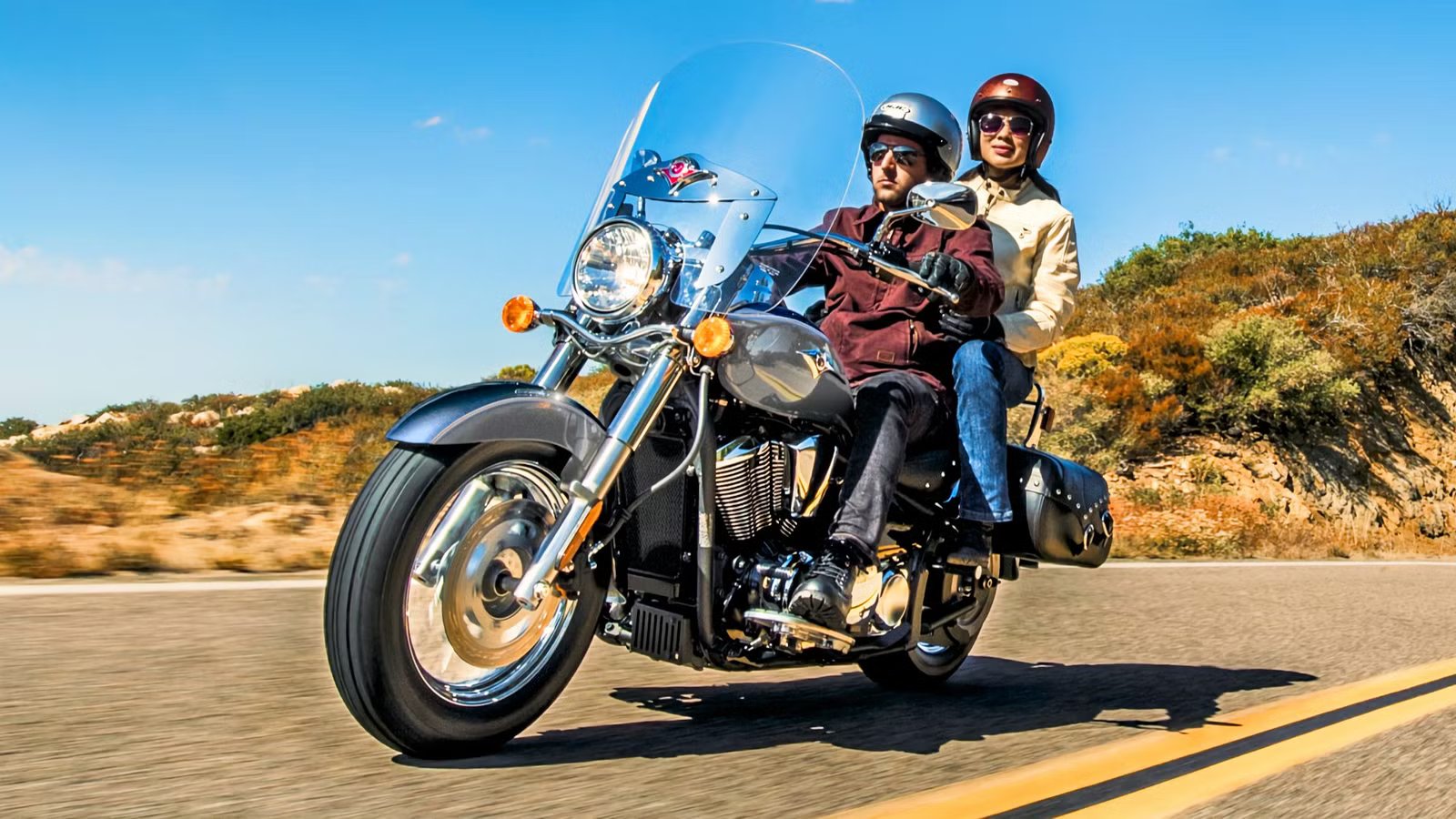
This brings us straight to the Kawasaki Vulcan 900 Classic LT, with ‘LT’ standing for Light Touring. First introduced in 2006, this Japanese cruiser has spent nearly two decades quietly proving that premium road-tripping comfort doesn’t require a specific price tag. In fact, unlike many motorcycles that require expensive accessories to be road-trip ready, the Vulcan 900 Classic LT comes equipped with many practical touring essentials – like leather saddlebags, an adjustable windshield and a passenger backrest – straight from the factory.
With a starting MSRP of $10,599, the Vulcan 900 Classic LT is one of the old guards in the mid-weight cruiser segment that has stood the test of time. Kawasaki has stayed true to the original formula, delivering a full-sized cruiser experience in a package that competes with the giants in terms of comfort while costing a fraction of the price.
The 903cc torque-rich V-twin is tuned for comfortable cruising

The engine is the heart of the Vulcan’s appeal, and Kawasaki has tuned it with long-range drivability in mind. Powering this Japanese cruiser is a 903cc liquid-cooled, 55-degree V-twin engine. With an output of 51 horsepower at 5,500 rpm, its power figure is modest by modern standards, but that’s part of the charm, as it’s not trying to be sporty or aggressive. What matters more is torque delivery, and this motor produces 58.2 pound-feet at just 3,500 rpm. Power is sent to the rear wheels through a five-speed gearbox.

This mechanical setup gives the Vulcan 900 Classic LT a very distinctive personality. It does not pursue enthusiasm; Instead, it builds confidence through consistency. For a rider who’s planning a day riding up to 500 miles, that kind of predictability is valuable. Furthermore, it is one of the most economical belt-driven V-twin cruisers of its type produced by a legacy manufacturer. It is supported by a Vulcan Kevlar-reinforced belt final drive that helps keep the ride smooth and maintenance simple. This setup is perfect for a bike covering miles with minimal fuss.
Classic cruiser styling with touring equipment from the factory

One of the greatest features of the Vulcan 900 Classic LT is that riders do not need to convert it into a touring motorcycle – it is already fully equipped straight from the factory. This Japanese cruiser has standard touring-focused equipment, including a height-adjustable windscreen, a deeply padded seat with passenger backrest, and leather saddlebags for extra storage. With these additions, Kawasaki ensures that the ‘LT’ (Light Touring) moniker is fitting. Its styling remains faithful to the classic cruiser formula with generous chrome accents, wide fenders and impressive proportions. It tips the scales at 657 pounds (wet curb weight).
A proven platform that prioritizes reliability over complexity

The Vulcan 900 Classic LT is devoid of unnecessary complexity. Its chassis is designed around a traditional high-tensile steel frame. Front suspension is handled by 41 mm Showa telescopic forks offering 5.9 inches of travel, while at the rear there is a hidden Uni-Track mono-shock with seven-way adjustable preload and 4.1 inches of travel. The Kawasaki also has ergonomics with a 26.8-inch seat height that makes the bike approachable, while the 64.8-inch wheelbase contributes to the quiet, stable feel that touring riders appreciate. In terms of features, it gets a basic tank-mounted instrument cluster that displays all ride-related information. There are no rider aids available.
The Kawasaki Vulcan 900 Classic LT is a great budget-friendly road tripper

There is no shortage of capable middleweight cruisers in the touring motorcycle market. But, when it comes to swallowing highway miles without emptying your bank account, the Kawasaki Vulcan 900 Classic LT is a powerhouse worth the price. It essentially bridges the gap between small, entry-level cruisers and larger, expensive touring rigs. Rather than chasing premium features or intimidating power figures, Vulcan focuses on providing an honest touring experience Riders can enjoy without burning a hole in their pockets.

When pitted against its closest market rivals, the Vulcan 900 Classic LT’s unique value proposition becomes even more apparent. this is the bestUral competitor, Suzuki Boulevard C50T, shares a wonderful nostalgiaC Aesthetic and offers a similar tourism-oriented packageBut its 805 cc V-twin displaces less and feels more docile at interstate speeds, while it still relies on the old mechanical rear drum brakes. Meanwhile, a stripped-down option like the Honda Shadow Phantom boasts an incredibly reliable liquid-cooled 745cc V-twin, but its bobber-style ergonomics and lack of factory-fitted touring accessories means it requires a significant investment to match Team Green’s long-range capability.
Source: Kawasaki