- Jeep Recon Moab 4xe ($67K): 670 HP, dual-motor 4WD, electronic lockers, and serious trail capability, but a 100.5-kWh battery delivers just 222 miles of EPA-rated range.
- Rivian R2 Performance AWD ($58K): More than 100 additional miles of range, up to 330 miles EPA-estimated, while costing over $9,000 less than the Jeep.
- Slate SUV Conversion (~$30K Estimated): Based on Slate’s $24,950 starting platform and modular accessory strategy, a fully converted SUV could potentially land near $30,000 while delivering 205 miles of range from a 65-kWh LFP battery pack, only 17 miles of difference than the Jeep Recon.
When automakers pitch the EV transition, the conversation usually centers on advanced technology, instant torque, quiet operation, and lower maintenance costs. But every so often, a vehicle launches with pricing and range figures that force buyers to examine the engineering trade-offs behind them.
Enter the 2026 Jeep Recon Moab 4xe.
Jeep’s first dedicated electric off-roader arrives with a starting MSRP of $66,995, including destination. The pricing reflects Jeep’s decision to prioritize off-road capability over outright efficiency. The Recon Moab features a 100.5-kWh battery pack, 670 horsepower, dual-motor 4WD, electronic lockers, heavy-duty skid plates, a power canvas top, and removable doors and glass. It is designed from the outset as a factory-built trail machine for serious off-road enthusiasts.
However, all of that capability comes at a cost. Heavy-duty drivetrain components, 33-inch all-terrain tires, and Jeep’s famously upright styling contribute to an EPA highway range estimate of just 222 miles.
Comparing those numbers to the upcoming Ri
Comparing those numbers to the upcoming Ri an electric utility vehicle. At the same time, Slate’s modular SUV conversion introduces a third option focused almost entirely on affordability and simplicity
How Much Does Off-Road Capability Cost?
Comparing dual-motor all-wheel-drive configurations directly provides a useful baseline.
The Riepower, accelerates from 0-60 mph in 3.6 seconds, and carries an EPA-estimated range of 307 to 330 miles depending on configuration
| Spec / Metric | Jeep Recon Moab 4xe |
|---|---|
| Launch MSRP (with destination) | $66,995 |
| Battery Pack Capacity | 100.5 kWh |
| EPA Estimated Range | 222 Miles |
| Efficiency Rating | ~2.21 mi/kWh |
| Drivetrain & Horsepower | 670 HP Dual-Motor 4WD |
| Standout Feature | Removable doors, e-lockers, and heavy-duty trail hardware |
| Spec / Metric | Rivian R2 Performance AWD |
|---|---|
| Launch MSRP (with destination) | $57,990 |
| Estimated Battery Pack Capacity | ~88 kWh |
| EPA Estimated Range | 307–330 Miles |
| Efficiency Rating | ~3.63 mi/kWh |
| Drivetrain & Horsepower | 656 HP Dual-Motor AWD |
| Standout Feature | 3.6-second 0-60 mph performance and native NACS charging |
The Rioab while providing more than 100 additional miles of estimated driving range and nearly matching Jeep’s horsepower output
For buyers who spend most of their time
For buyers who spend most of their time on pavement, that value proposition is hard to ignore.
The Battery Size & Efficiency Reality Check
Looking at the efficiency numbers reveals where the differences originate.
Jeep deliberately embraced its heritage design language. A flat windshield, exposed hinges, squared-off bodywork, and an upright rear profile all contribute to off-road character, but those design choices come with significant aerodynamic penalties.
Despite carrying a massive 100.5-kWh battery pack, the Recon achieves roughly 2.21 miles per kWh. By comparison, Ri estimated 88-kWh battery allow the R2 to achieve approximately 3.63 miles per kWh
Having spent thousands of milesbehind the wheel
Having spent thousands of milesbehind the wheel of both my former Ritically efficiency influences everyday ownership. Even small differences in energy consumption compound quickly during highway travel
The Recon Moab carries a 3,300-pound tow rating and an 850-pound payload rating. Ri offering over 1,100 pounds of payload
When loaded for road trips or outdoor adventures, the Rio is ever added
Prepping The Wildcard: Slate’s Affordable SUV Conversion
While Jeep and Rig an entirely different strategy
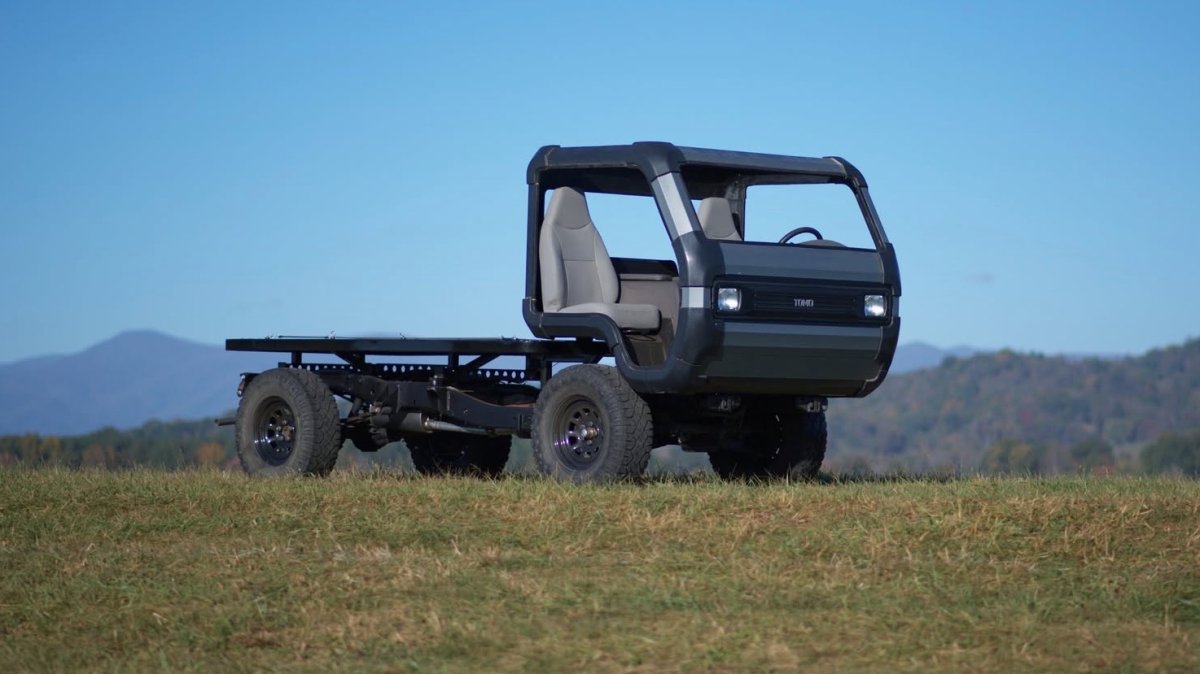
The company starts with a $24,950 electric pickup platform, then allows owners to convert the vehicle into a fully enclosed SUV using bolt-on accessory packages. While Slate has not announced final SUV-conversion pricing, the company’s $24,950 starting price and modular accessory strategy suggest a fully converted SUV could potentially land near the $30,000 mark depending on equipment and options.
That would place it tens of thousands
That would place it tens of thousands of dollars below both the Jeep Recon Moab 4xe and Ri
Where the Jeep Recon focuses on horsepower and trail technology, the Slate SUV embraces simplicity. Manual crank windows, smartphone-based navigation, rear-wheel drive, and lightweight composite body panels stand in sharp contrast to the increasingly feature-heavy EV market.
That philosophy reminds me of older compact trucks and entry-level SUVs that prioritized utility over luxury. Rather than competing on technology, Slate is betting that affordability still matters.
Rather than relying on massive touchscreen ecosystems, power
Rather than relying on massive touchscreen ecosystems, power door actuators, and luxury-focused cabin materials, Slate’s platform leans into simplicity with manual crank windows, smartphone-based navigation, standard rear-wheel drive, and lightweight composite body panels.
| Spec / Metric | Slate SUV Conversion (Estimated) |
|---|---|
| Estimated SUV Pricing | ~$30,000 (based on current platform pricing and assumed conversion costs) |
| Battery Pack Capacity | 65 kWh (LFP) |
| EPA Estimated Range | 205 Miles |
| Efficiency Rating | ~3.15 mi/kWh |
| Drivetrain & Horsepower | 181 HP Single-Motor RWD |
| Standout Feature | Modular SUV conversion, simplicity, and affordability |
The pricing gap may be the most fascinating part of the comparison.
A Slate SUV conversion that lands near the estimated $30,000 mark could potentially be purchased for less than half the price of Jeep’s new electric off-roader. Of course, buyers would be giving up substantial capability. The Slate offers no dual-motor drivetrain, no electronic lockers, no removable doors, and nowhere near 670 horsepower, but it raises an interesting question:
How much of the Recon’s capability will most buyers actually use?
The battery math becomes particularly interesting here.
Slate’s 65-kWh battery delivers an estimated 205 miles of range. Despite carrying a battery 35.5 kWh larger, the Recon’s EPA estimate is only 17 miles higher. That comparison highlights how much energy is consumed by the Jeep’s larger footprint, heavier off-road equipment, and less aerodynamic design.
That difference reflects far more than battery size
That difference reflects far more than battery size. It illustrates the cost of pushing a heavy, highly capable, aggressively off-road-focused vehicle through the air.
For drivers seeking a straightforward utility vehicle without the complexity and price of premium EVs, the Slate SUV could emerge as one of the most intriguing wildcards in the segment.
The Real-World Cold-Weather Reality Check
Cold temperatures reduce range across all EVs, but not equally.
The Rir efficiency losses. Its 330-mile range estimate will inevitably shrink in sub-freezing conditions, but it begins with a substantial buffer
Jeep’s thermal management systems will help protect battery
Jeep’s thermal management systems will help protect battery performance, but the Recon’s upright design and relatively short baseline range leave less room for cold-weather losses.
Slate faces a different challenge. The company’s low-cost approach relies on a 65-kWh LFP battery pack and conventional resistive heating. That strategy helps keep pricing low, but winter conditions will likely have a greater impact on range than premium EVs equipped with advanced thermal systems.
Which Electric SUV Would You Pick?
- Does the $67,000 Jeep Recon Moab justify its price through unmatched factory off-road capability?
- Does the $58,000 Rivian R2 strike the best balance between performance, utility, and range?
- Or could a roughly $30,000 Slate SUV conversion prove that affordability matters more than extreme capability for many EV buyers?
Let us know in the comments below!
Blake Lowry is a tech forward automotive enthusiast with a background in software development and animation working with clients such as Car & Driver, Hot Wheels, Google, Microsoft and the History Channel where he contributed on various interactive experiences. Blake’s automotive passion is centered around his hands-on experience with electric cars and trucks, alternative/green energy and practical applications in the real world. At Torque News, Blake’s articles focus on Ford F-150 Lightning, Chevrolet Silverado EV, GMC Sierra EV, Rivian R1T, Ford F-150 PowerBoost, Ford Maverick hybrid, Chevy Bolt and Slate Truck coverage.
Read more of Blake’s work on his author profile page.
You can also follow Blake here: